






























The core principle in these situations is that some individuals believe they are above the law, and that systems can be manipulated to manage their transgressions in their favor. Their confidence and authority often stem from holding key positions in influential public and private institutions, government offices, major corporations, high-ranking military positions, or the judiciary. Even after leaving office, they continue to wield influence and financial power, perpetuating control over critical circles. One hopes this is not what is happening in the present case.
The Nigerian Constitution is unequivocal in its supremacy. Section 1(1) establishes the Constitution as the highest law of the land, binding on all persons and authorities. Flowing from this is a foundational democratic principle: no one is above the law. This principle is not a mere slogan; it is a constitutional doctrine intended to ensure equality before the law and accountability in governance.
However, Nigeria’s constitutional framework also recognizes specific exceptions in practice, most notably Section 308, which grants temporary immunity from civil and criminal prosecution to the President, Vice-President, Governors, and Deputy Governors while in office. Even this immunity does not place these officials above the law in principle; it merely suspends prosecution during their tenure. They may still be investigated, and face full accountability once they leave office.
Beyond this narrow constitutional protection, no other category of citizens enjoys immunity, especially former public office holders. Yet, in Nigeria’s lived reality, public perception increasingly suggests that some members of the political and economic elite operate as though they are untouchable. This perception has dangerously eroded public confidence in the justice system.
Many Nigerians believe that the justice system often favors the wealthy and powerful, while the poor encounter swift and unforgiving judgments. Allegations of corruption within law enforcement and the judiciary, whether proven or not, have further deepened public cynicism, creating the impression that laws can be manipulated to shield influential individuals from accountability.
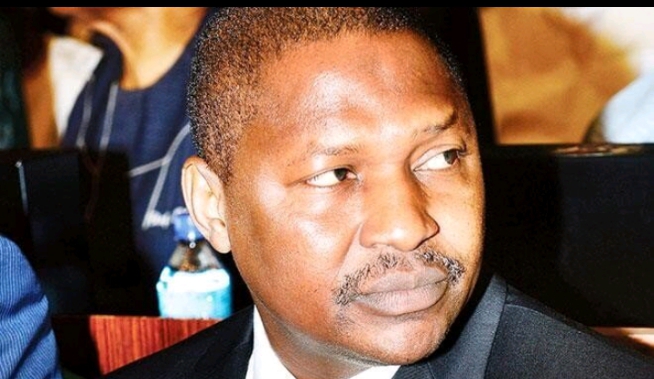
It is against this backdrop that the ongoing controversy surrounding former Attorney-General of the Federation and Minister of Justice, Abubakar Malami (SAN), has generated intense national attention.
Controversy has long trailed the recovery of funds looted under the regime of the late former military ruler, General Sani Abacha. In 2018, the recovery of $321 million from Switzerland became a subject of public debate following Malami’s decision to engage the services of two new lawyers, even though a Swiss lawyer previously hired for the recovery had reportedly completed his brief.
The decision reportedly included plans to pay $16.9 million in legal fees to the newly engaged lawyers, an amount that sparked public outrage and raised questions about transparency, due process, and value for money. Many Nigerians continue to ask whether this arrangement was justified and whether it bears any connection to the larger questions now being raised by investigators.
Recent developments have further intensified scrutiny. Malami has publicly accused the Economic and Financial Crimes Commission (EFCC) of witch-hunt and has demanded the recusal of the Commission’s Chairman, Mr. Olanipekun Olukoyede, from any investigation or prosecution involving him. Malami insists that the EFCC can no longer act impartially or lawfully in his case, a claim many observers find untenable.
He has also reportedly called on the current Attorney-General of the Federation, in his capacity as Chief Law Officer of the Federation, to intervene and compel the EFCC Chairman’s recusal, arguing that such action is necessary to prevent institutional damage and restore public confidence in the anti-corruption agency.
This demand has been met with disbelief. Critics argue that no citizen, regardless of past office or legal pedigree, should be treated differently under the law, and that attempting to dictate the terms of an investigation undermines the very essence of accountability.
Allegedly, an investigation is ongoing into terrorism financing, questions surrounding the whereabouts and handling of Abacha loot recovered from Switzerland and the Island of Jersey in the United Kingdom, and alleged sudden wealth, including investments estimated at ₦10 billion in Kebbi State. These assets, according to sources, may be subject to attachment pending the outcome of investigations.
Additionally, investigators are reportedly examining the role of one of Malami’s wives in relation to an alleged ₦4 billion Anchor Borrowers Programme cash advance linked to the Central Bank of Nigeria (CBN). It must be emphasized that these remain allegations under investigation, and all parties are entitled to the presumption of innocence under the law.
At the heart of this case lies a larger national question: Does the rule of law truly apply equally to all Nigerians? If the EFCC is to retain credibility, it must be allowed to perform its statutory duties without fear or favor, political pressure, or elite intimidation. Selective justice is not justice at all.
The law exists to protect society, not to serve as a shield for the powerful. If a crime has been committed, due process must be followed, evidence tested in court, and the guilty punished in accordance with the law. Equally, if innocence is established, it must be declared without prejudice.
Nigeria stands at a critical juncture. Upholding the rule of law is not merely about prosecuting individuals; it is about restoring public trust in institutions. No individual, past or present, powerful or privileged, should be above the law. Accountability is the lifeblood of democracy, and justice must not only be done but must be seen to be done.
The outcome of this case will send a powerful message: either that Nigeria is serious about equality before the law, or that elite privilege still trumps constitutional principles. The nation, and indeed the world, is watching. The perception or reality of elites controlling the law often leads to public debate and critiques of democratic systems, highlighting the tension between the ideal of equal governance and the concentration of power in the hands of a few.
Daniel Nduka Okonkwo is a seasoned writer, human rights advocate, and public affairs analyst, widely recognized for his incisive commentary on governance, justice, and social equity. Through his platform, Profiles International Human Rights Advocate, he has consistently illuminated critical social and political issues in Nigeria and beyond, championing accountability, transparency, and reform. With a portfolio of more than 1,000 published articles available on Google, Okonkwo’s works have appeared in prominent outlets such as Sahara Reporters and other leading media platforms. Beyond journalism, he is an accomplished transcriptionist and experienced petition writer, known for his precision and persuasive communication. He also works as a ghostwriter and freelance journalist, contributing his expertise to diverse projects that promote truth, integrity, and the protection of human rights.