































For the Mazi Nnamdi Kanu Global Defence Consortium
On 21 March 2025, in FRN v. Nnamdi Kanu (FHC/ABJ/CR/383/15), the Federal High Court delivered a judgment that exposes a deep structural failure in Nigeria’s judicial reasoning. The certified true copies (CTCs) of the proceedings and judgment reveal a simple truth: Justice J. K. Omotosho convicted a man under a repealed law by clinging to a misread subsection of the new law — Section 98(3) of the Terrorism (Prevention and Prohibition) Act, 2022 (TPPA).
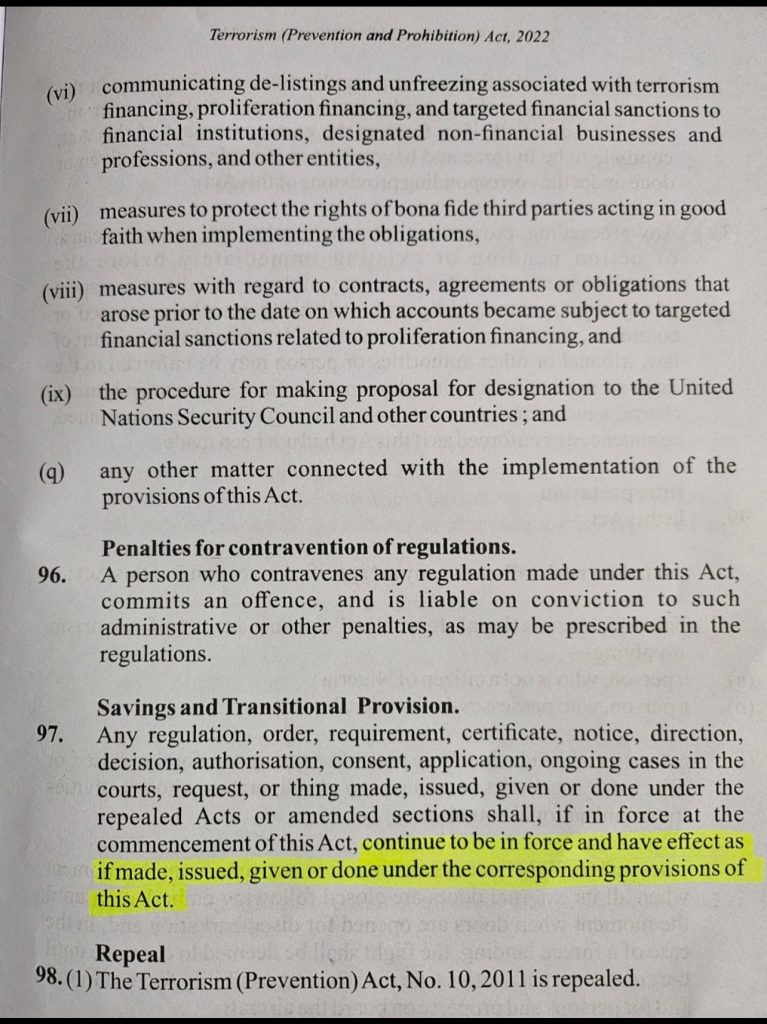
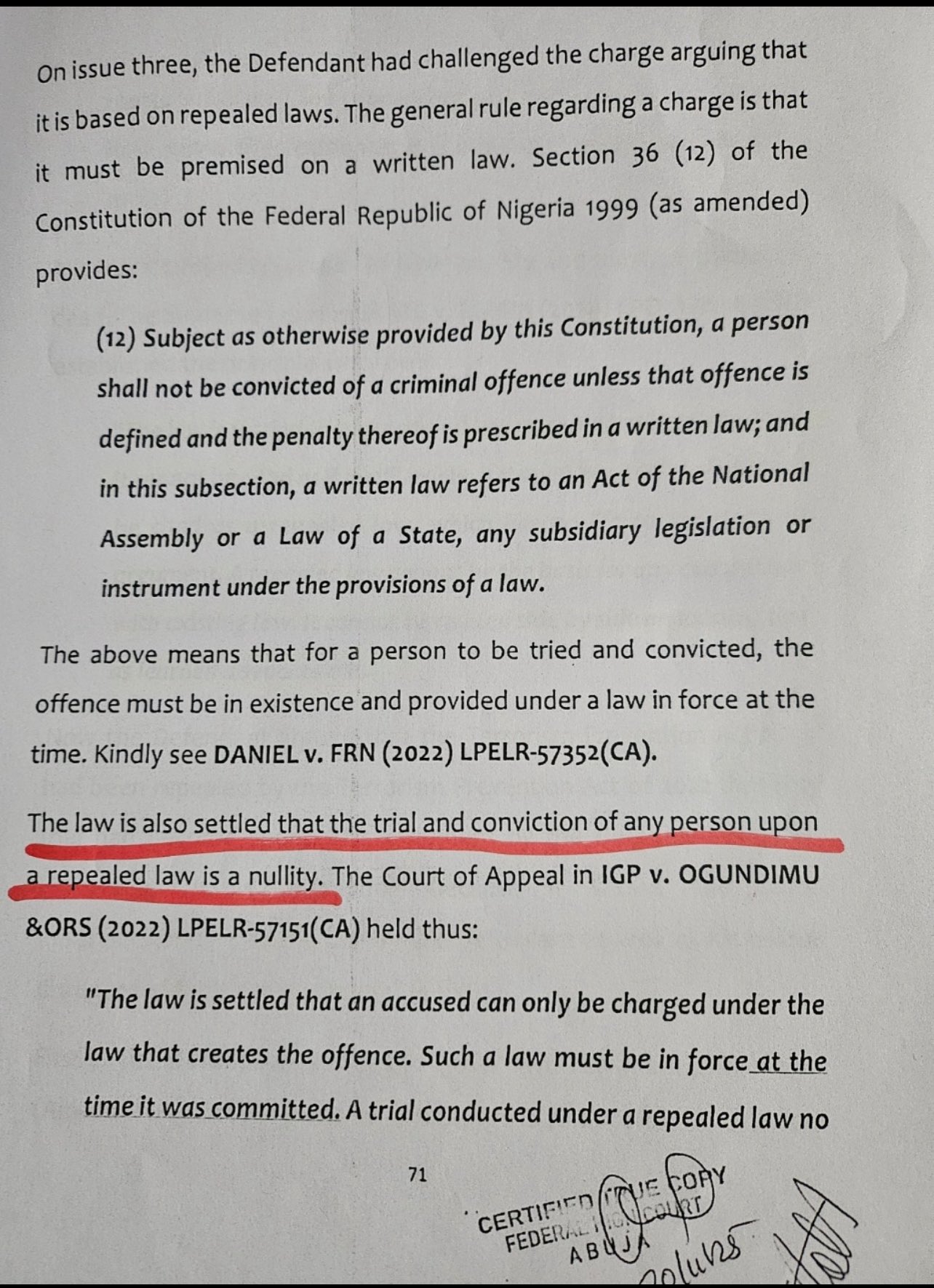
The images speak clearly (Images 1–7). The law speaks even more clearly.
Only the judgment does not.
1. The Record Shows Routine Procedure Masking a Fatal Defect
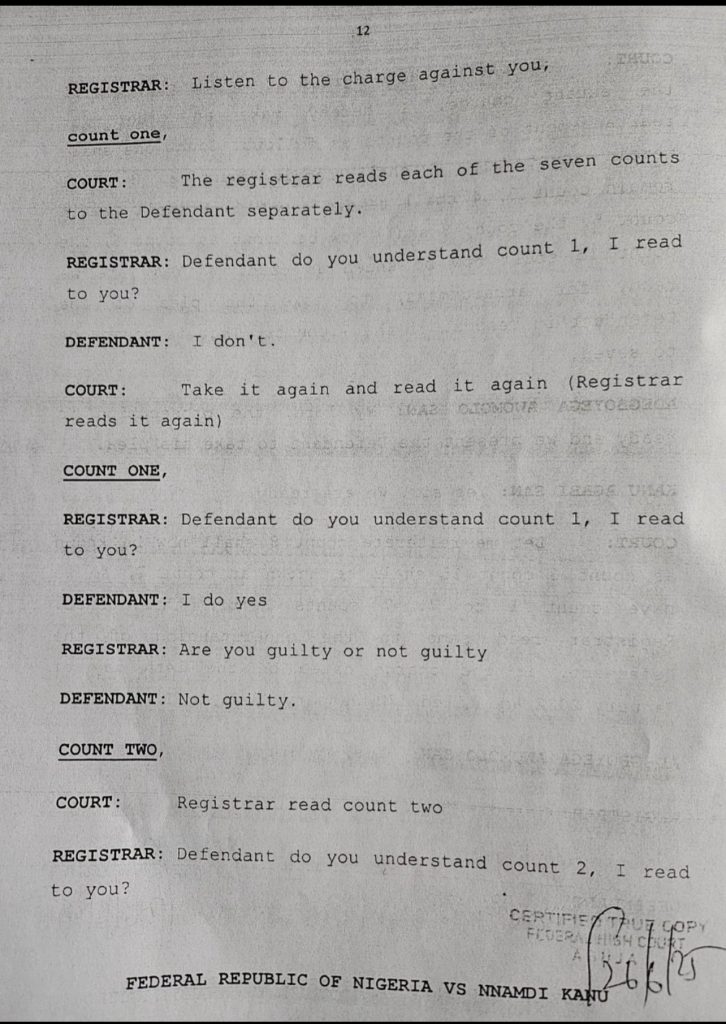
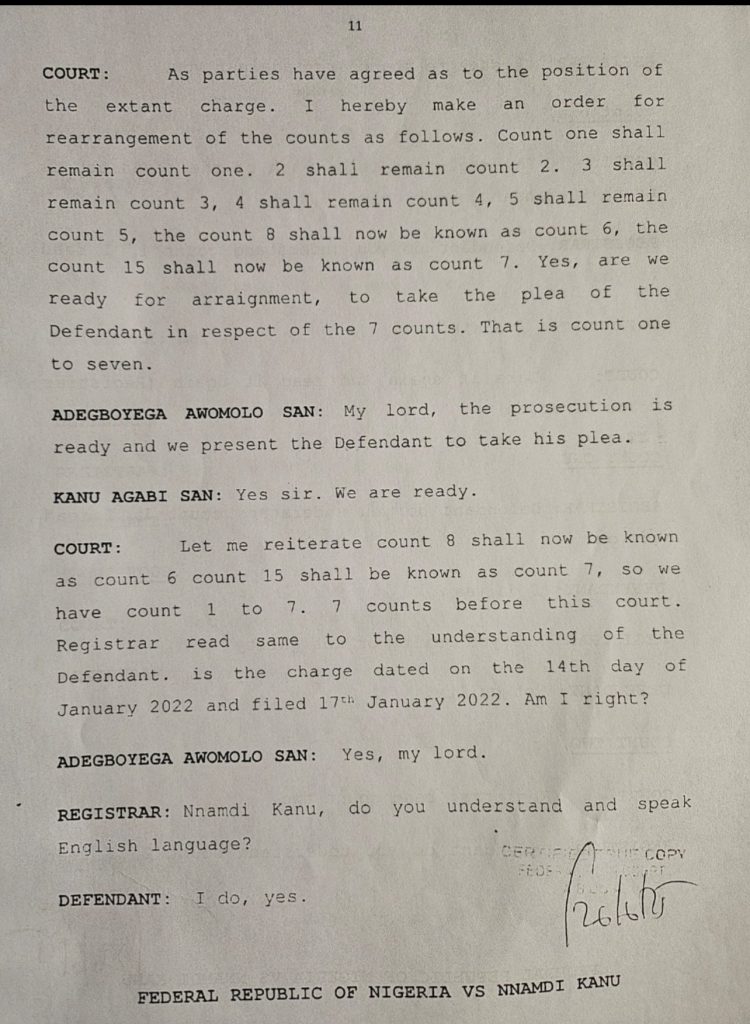
The proceedings at pages 10–12 (Images 3 & 6) show the 15-count charge reduced to seven. The registrar read each charge; Kanu asked for clarification on Count 1, then entered “not guilty” across all counts. Everything appeared normal.
But this entire arraignment occurred under a law — the TPAA — that Parliament repealed in 2022. (See Image 2.)
2. The Law on Repeal Is Settled — And Omotosho Underlined It Himself
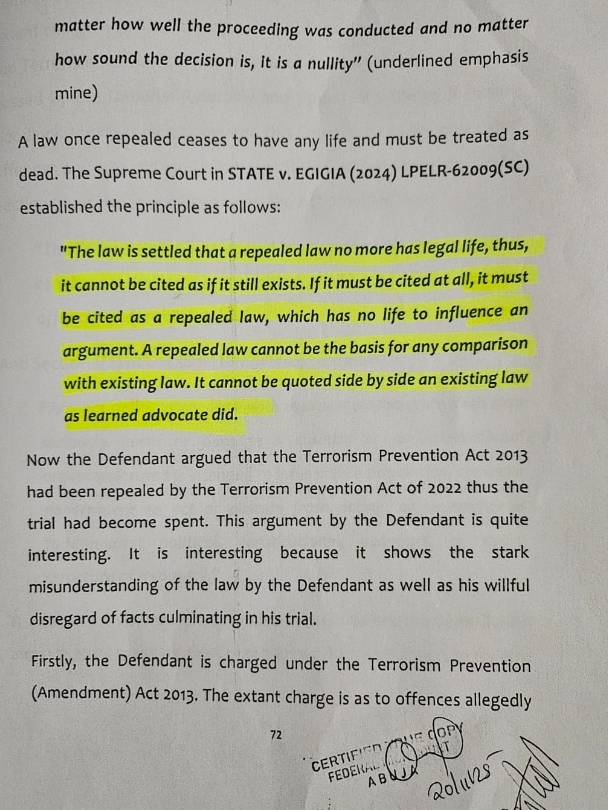
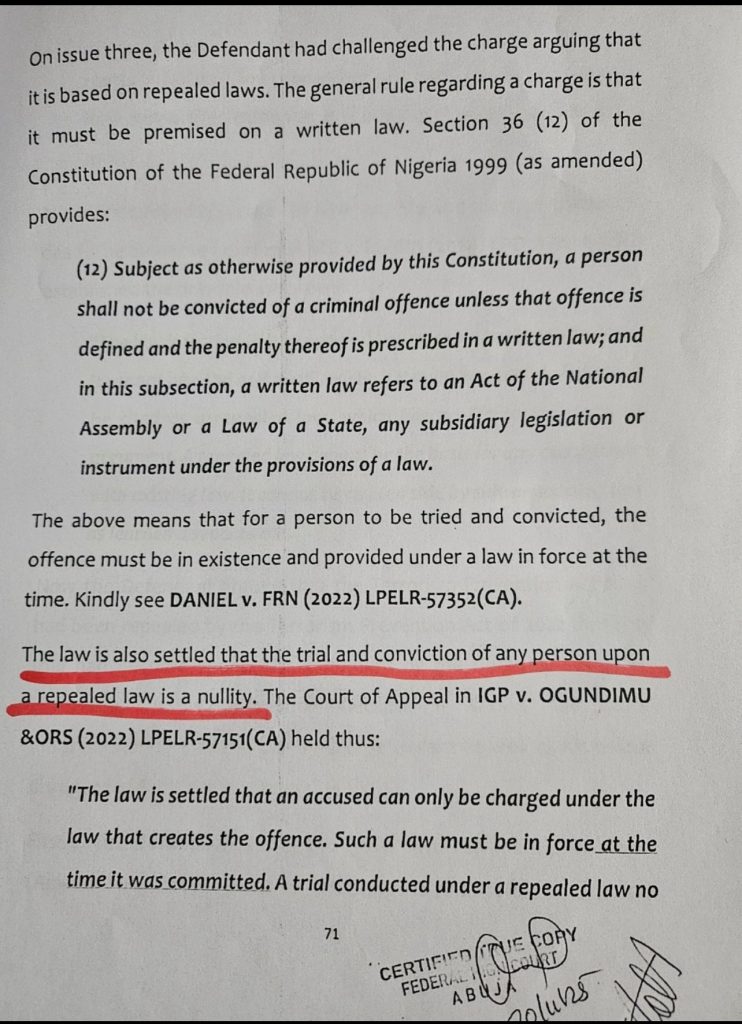
The judgment (Image 1) cites Ogundimu, Daniel, and State v. Egigia — all affirming the rule:
No one may be tried or convicted under a repealed law. A repealed statute has no more legal life and cannot be cited as if it still exists.
Omotosho J. even underlined the phrase:
“it is a nullity.”
Yet, after acknowledging the principle, he violated it.
3. The Twin Pillars of Criminal Jurisdiction — And Why This Trial Was Doomed
A vital principle is being deliberately twisted in public discourse. Criminal jurisdiction rests on two independent pillars:
PILLAR ONE:
The law must have been in force when the alleged conduct occurred.
PILLAR TWO:
The law must still be in force at the time of trial, plea, and conviction.
Both must stand.
If either collapses, jurisdiction collapses.
Yes, the TPAA existed in 2013–2022.
Nobody disputes Pillar One.
But the trial and the de novo plea occurred on 29 March 2025, when the TPAA had been repealed by Section 98 of the TPPA.
The only extant law in 2025 was the TPPA — not the TPAA.
Once repeal occurred, the TPAA ceased to exist for purposes of trial. Pillar Two collapsed completely.
A dead statute cannot sustain a living prosecution.
4. The 98(3) Deception: “As If This Act Does Not Exist” Does Not Mean ‘Ignore TPPA’
Much mischief has arisen from the phrase in Section 98(3) that preserves certain liabilities “as if this Act does not exist.”
Omotosho treated this as license to pretend the TPPA never came into force.
This is legally impossible.
If Section 98(3) truly required courts to ignore the TPPA, then Omotosho J. had no right to cite or rely on TPPA Section 98(3) in the first place.
You cannot invoke a statute to justify acting as if the same statute does not exist.
That is circular nonsense.
What Section 98(3) actually preserves are liabilities, not repealed laws.
And Section 97 tells the court precisely what to do with those liabilities:
Bring them under the TPPA — the extant law — for trial to continue.
Section 97 is the bridge the legislature built to ensure continuity without resurrecting dead statutes.
Why did Omotosho ignore Section 97?
Because Section 97 would have forced him to abandon the repealed TPAA and apply the TPPA — whose definitions and evidentiary standards could not sustain the prosecution’s case.
Why Omotosho Had to “Assume Without Conceding”: A Judicial Evasion of Section 122 Evidence Act
This is also why Justice Omotosho resorted to the strange phrase “assume without conceding” rather than do what the law mandates: take judicial notice of the repeal under Section 122 of the Evidence Act, which requires courts to recognize all Acts of the National Assembly without proof.
Had he complied with Section 122, he would have been forced to accept that TPPA — not TPAA — governed the trial, instantly rendering the charges void.
Instead, he performed an evasive linguistic somersault: “assuming” the repeal in theory while refusing to apply it in law.
This was not a mistake — it was a deliberate judicial choreography designed to avoid the mandatory conclusion that trial under the TPAA in 2025 is a nullity.
And here the mask slips:
From the day of the unlawful rendition in 2021, the objective was fixed — jail Kanu at all costs, law and evidence notwithstanding.
Section 98(3) became the judicial fig leaf for a conclusion already predetermined.
5. Why Section 98(3) Cannot Revive a Dead Law
Savings clauses preserve administrative measures — not the substantive criminal code. They keep “acts in flight” (regulations, notices, sanctions) but do not resurrect the repealed charging statute.
There is no Nigerian authority, no Commonwealth precedent, no global example where a court used a savings clause to uphold a conviction under a repealed criminal law.
Omotosho cited none — because none exist.
6. The Legal Consequence Is Brutal and Unavoidable
The alleged conduct may have occurred when TPAA was alive (Pillar One).
But by 2025, TPAA was dead (Pillar Two gone).
Without both pillars, jurisdiction evaporates.
Section 98(3) cannot breathe life into a corpse.
Conviction under TPAA in 2025 is a jurisdictional nullity, incurable at law.
This is not a technicality. This is the architecture of criminal justice.
Ignoring it is not an error; it is a judicial choice.
7. A Judgment Built on a Statute Parliament Buried
Justice Omotosho’s reasoning transforms Section 98(3) into a weapon against Section 98(1), contradicts Section 97, defies Supreme Court authority, and violates constitutional safeguards.
It is a ruling constructed on a legal foundation repealed three years earlier.
If this stands, no Nigerian is safe from retroactive prosecution or judicial resurrection of dead statutes.
Conclusion: The Appellate Courts Must Intervene
This case is no longer about one man.
It is about whether repeal means repeal.
It is about whether courts obey Parliament or reinvent statutes to achieve predetermined outcomes.
Justice Omotosho’s judgment is not merely wrong — it is a repudiation of the rule of law.
The Court of Appeal must dismantle it, or Nigeria will have declared, by judicial fiat, that dead laws can walk again.