
















Nigeria is abundantly blessed by nature, yet tragically impoverished by governance. Decades after crude oil was discovered in commercial quantities, the vast majority of Nigerians, especially those in host communities, have little to show for the resource that sustains the national economy. What was divinely given as a blessing has, through poor leadership, weak regulation, and elite capture, increasingly assumed the character of a curse.
In Nigeria, oil blocks are often held for decades without meaningful development, yet licences are rarely revoked. Political connections, elite status, and regulatory capture frequently override the national interest.
Nigeria’s oil wealth has failed to uplift its people not because of fate or divine irony, but because of policy failure and governance weakness. The Senegalese example proves that African nations can reclaim control of their resources when political will exists.
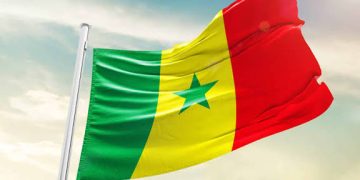
This shift was recently demonstrated by the administration of Senegalese President Bassirou Diomaye Faye as part of a broader and stricter regulatory approach aimed at reclaiming dormant licences and ensuring the active development of natural resources. Senegal revoked the Cayar Offshore Shallow oil licence held by Atlas Oranto Petroleum Company, a move that highlights what Nigeria has consistently failed to do: enforce accountability without fear or favour.
The passage of the Petroleum Industry Act (PIA) 2021 was widely hailed as a watershed moment designed to improve efficiency, attract investment, and modernize Nigeria’s oil and gas sector. However, evidence suggests that these reforms have not translated into meaningful improvements in the lives of ordinary Nigerians. Studies and policy analyses, including research hosted on platforms such as ResearchGate, indicate that privatization and sectoral restructuring have failed to reduce poverty or improve service delivery. Instead, they have often deepened inequality and further marginalized vulnerable communities.
Nigeria’s shift toward privatization culminating in the commercialization and restructuring of the Nigerian National Petroleum Company Limited (NNPCL) was intended to reduce inefficiency and curb corruption. In practice, it has largely concentrated wealth in the hands of a narrow elite. While balance sheets may look healthier and private capital has increased, the socioeconomic conditions of oil-producing communities remain dire.
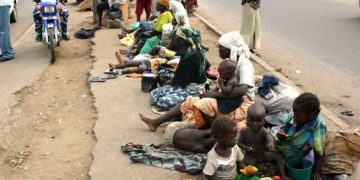
Across the Niger Delta, host communities continue to live without basic amenities such as potable water, quality healthcare, functional schools, or reliable infrastructure, despite sitting atop the nation’s wealth. Years of oil exploration by multinational and indigenous companies alike have left behind devastated farmlands, polluted rivers, and toxic air from relentless gas flaring. Farming and fishing, the traditional livelihoods of the people, have been destroyed, with little or no adequate compensation.
This neglect has bred deep frustration, particularly among the youth. High unemployment, lack of opportunity, and environmental ruin have fueled militancy, oil theft, pipeline vandalism, and broader insecurity. These outcomes are not accidental; they are the predictable consequences of a system that prioritizes profit and political patronage over people.
Nigeria has long defended its oil licensing regime by arguing that awarding marginal and underdeveloped fields to indigenous companies would increase local participation and national benefit. Indeed, the sector has evolved from total foreign dominance, once controlled almost exclusively by Shell, Mobil, Chevron, and Agip operating major terminals such as Bonny, Forcados, and Qua Iboe, to include prominent Nigerian players.
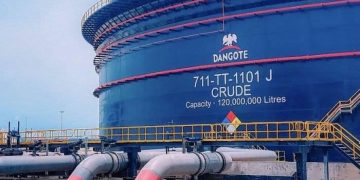
Companies such as Seplat and Oando (which acquired Agip’s Nigerian assets) have expanded crude production and contributed to local content development. Modular refineries such as Waltersmith and Aradel are now refining crude locally, while major private investments, including the 650,000 bpd Dangote Refinery, OPAC, Duport, and Edo Refining, were licensed to reduce fuel importation and enhance domestic supply.
Yet, for all this activity, Nigerians are still waiting to feel the economic impact. Fuel prices remain high, unemployment persists, and oil-producing communities continue to bear environmental costs without corresponding benefits. The critical question remains unanswered: Is the Nigerian state, and its people, truly benefiting from these investments?
A striking contrast has emerged from Senegal, where a new regulatory posture signals a firm commitment to national interest over elite privilege. In January 2026, the Senegalese government revoked the Cayar Offshore Shallow oil exploration licence held by Atlas Oranto Petroleum, owned by Nigerian billionaire Arthur Eze.
The licence, covering approximately 3,600 square kilometres north of Dakar, had been held since 2008. Senegalese authorities cited prolonged inactivity, failure to drill a single exploratory well, and non-compliance with contractual obligations, including the absence of a mandatory $25 million bank guarantee. Despite Oranto Group’s claim that it invested over $45 million in seismic surveys and local development, the government concluded that the block had been warehoused rather than developed.
This decisive action reflects the regulatory philosophy of President Bassirou Diomaye Faye, whose administration has adopted a tougher stance against dormant and speculative licences. The objective is clear: natural resources must be actively developed in ways that benefit the nation, not locked away as private assets for future bargaining.
While Nigeria speaks of reform, Senegal is practicing it.
While Nigeria tolerates inactivity, Senegal penalizes it.
While Nigeria negotiates endlessly with powerful interests, Senegal acts decisively.
This is not an argument against private investment or indigenous participation. Rather, it is a call for strong, transparent, and patriotic regulation. Licences must be performance-based, environmental obligations must be strictly enforced, and host communities must be made direct beneficiaries of resource exploitation.
If Nigeria is serious about ending poverty in oil-producing regions, reducing insecurity, and restoring public trust, it must move beyond cosmetic reforms. The country must adopt Senegal’s courage revoking dormant licences, enforcing compliance, and placing national and community interests above elite profit.
Until then, oil will remain Nigeria’s paradox: immense wealth amid enduring poverty.
Daniel Nduka Okonkwo is a seasoned writer, human rights advocate, and public affairs analyst renowned for his incisive commentary on governance, justice, and social equity. Through Profiles International Human Rights Advocate, he champions accountability, transparency, and institutional reform in Nigeria and beyond. With over 1,000 published articles indexed on Google, his work has appeared on Sahara Reporters and other leading international media platforms.
He is also an accomplished transcriptionist, petition writer, ghostwriter, and freelance journalist, widely recognized for his precision, persuasive communication, and unwavering commitment to human rights.
📧 Contact: dan.okonkwo.73@gmail.com
Signed:
Daniel Nduka Okonkwo.