















Nigeria is blessed with an abundance of mineral resources, with over 34 to 44 types of solid minerals, including gold, coal, iron ore, bitumen, and gemstones, spread across more than 450 locations. While the country is often recognized primarily for its crude oil and gas, it also possesses vast, largely untapped reserves. Notably, Nigeria holds the world’s second-largest bitumen deposits, along with significant coal, iron ore, and barite reserves, all of which present immense potential for industrial growth.
Yet, despite these blessings, the nation’s wealth has not translated into prosperity for its people. Challenges such as illegal mining, poor infrastructure, and insufficient investment have hindered progress. Worse still, the absence of good governance has allowed those in power to exploit these resources against the citizens. Greed and discontent have driven some to invite illegal foreign actors, further deepening the destruction of the country’s future.
The story of Nigeria touches the heart. It is a tale of squandered opportunities and leaders who are driven by selfish ambition and who cling to power at all costs. Their actions have left the nation stagnant, preventing it from rising to the greatness and its natural endowments promise.
The value of human life increasingly appears diminished in Nigeria. What is the value of human life in Nigeria today, given how terrorists kidnap, destroy lives, and how society so easily moves on? Burundi, Sudan, Somalia, Central African Republic, Yemen, Libya, Afghanistan, and Syria all share troubling similarities with Nigeria: weak governance, porous borders, instability, corruption, and, in some cases, political actors or sympathizers who portray terrorists as religious fighters seeking to impose their beliefs.
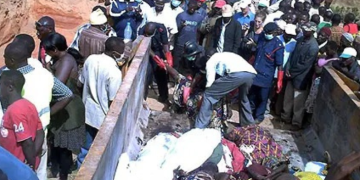
This question continues to haunt a nation grappling with terrorism, mass abductions, and violent extremism. Across many affected communities, life has been reduced to a bargaining chip, measured in ransom demands, exploited for propaganda, or extinguished to advance ideological goals.
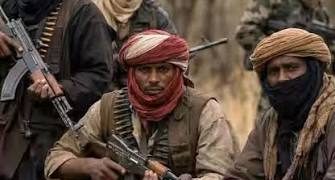
For terrorist groups such as Boko Haram and Islamic State West Africa Province, human life is often treated not as sacred, but as expendable. Their attacks on churches, mosques, schools, and villages are calculated to generate fear, attract media attention, and undermine public confidence in the state’s ability to provide security.
The international community has taken concrete steps to identify and punish those who finance terrorism in Nigeria. Both the United Arab Emirates and the United States have sanctioned individuals accused of funding extremist groups.
In 2019, the Abu Dhabi Federal Court of Appeal convicted Nigerian national Surajo Abubakar Muhammad for transferring funds from Dubai to Nigeria in support of Boko Haram. Similarly, the United States Department of the Treasury imposed sanctions on individuals accused of raising and channeling money to terrorist networks.
These actions demonstrate that terrorism in Nigeria is not solely a domestic security issue but part of a global financial and criminal network that requires a coordinated international response.
Further highlighting the scale of the problem, Interpol reported the arrest of 83 individuals worldwide, including 11 Nigerians, for alleged terrorism financing linked to money laundering. According to the investigation, authorities screened more than 15,000 individuals, uncovered financial flows exceeding $260 million (₦36 billion), and seized approximately $600,000 (₦890 million) in both fiat and virtual currencies.
International conventions require countries, including Nigeria, to criminalize terrorism financing and impose penalties that reflect the severity of the offense. Suspected sponsors must be investigated, prosecuted, and brought to justice within a legal framework that respects human rights and the rule of law.
In many parts of Nigeria, terrorists and armed groups assign monetary value to human life. Victims are kidnapped for ransom, while communities are subjected to illegal taxation and so-called protection levies. In these situations, survival often depends on the ability to pay.
This commodification of human existence represents a profound moral collapse. A person’s worth becomes defined not by inherent dignity, but by financial utility to criminal actors.
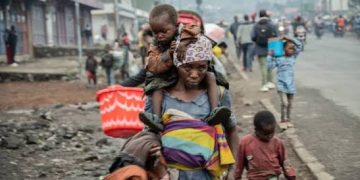
Women and children have been used as suicide bombers, effectively turning human beings into weapons. In such acts, individuals are stripped of their humanity and reduced to instruments of violence.
Attacks are often designed to demonstrate the vulnerability of communities and expose gaps in state protection. In some cases, warnings reportedly reach local populations ahead of attacks, yet preventive action fails to materialize, leaving citizens feeling abandoned and exposed.
The psychological impact is profound. Terrorists exploit society’s respect for life, using brutality to send a message that no one is beyond their reach.
Boko Haram’s ideology, which opposes Western education and modern state institutions, has explicitly targeted civilians deemed to be outside its belief system. Such ideology justifies violence against innocent people and frames mass killing as a legitimate tool of ideological enforcement.
While some extremist factions have attempted to present themselves as alternative authorities by providing limited services or imposing order, this often comes at the cost of strict and brutal control. Compliance is enforced through fear, and dissent is met with violence.
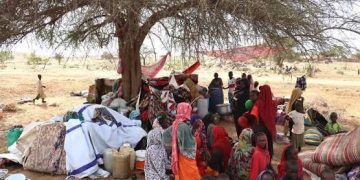
The widespread killing, displacement, and destruction of entire communities demonstrate a chilling disregard for human dignity.
The Nigerian government allocates billions of dollars annually to defense and security. Yet many citizens continue to question whether these investments are translating into meaningful protection.
The primary responsibility of any sovereign state is to safeguard the lives of its citizens. When communities are repeatedly attacked, kidnapped, or displaced, it raises urgent questions about preparedness, intelligence coordination, and accountability.
However, addressing terrorism requires more than military force alone. It demands
Effective investigation and prosecution of financiers
Stronger intelligence gathering and inter-agency cooperation
Transparency and accountability in security operations
International collaboration to disrupt financial networks
Community engagement to counter extremist narratives
The moral question Nigeria must ultimately confront is that terrorism is not only a security crisis but also a moral one.
For terrorists, human life may hold little value. But for Nigeria as a nation, the sanctity of life must remain non-negotiable.
When citizens begin to question whether their lives are adequately protected, it signals a crisis of confidence that threatens the very foundation of the state.
Nigeria stands at a critical intersection. The fight against terrorism is not just about reclaiming territory. It is about restoring the value of human life and reaffirming the principle that no Nigerian life is disposable.
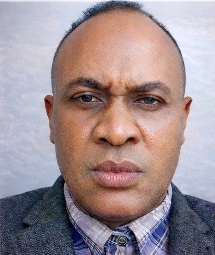
Daniel Nduka Okonkwo is a Nigerian investigative journalist, publisher of Profiles International Human Rights Advocate, and policy analyst whose work focuses on governance, institutional accountability, and political power. He is also a human rights activist, human rights advocate, and human rights journalist. His reporting and analysis have appeared in Sahara Reporters, African Defence Forum, Daily Intel Newspapers, Opinion Nigeria, African Angle, and other international media platforms. He writes from Nigeria and can be reached at dan.okonkwo.73@gmail.com.