














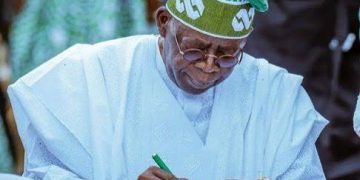
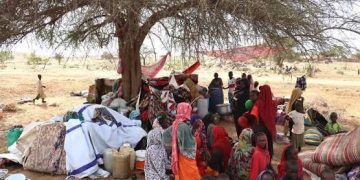


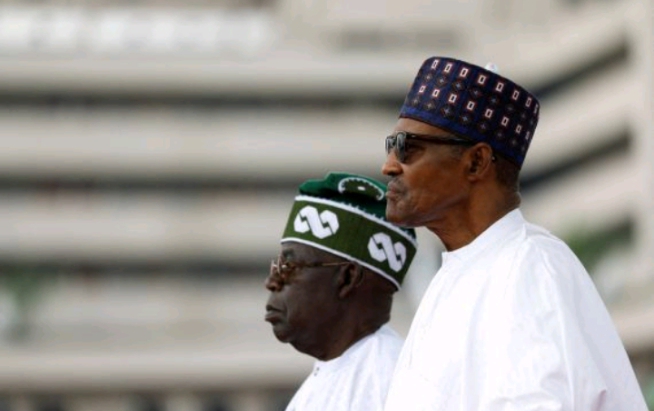
Nigerian political history is being rewritten before our eyes. What was once widely condemned as lethargy under Muhammadu Buhari is now being recast as prudence, while Bola Ahmed Tinubu’s sweeping reforms are increasingly portrayed as reckless gambles. The narrative is shifting in real time. Yesterday’s failures are being burnished into nostalgia, and the pain of the present is fueling a dangerous longing for the past. This is the politics of perception, where hardship canonizes former leaders and casts current reformers as villains.
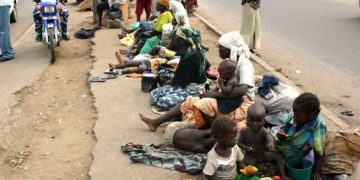
In the public imagination, the Tinubu administration has, perhaps unintentionally, softened the judgment of Buhari’s years in power. Buhari was frequently criticized for inertia and detachment, yet Tinubu’s rapid and far reaching reforms, particularly the removal of fuel subsidies and the unification of the exchange rate, have delivered immediate and severe economic shock. Fuel prices surged from about ₦200 to nearly ₦1,000 per liter, while the naira depreciated sharply, accelerating inflation and deepening poverty. The result is a growing, if selective, nostalgia for an era that was itself deeply contested.
At the heart of the criticism is the pace and scale of government borrowing. Detractors argue that within a remarkably short period, the Tinubu administration has accumulated debt at a rate that rivals or exceeds that of previous governments, even after eliminating subsidies that were expected to ease fiscal pressure. This apparent contradiction has heightened public skepticism and raised legitimate concerns about long term debt sustainability and macroeconomic stability.
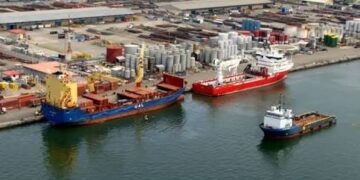
Infrastructure offers another point of contrast. Buhari’s tenure was defined, in part, by visible rail expansion projects that came to symbolize progress despite broader governance challenges. Tinubu’s administration, by contrast, has prioritized large scale road construction, including the Lagos Calabar Coastal Highway. While ambitious, such projects have yet to produce the same immediate and widely felt impact, leaving many Nigerians questioning both the sequencing and the social returns of current infrastructure priorities.
On security, the story is one of continuity rather than divergence. Both administrations have struggled to decisively curb banditry, kidnapping, and other forms of violent insecurity. Buhari was often labeled aloof, but critics note that his government was comparatively cautious in implementing policies perceived as burdensome to ordinary citizens. Tinubu, in contrast, is seen as more assertive, yet that assertiveness has translated, for many, into harsher economic realities without a commensurate improvement in security outcomes.
Supporters of the current administration counter that such criticisms ignore the structural weaknesses inherited from the past. They argue that Buhari deferred difficult decisions, leaving behind an economy distorted by subsidies, multiple exchange rates, and mounting fiscal imbalances. From this perspective, Tinubu’s reforms are not reckless but necessary, a painful recalibration aimed at restoring long term stability and unlocking sustainable growth. In this telling, Tinubu is a leader willing to absorb short term political costs in pursuit of longer term national gain.
Even so, perception remains powerful. The severity and immediacy of today’s hardship have made Buhari’s tenure appear, in retrospect, more benign. Yet beneath the turbulence, there are early of stabilization. Inflation, which peaked at nearly 35 percent in late 2024, has moderated to around 15 percent by early 2026. This easing does not erase the pain experienced by millions, but it does suggest that the most disruptive phase of adjustment may be passing. The bitter medicine, it seems, is beginning to take effect.
Nigeria now finds itself at a critical juncture. The country is enduring one of its most difficult economic periods in decades, yet this moment may ultimately be judged as a turning point. It is a test of national resolve, where the choice is not between comfort and discomfort, but between reform and stagnation, between confronting structural weaknesses and perpetuating them.
The surge in inflation across 2024 and early 2025 reflects a convergence of policy decisions and longstanding structural constraints
The elimination of petrol subsidies in May 2023 triggered an immediate tripling of fuel prices. This shock rippled through the economy, raising transportation, production, and distribution costs.
Allowing the naira to float and consolidating multiple exchange windows led to a sharp depreciation. As a result, import costs soared, affecting everything from industrial inputs to consumer goods.
Ongoing insecurity in key farming regions has disrupted food production, constraining supply and driving up food prices.
Persistent public sector spending, despite calls for restraint, has compounded inflationary pressures and weakened fiscal credibility.
Increased borrowing combined with currency depreciation, has inflated debt servicing obligations, tightening fiscal space.
Critics maintain that the intensity of economic strain under Tinubu has been more acute, compressed into a shorter time frame than under Buhari:
While supporters argue that decisive action was unavoidable, the speed of implementation has amplified short term hardship.
The shock effects of the 2023 reforms have been more immediate and severe than the gradual inflation experienced over Buhari’s eight year tenure.
Early borrowing patterns under the current administration have heightened concerns about fiscal sustainability, particularly in the context of a weakened currency.
Ultimately, this is not merely a debate about two administrations. It is a reflection of how societies remember, reinterpret, and sometimes misremember their past in response to present pain. In Nigeria today, hardship is reshaping memory, and memory, in turn, is reshaping politics.
History will render its verdict in time. For now, Nigerians continue to navigate the realities of reform, balancing present sacrifice against the promise, however uncertain, of a more stable and prosperous future.
Daniel Nduka Okonkwo is a Nigerian investigative journalist, publisher of Profiles International Human Rights Advocate, and policy analyst whose work focuses on governance, institutional accountability, and political power. He is also a human rights activist, human rights advocate, and human rights journalist. His reporting and analysis have appeared in Sahara Reporters, African Defence Forum, Daily Intel Newspapers, Opinion Nigeria, African Angle, and other international media platforms. He writes from Nigeria and can be reached at dan.okonkwo.73@gmail.com.