










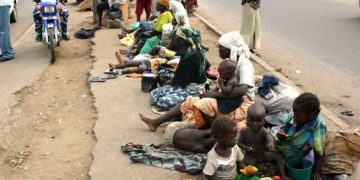


















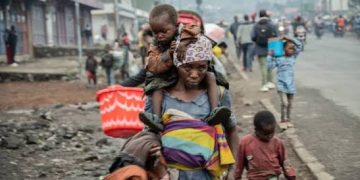

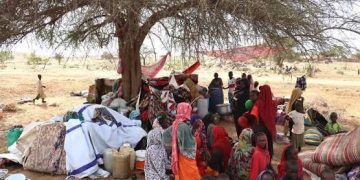



Nigeria’s security crisis has metastasized beyond regional confines, transforming into a nationwide struggle against insurgent groups whose reach and adaptability defy containment. What began as a localized insurgency has evolved into a diffuse conflict, eroding the notion of safe havens across the country.
In response, the United States has stepped up military support, deploying around 100 soldiers to provide training and intelligence assistance to Nigerian forces battling Boko Haram and ISWAP. This partnership, framed as a defense of stability and the protection of vulnerable communities, emphasizes intelligence and capacity building over direct combat, signaling Washington’s intent to bolster Nigeria’s resilience against extremist threats while projecting strength in safeguarding vulnerable populations under siege.
It is no longer a regional problem confined to the North East, where insurgent groups wage a brutal campaign against the state and civilians. That narrative is increasingly outdated. Across the country, from the conflict ridden North to the commercially vibrant South, insecurity has evolved into a national emergency with shifting fronts and blurred boundaries.
The idea that geography alone can guarantee safety in Nigeria is no longer tenable.
For over a decade, Nigeria has grappled with persistent violence driven by terrorist insurgencies, armed banditry, and organized crime. Groups such as Boko Haram and the Islamic State West Africa Province (ISWAP) continue to operate primarily in the North East, targeting civilians, military formations, and critical infrastructure.
States including Borno, Yobe, and Adamawa remain epicenters of insurgent activity. Beyond these, parts of Kaduna, Katsina, Zamfara, Sokoto, and Niger have witnessed sustained attacks linked to banditry and extremist violence. The threat is not static, it is adaptive, mobile, and increasingly decentralized.
By 2025, Nigeria ranked among the countries most affected by terrorism globally, underscoring the enduring severity of the crisis.
Tactics employed by armed groups range from kidnappings and ambushes to the use of improvised explosive devices in crowded public spaces such as markets, schools, transport hubs, and places of worship. These methods are designed not only to inflict casualties but also to instill widespread fear and disrupt daily life.
While the North remains the epicenter of large scale jihadist insurgency, security threats have steadily diffused into other regions.
In the Federal Capital Territory, Abuja, once considered relatively insulated, there have been growing concerns about kidnappings and attacks on the outskirts. This development has heightened anxiety among residents and raised questions about the reach of criminal networks.
The North Central region, particularly states such as Kogi and Plateau, has also experienced rising instability, serving as a transitional zone where different forms of violence intersect.
The South West, often described as Nigeria’s most stable region, presents a more complex reality. While it has largely avoided the scale of insurgency seen in the North East, it faces a rising tide of violent crime.
Lagos, the country’s economic nerve center, records frequent incidents of armed robbery, carjacking, and street level violence, particularly in densely populated urban areas. Security advisories routinely caution against movement after dark in certain districts, especially on the mainland.
Kidnapping, once associated primarily with other regions, is becoming an increasing concern in parts of the South West. Ondo State, in particular, has emerged as a hotspot, with reports of attacks linked to armed groups operating in forested areas.
In response, regional governments established the Western Nigeria Security Network, commonly known as Amotekun. While the initiative represents a proactive attempt to bolster local security, questions persist regarding its operational capacity, training, and ability to confront heavily armed adversaries.
The South East faces a different but equally troubling security dynamic. The region has witnessed recurring violence attributed to separatist agitation and the activities of so called unknown gunmen.
States such as Anambra and Imo have experienced attacks on security personnel, government facilities, and civilians. These incidents, often unpredictable, have contributed to an atmosphere of uncertainty and periodic disruptions to economic and social activities.
Although some areas have seen relative improvements, the overall security situation remains fragile.
In the South South, the legacy of militancy continues to shape the security environment. While large scale insurgency is less visible, the region contends with kidnapping for ransom, piracy, and sporadic clashes involving armed groups.
Riverine areas in states such as Delta, Bayelsa, and Rivers may appear calm on the surface, yet underlying risks persist, particularly in remote communities where law enforcement presence is limited.
Across Nigeria, kidnapping has emerged as one of the most pervasive security threats, affecting both rural and urban populations. No demographic group is immune, citizens, expatriates, and even government officials have been targeted.
International advisories, including those issued by the United Kingdom’s Foreign, Commonwealth and Development Office and the United States Embassy, consistently warn of high risks across multiple regions. While some areas are designated as more dangerous than others, the broader message is clear: the security situation is fluid and can deteriorate rapidly.
The notion that southern Nigeria offers guaranteed protection from terrorism and violence is increasingly difficult to sustain. While it is true that the South West and South East have not experienced the same scale of coordinated jihadist attacks as the North East, they are far from secure.
Instead, the country faces a mosaic of threats, terrorism in the North East, banditry in the North West, communal violence in the Middle Belt, separatist unrest in the South East, and widespread criminality in the South West and South South.
These threats are interconnected, often feeding into one another and expanding across geographical lines.
For millions of Nigerians, safety is no longer a matter of location, it is a matter of circumstance, vigilance, and increasingly, luck.
Daniel Nduka Okonkwo is a Nigerian investigative journalist, publisher of Profiles International Human Rights Advocate, and policy analyst whose work focuses on governance, institutional accountability, and political power. He is also a human rights activist and advocate. His reporting and analysis have appeared in Sahara Reporters, African Defence Forum, Daily Intel Newspapers, Opinion Nigeria, African Angle, and other international media platforms. He writes from Nigeria and can be reached at dan.okonkwo.73@gmail.com.