
















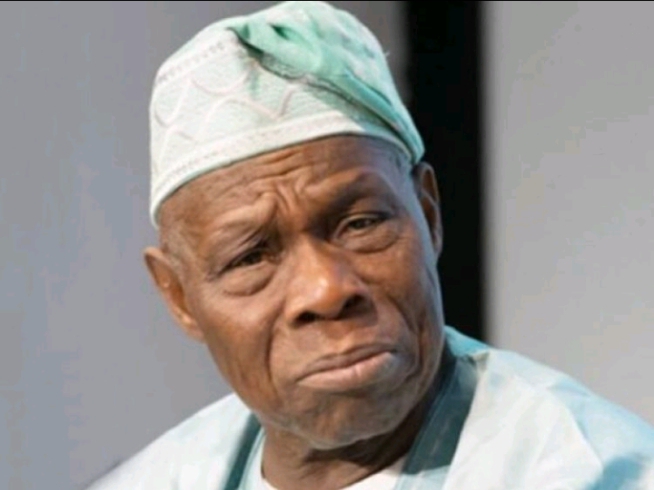
I may not agree with former President Olusegun Obasanjo on how Nigeria was governed during his administration. He had a historic opportunity to set the country on a stronger footing, but the obsession with a third-term agenda distracted him from implementing effective policies that could have produced lasting positive outcomes for Nigerians. Despite having the opportunity to amend critical aspects of the Constitution, those reforms were either insufficient or misdirected. In many ways, he remains part of the reason Nigeria finds itself in its current predicament.
That said, honesty must be acknowledged wherever it appears.
Former President Obasanjo’s recent statement that Nigerians have the right to seek foreign assistance if their government can no longer protect them is one of the most candid and responsible statements he has made in recent years. Coming from a former military general and a two-time leader of Nigeria, this position reflects not weakness, but experience shaped by age, history, and the harsh realities confronting the nation.
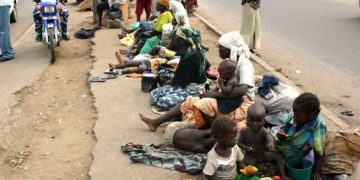
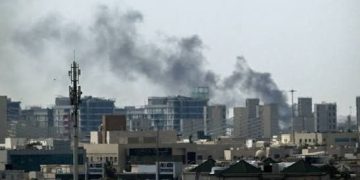
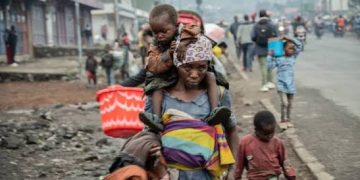
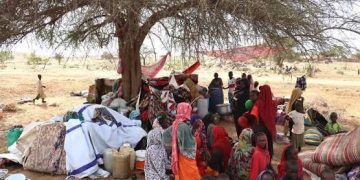
Nigeria is facing a security crisis that has overwhelmed its internal capacity. In parts of the country, the state has lost effective control of territory to terrorists and non-state armed groups. When this occurs, international law is clear: a sovereign government may lawfully seek external assistance if the threat exceeds the capacity of its national military and law enforcement agencies.
Under international law, particularly Article 51 of the United Nations Charter, a state retains the inherent right to individual or collective self-defense if it suffers an armed attack. Where a government remains legitimate and in control of the state apparatus, it may invite other states to assist in suppressing insurgents or terrorist groups operating within its territory. Such assistance is lawful, provided it is requested by the affected state.
Inviting foreign troops is, without doubt, a sensitive issue. It involves the presence of external military forces on a nation’s soil and touches the core of sovereignty. However, sovereignty is not merely about territorial pride; it is fundamentally about the protection of citizens. The host country’s consent preserves that sovereignty.
At what point does a country seek military assistance against terrorism?
The answer is simple, when the scale of the threat overwhelms national capacity.
Having a different opinion does not eliminate the need for respect, empathy, or love for one another. Obasanjo recently argued that if the Nigerian government fails in its constitutional duty to protect lives and property, Nigerians have a moral and legal right to call on the international community for help.
“If our government cannot do it, we have the right to call on the international community to do for us what our government cannot do, and we should have no apology for that,” he said.
These words resonate deeply with millions of Nigerians who live daily under fear. With modern technology, satellites, drones, and advanced intelligence systems, criminals should not have the freedom to kill, abduct, and disappear without consequence.
Obasanjo’s frustration was evident when he asked pointed questions:
Why are we apologising? Why are we negotiating with killers? Why are Nigerians still being slaughtered?
“We are being killed, we are tired, and we want the killing to stop,” he added.
Beyond insecurity, the former president also expressed concern about Nigeria’s diminishing global influence. Recalling his time in office, he noted that during the administration of U.S. President Jimmy Carter, the United States could not take major actions in Africa without consulting Nigeria, a demonstration of Nigeria’s once-commanding role on the continent.
Speaking in Abeokuta, Ogun State, during the Presidential Youth Mentorship Retreat (6.0) organised by the Youth Development Centre of the Olusegun Obasanjo Presidential Library (OOPL), Obasanjo reflected on Nigeria’s lost promise.
“At Independence, the world saw Nigeria as a giant coming up. Soon after independence, we lost that. When Murtala and I came into government, we brought it back. We were young, idealistic, and under 40. Our ambition was not money.”
He urged Nigerian youths to prepare themselves for leadership, warning that the country cannot continue on its current path.
Obasanjo has since declared that Nigeria is in bondage, trapped by insecurity, economic hardship, and sectional leadership. During a courtesy visit by the Southern leadership of the New Nigeria Peoples Party (NNPP) at his Abeokuta residence, he stressed that only a truly national leader, one who transcends ethnic and sectional interests, can rescue the country.
“We are in bondage,” he lamented. “We must pray that God delivers us.”
Prayer, however, must be matched with action. A critical component of defeating terrorism is disrupting its financial lifelines. Monitoring money laundering, cash smuggling, and other channels of criminal financing is essential to weakening terrorist organizations and restoring national security.
Obasanjo’s remarks may be uncomfortable, controversial, and even politically inconvenient, but they are rooted in reality. When a state can no longer protect its citizens, silence becomes complicity. The ultimate duty of any government is the preservation of life. Anything short of that is a failure of leadership.
Nigeria cannot afford denial. The time for excuses has passed. The killings must stop.
Daniel Nduka Okonkwo is a seasoned writer, human rights advocate, and public affairs analyst, widely recognized for his incisive commentary on governance, justice, and social equity. Through his platform, Profiles International Human Rights Advocate, he has consistently illuminated critical social and political issues in Nigeria and beyond, championing accountability, transparency, and reform. With a portfolio of more than 1,000 published articles available on Google, Okonkwo’s works have appeared in prominent outlets such as Sahara Reporters and other leading media platforms. Beyond journalism, he is an accomplished transcriptionist and experienced petition writer, known for his precision and persuasive communication. He also works as a ghostwriter and freelance journalist, contributing his expertise to diverse projects that promote truth, integrity, and the protection of human rights.