


























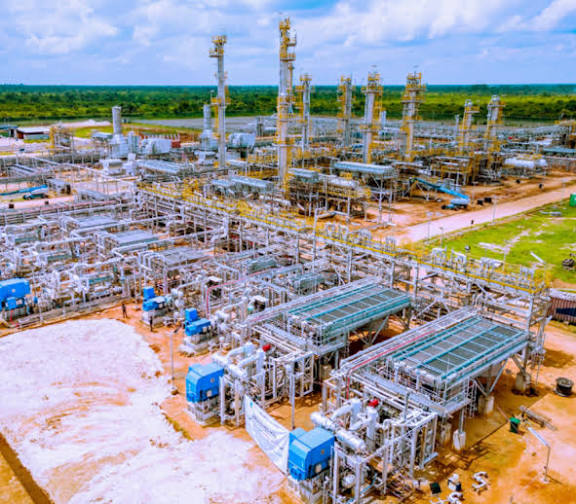
The federal government says Nigeria aims to reach 10 billion standard cubic feet per day of gas production by 2030, positioning natural gas as a cornerstone of national energy security and economic prosperity.
Ekperikpe Ekpo, the deputy petroleum minister, said this while delivering a ministerial address at the ninth Nigeria International Energy Summit 2026, on Tuesday in Abuja.
The minister said government efforts were yielding tangible results, with Nigeria’s gas production maintaining an upward trajectory in 2025, averaging between 7.5 and 7.6BSCFD.
Mr Ekpo disclosed that domestic gas supply exceeded two BSCFD for the first time, marking a historic milestone for power generation, industrial use and household consumption. He also said significant progress in environmental performance, with gas flaring reduced to some of the lowest levels recorded in recent years, in line with Nigeria’s commitment to end routine gas flaring by 2030.
Investor confidence in the gas sector had been strengthened, the minister said, citing Final Investment Decisions in key upstream gas projects supported by improved regulatory clarity under the Petroleum Industry Act.
“Across the midstream and downstream segments, pipeline infrastructure, processing facilities and gas-to-power projects have expanded, improving connectivity, boosting domestic utilisation and supporting cleaner cooking solutions, job creation and industrial stability.
“Under President Bola Tinubu’s Renewed Hope Agenda, government policy prioritises the expansion of domestic gas infrastructure while strengthening Nigeria’s presence in regional and global gas markets.
“This includes facilitating investments in gas processing, storage and distribution, as well as accelerating gas-to-power projects aimed at addressing energy poverty and enhancing industrial competitiveness,” Mr Ekpo said.
The minister noted that Nigeria’s energy future was inseparable from peace, partnership and shared responsibility, calling on governments, investors, development partners, host communities and civil society to move from dialogue to decisive action.
“Our collective task is to build an energy system that powers prosperity, strengthens stability and supports regional integration,” he said.
According to Mr Ekpo, Nigeria’s energy strategy is aligned with global energy transition realities while responding to Africa’s unique development challenges, including widespread energy poverty, limited industrial capacity, and inadequate access to reliable power.
“While the world moves towards lower-carbon systems, Africa must pursue a transition that is not only green, but also just, inclusive and development-driven.
“Nigeria is leveraging its abundant natural gas resources to balance climate responsibility with economic development, positioning gas as the backbone of industrial growth, job creation and expanded energy access,” Mr Ekpo said. NAN