








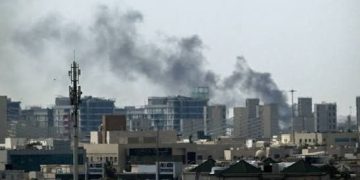









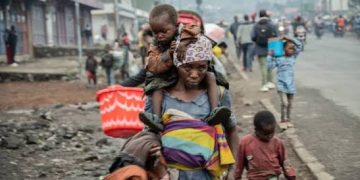

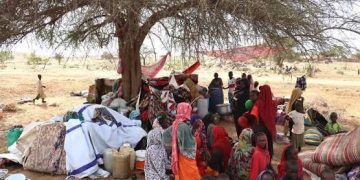


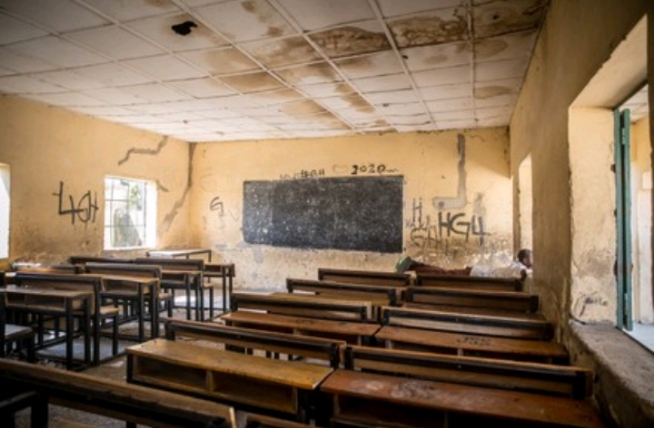
It is no news that parts of Nigeria, particularly in the North, have experienced sustained attacks on formal education driven by extremist ideology. Groups such as Boko Haram, whose name loosely translates as “Western education is forbidden,” have created environments where schooling is deliberately targeted or rejected. This is not a nationwide state policy, but a conflict-driven reality and it is deeply damaging to Nigeria’s future.
Globally, there are countries where religious restrictions, policies, or cultural norms limit, alter, or reject secular education, particularly for girls or in favor of religious instruction. Nigeria must resist the replication of such outdated systems by non-state actors who do not have the country’s best interests at heart.
For more than a decade, Nigeria has made a clear budgetary choice: security first, education later. Year after year, successive administrations have poured trillions of naira into defence, policing, and intelligence operations, often allocating more to security than to education and, at times, even exceeding combined spending on education and health.
The results of this strategy raise uncomfortable questions.
Between 2021 and 2025 alone, over ₦17 trillion was earmarked for security-related expenditures at the federal level. At the subnational level, state governments dramatically expanded their own security spending, with allocations rising by more than 40 percent between 2023 and 2025, reaching approximately ₦525.23 billion, according to BudgIT-backed analyses.
Yet despite this sustained surge in spending, Nigeria remains one of the countries most affected by terrorism, violent crime, banditry, and kidnappings. Insecurity persists across large swathes of the country, from the North-East and North-West to parts of the Middle Belt and the South.
The pattern is not new. From 2016 to 2022, Nigeria spent an estimated US$19.9 billion on security. This period coincided with escalating insurgency, mass displacement, widespread rural banditry, and rising urban crime. In real terms, the security situation did not significantly improve.
The imbalance became especially stark in the 2022 federal budget, where ₦2.41 trillion was allocated to security and defence—almost double the ₦1.29 trillion allocated to education. This trend has continued in various forms, reinforcing a governance model that treats security primarily as a military and enforcement challenge rather than a social and developmental one.
Security spending has now grown by more than 40 percent in the past three years, yet Nigeria continues to rank among the countries most affected by terrorism and violent crime globally. The widening gap between expenditure and outcomes has intensified concerns about efficiency, accountability, and strategic focus.
What Nigeria has lost in this trade-off is not abstract, it is measurable, generational, and deeply structural.
Education remains the single most effective long-term investment for national stability. It breaks cycles of poverty, reduces inequality, improves public health outcomes, promotes gender equality, and drives economic growth. A more educated population consistently correlates with higher GDP per capita, increased productivity, and stronger institutions.
Education equips young people with skills, reshapes attitudes, builds confidence and resilience, and nurtures critical thinking and innovation. These qualities are essential for navigating a globalized world and for resisting recruitment into criminal networks, extremist groups, and violent movements.
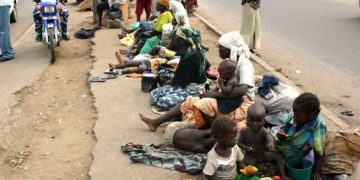
Nigeria’s youthful population should be its greatest asset. Instead, chronic underinvestment in education has left millions of young people without quality schooling, employable skills, or viable economic opportunities, conditions that directly feed insecurity.
Countries that prioritize education as a pillar of national strength often enjoy greater stability and higher human development outcomes. Nations such as Finland, Norway, Denmark, South Korea, Canada, and Singapore have consistently invested in education alongside social welfare and inclusive growth, rather than relying predominantly on militarized security responses.
Their approach recognizes a fundamental truth: long-term security is built in classrooms, not only in barracks.
These countries focus on creating stable environments where education produces informed citizens, innovative economies, and resilient societies. Security institutions exist, but they are reinforced by strong social foundations that reduce the conditions that breed violence.
Nigeria’s situation is precarious, but it is not irreversible. A meaningful rebalancing of national priorities, one that treats education as a security strategy rather than a competing expense, could fundamentally change the country’s trajectory.
Modern tools, particularly social media, already play a growing educational role. Platforms such as YouTube, LinkedIn, and specialized online communities provide access to global knowledge, foster collaboration, encourage critical debate, and build digital literacy. They transform learning from passive consumption into interactive engagement, especially for young people who lack access to formal institutions.
These benefits are significant, but they cannot substitute for deliberate public investment in education policy, infrastructure, teacher development, curriculum reform, and inclusive access.
What did a decade of spending buy? After more than ten years of prioritizing security over education, Nigeria is left with an unsettling reality: higher budgets, persistent violence, overstretched security forces, and a generation of young people insufficiently prepared to drive economic growth or sustain peace.
Security matters. No serious nation can ignore it. But when security spending consistently outpaces investment in human capital, the result is often a cycle of repression without resolution.
Nigeria’s experience offers a hard lesson: guns alone do not create safety. Education does.
Until national budgeting reflects that truth, Nigeria may continue to spend more on security than education, while buying neither peace nor progress.
Daniel Nduka Okonkwo is a Nigerian investigative journalist, publisher of Profiles International Human Rights Advocate, and policy analyst whose work exposes corruption, institutional failures, and the quiet forces shaping governance and global influence. With over a thousand published pieces featured on Sahara Reporters, African Defence Forum, Daily Intel Newspapers, Opinion Nigeria, African Angle, and other international media, he blends meticulous research with compelling storytelling to drive accountability and reform. A human rights advocate, ghostwriter, and strategic communicator, Daniel transforms complex issues into clear, actionable insights that resonate locally and globally.
📧 Contact: dan.okonkwo.73@gmail.com.