








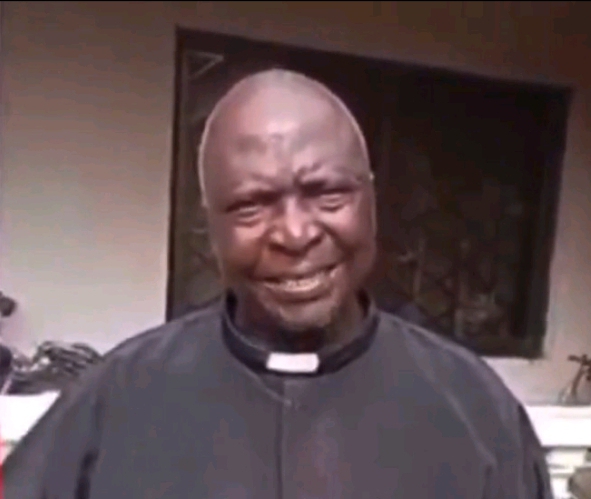
Reverend Ezekiel Dachomo’s courage stands as a reminder that one voice, grounded in truth, can shake the world. The question remains why did it take a lone voice in the wilderness when so many stood on towering pulpits and in influential newsrooms?
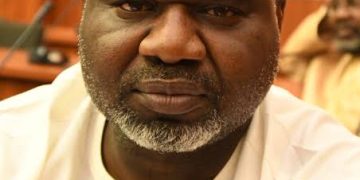
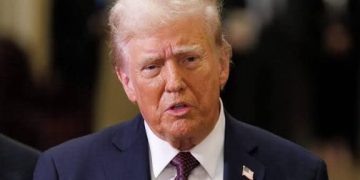
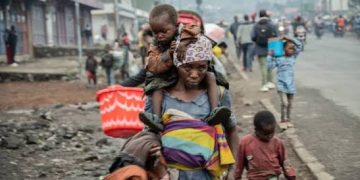
At a time when many voices of influence remained silent, Reverend Ezekiel Dachomo, a regional chairman of the Church of Christ in Nations (COCIN) in Plateau State, took it upon himself to alert the international community to the mass killings occurring in parts of Nigeria. Standing before freshly dug graves at a mass burial site of attack victims, Reverend Dachomo released a video appeal that reverberated beyond Nigeria’s borders. In it, he called directly on the United States government and then-President Donald Trump to intervene in what he described as an “ongoing Christian genocide” in Nigeria.
That act of courage came at a cost. Reverend Dachomo reportedly received death threats for speaking out.
Yet, his lone voice succeeded where institutions failed: it drew global attention to atrocities many Nigerians had grown numb to, and many leaders preferred not to confront.
Nigeria is home to some of the largest church auditoriums in the world, monuments not only of faith, but of influence, wealth, and political reach. Among them are:
Hand of God Cathedral (Salvation Ministries, Port Harcourt): approximately 120,000-seat capacity under construction
The Ark (Living Faith Church, Ogun State): over 109,000 seats (under construction)
Glory Dome (Dunamis International Gospel Centre, Abuja): 100,000 seats
Champions Royal Assembly (Abuja): approximately 80,000 seats
International Gospel Centre (Warri): about 35,000 seats
Deeper Life Bible Church Auditorium (Lagos): around 30,000 seats
The Apostolic Church, Ikono Field Headquarters: approximately 30,000 seats
These churches command congregations that rival small cities. Their founders enjoy direct access to political power and shape national discourse. Yet, when members of their faith communities were being killed, displaced, or buried in mass graves, most of these voices chose silence.
When shepherds refuse to cry out while their flock is slaughtered, courage gives way to calculation. What should have been prophetic voices became cautious whispers if they spoke at all. This silence, particularly striking because many of these same voices were far louder during previous administrations, raises uncomfortable questions about fear, favoritism, and political convenience.
Faith leadership loses its moral authority the moment self-preservation replaces truth.
A free, independent, and active press is society’s watchdog. It exists to expose abuse, demand accountability, and give voice to the voiceless. When the media fails in this duty, oppression thrives.
In Nigeria, prolonged media silence or selective reporting on mass killings and human rights abuses has had devastating consequences. When atrocities are underreported or reframed to avoid controversy, citizens remain uninformed. Without information, there can be no public outrage; without outrage, there can be no pressure for reform or international intervention. Silence does not preserve peace it preserves impunity.
The Federal Government of Nigeria (FG), through the Ministry of Information and National Orientation under Mohammed Idris, has consistently rejected the “genocide” narrative, describing it as false, politically motivated propaganda and a reputational threat allegedly driven by foreign interests.
The government maintains that Nigeria’s violence is a complex national security crisis affecting all citizens, not a targeted religious extermination. While this position deserves to be reported, journalism demands that official denials do not replace independent investigation.
Numerous local and international organizations have accused the government of engaging in narrative control, denial campaigns, and strategic media messaging designed to downplay the scale and nature of the killings. When media institutions echo official talking points without scrutiny, journalism degenerates into public relations.
Credible journalism is grounded in truth, accuracy, fairness, and accountability. It relies on verifiable sources, rigorous fact-checking, independence from power, and a commitment to public interest principles enshrined in global ethical frameworks such as the SPJ Code of Ethics.
Bad journalism, by contrast, distorts reality. It thrives on selective facts, loaded language, suppression of inconvenient truths, and the injection of political or personal agendas into what should be objective reporting. In its worst form, it spreads misinformation whether through negligence or deliberate deception.
When government influence through ownership, advertising pressure, licensing, or intimidation dictates coverage, the press ceases to be free. Excessive control turns news into a commodity and reporters into couriers of state-approved narratives. This erosion of press freedom is more commonly associated with authoritarian regimes, but it can take subtler forms within democracies.
The tragedy of Nigeria’s crisis is not only the violence itself, but the fear that keeps powerful institutions quiet. Too many leaders, religious and media alike, have chosen comfort over conscience, access over accountability, life over legacy.
As the saying goes, “Cowards die many times before their deaths; the valiant taste death but once.” History remembers those who spoke when it was dangerous, not those who hid when it mattered.
The world is not fair. Too often, fools, cowards, liars, and the selfish occupy high places. But silence in the face of injustice is not neutrality it is complicity.
And more importantly, how long will Nigeria continue to pay the price for fear disguised as wisdom?
Daniel Nduka Okonkwo is a seasoned writer, human rights advocate, and public affairs analyst, widely recognized for his incisive commentary on governance, justice, and social equity. Through his platform, Profiles International Human Rights Advocate, he has consistently illuminated critical social and political issues in Nigeria and beyond, championing accountability, transparency, and reform. With a portfolio of more than 1,000 published articles available on Google, Okonkwo’s works have appeared in prominent outlets such as Sahara Reporters and other leading media platforms. Beyond journalism, he is an accomplished transcriptionist and experienced petition writer, known for his precision and persuasive communication. He also works as a ghostwriter and freelance journalist, contributing his expertise to diverse projects that promote truth, integrity, and the protection of human rights.