













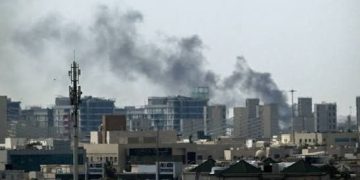



















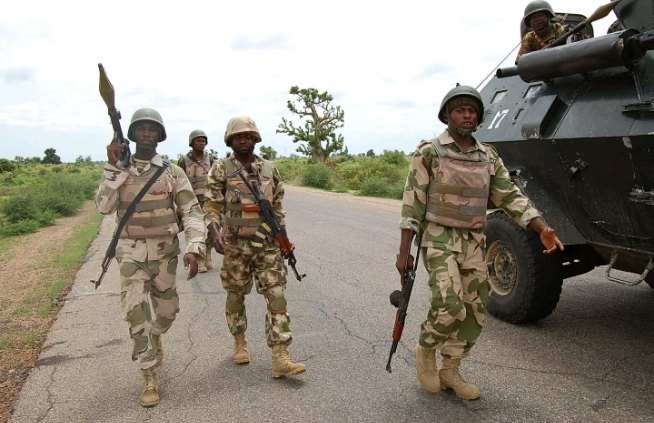
Nigeria has spent trillions of naira on security over the past decade. Defence budgets have expanded, troop deployments have increased, and successive administrations have announced renewed commitments to ending insurgency, banditry, and violent crime. Yet insecurity persists often spreading into new regions even as old threats evolve.
This persistence raises an uncomfortable question: if spending and force have increased, why has security not followed? The answer lies not in the absence of effort or firepower, but in the deeper problem of state capacity and the political economy that shapes how security is organised, funded, and governed.
Nigeria’s security crisis is not primarily a failure of spending. It is a failure of systems.
Public debate in Nigeria often treats insecurity as a budgetary problem. When violence escalates, the default response is to demand more funding, more equipment, or more deployments. This framing has produced an almost permanent state of emergency budgeting, where security allocations grow with limited scrutiny of outcomes.
However, international experience shows that security spending alone does not guarantee security. Countries with far smaller budgets have achieved greater stability because their institutions, intelligence coordination, justice systems, civil oversight, and political legitimacy function more coherently.
In Nigeria, increased spending has frequently operated in isolation from institutional reform. As a result, resources flow into a system that struggles to convert inputs into sustainable outcomes.
At the core of Nigeria’s security challenge is weak state capacity. This does not mean the absence of capable individuals or agencies, but the inability of institutions to act in a coordinated, predictable, and accountable manner.
Security in modern states depends on more than military force. It requires effective intelligence gathering, information sharing across agencies, cooperation between federal and subnational authorities, and credible judicial processes that deter violence. When these elements fail to align, force becomes reactive rather than preventive.
Nigeria’s security architecture remains fragmented. Multiple agencies operate with overlapping mandates, limited data integration, and uneven accountability. Intelligence often exists but does not travel efficiently. Operations may succeed tactically but fail strategically because they are not embedded in a broader governance framework.
One of the single most underleveraged advantages in Nigeria’s security architecture is the Nigerian Police Force. Experts and national security organizations agree that a strengthened, well-coordinated police system is central to effective national security.
Effective counterterrorism and community policing require the police to foster trust with local populations, who often serve as the first line of intelligence. Strong partnerships between police and communities generate crucial grassroots intelligence, help prevent radicalization, and improve public compliance with law enforcement.
Moreover, the integration of the police into broader security formations, including the military, intelligence agencies, and international partners can ensure a more proactive and preventative approach. Clear definitions of roles, improved inter-agency communication, and professional autonomy are critical to turning policing into a strategic, rather than reactive, instrument.
Insecurity also persists because it exists within a political and economic context that quietly absorbs it. Prolonged insecurity generates emergency contracts, special interventions, and opaque procurement processes. Over time, crises become normalized.
This does not require a grand conspiracy. Rather, it reflects how systems adapt to dysfunction. When insecurity becomes permanent, incentives shift away from resolution and toward management. Short-term containment replaces long-term reform, and spending becomes a substitute for accountability.
In such environments, success is measured by activity, operations conducted, funds released, and equipment acquired, rather than by reductions in violence or improvements in public trust.
Security operations depend heavily on civilian cooperation. Intelligence is local before it is technical. Communities that trust the state are more likely to share information, resist violent actors, and support enforcement efforts.
In many parts of Nigeria, however, trust between civilians and security institutions remains fragile. Years of inconsistent presence, weak justice outcomes, and governance failures have created distance between the state and local populations. Where legitimacy is thin, security forces operate with limited social backing, reducing the effectiveness of even well-funded operations.
Military spending cannot compensate for the absence of trust. Without parallel investment in policing, justice, accountability, and local governance, increased force can deepen alienation rather than foster cooperation.
Technology has not been a silver bullet recent years have seen growing emphasis on technology, surveillance systems, drones, biometric tools, and digital intelligence platforms. While these tools can enhance capability, they do not resolve underlying institutional weaknesses.
Technology requires governance to function effectively. Without clear oversight, data protection, inter-agency protocols, and accountability, technical upgrades risk becoming expensive additions to a fragile system. In Nigeria’s case, technology has often been layered onto existing structures without sufficient reform of decision-making and enforcement processes.
Nigeria’s insecurity does not exist in isolation. As Africa’s most populous country and a regional economic anchor, instability within its borders has consequences far beyond them. Arms flows, displacement, trade disruption, and maritime insecurity affect neighbouring states and regional supply chains.
For international partners, Nigeria represents a critical case study in how large states struggle when institutional capacity fails to keep pace with power. The persistence of insecurity despite spending underlines the limits of militarised responses in the absence of governance reform.
If Nigeria’s security crisis is not simply a funding problem, then the solution cannot be framed solely in budgetary terms. Real security investment must extend beyond hardware and deployments to include:
Stronger intelligence coordination between federal, state, and local agencies
Integration and strengthening of the Nigerian Police Force within the broader security formation
Credible civilian oversight of military and police operations
Judicial systems that function consistently and transparently
Clear accountability for outcomes, not just activity
Political commitment to institutional autonomy and sustainable reform
These are not quick fixes. They are political choices that determine whether spending translates into stability or simply sustains a cycle of crisis management.
Nigeria’s persistent insecurity, despite rising military expenditure, reveals a deeper truth: security is ultimately a test of governance, not firepower. Where institutions are weak, spending fills gaps temporarily but cannot resolve them permanently.
Until Nigeria confronts the structural and political constraints shaping its security architecture, increased budgets will continue to deliver diminishing returns. For both Nigeria and the international partners observing closely, the question is no longer how much is spent, but whether the state can reform the systems through which security is produced.
Daniel Nduka Okonkwo is a Nigerian investigative journalist, policy analyst, and publisher of Profiles International Human Rights Advocate. His work exposes corruption, institutional failures, and the quiet forces shaping governance and global influence. With over a thousand published pieces featured on Sahara Reporters, African Defence Forum, Daily Intel Newspapers, Opinion Nigeria, African Angle, and other leading international media, he blends meticulous research with compelling storytelling to drive accountability and reform. A human rights advocate, ghostwriter, and strategic communicator, Daniel transforms complex issues into clear, actionable insights that resonate locally and globally.
📧 Contact: dan.okonkwo.73@gmail.com