




























By Daniel Nduka Okonkwo
Nigeria stands in the grip of wealth and want. Vast revenues flow into government accounts, yet ordinary citizens grapple with soaring fuel costs that erode their daily survival. Official reports highlight record remittances and fiscal achievements, while headlines celebrate reforms and transparency. But behind these statistics lies a troubling contradiction: a nation endowed with oil riches where queues for petrol stretches, and households struggle against scarcity. What is presented as prosperity often feels like a mirage, numbers that shine on paper but fail to ease the hunger, hardship, and broken promises felt on the streets
Nigeria’s state oil company, the Nigerian National Petroleum Company Limited (NNPC), remitted approximately ₦2.89 trillion (about $2.1 billion) to the Federation Account in the first quarter of 2026, reflecting a sharp increase in revenue flows following recent policy reforms.
The surge was largely driven by stricter remittance rules and a significant jump in February payments, while operational performance also improved. In March, profit after tax rose to ₦276 billion, up from ₦136 billion in February, alongside total revenue of ₦2.77 trillion for the month
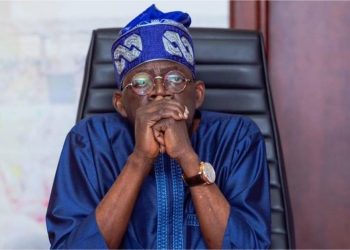
These gains have been attributed to improved gas output, tighter fiscal controls, and new policy directives that limit internal deductions. A key driver of the increased remittances was a February 2026 executive order by President Bola Ahmed Tinubu, which halted the longstanding practice that allowed NNPC to retain 30 percent of its earnings for the Frontier Exploration Fund and certain upstream investment fees. The directive effectively compelled the company to remit a larger share of its revenue directly into the Federation Account Allocation Committee (FAAC) pool, boosting government liquidity at a time of mounting fiscal pressure.
In theory, the enhanced cash inflows provide federal, state, and local governments with greater capacity to fund budgets, meet salary obligations, and invest in infrastructure. At a macroeconomic level, the figures suggest stronger revenue extraction from Nigeria’s oil and gas sector and improved transparency in remittance practices.
However, beneath these headline gains lies a more complex reality. Crude oil production continues to fall short of national targets, constrained by persistent structural challenges. Output declined from approximately 1.64 million barrels per day in January to about 1.54 million barrels per day in February, largely due to pipeline integrity issues, including disruptions along the Trans Forcados Pipeline, as well as maintenance-related outages
While natural gas production recorded a modest increase of 5.3 percent month-on-month, rising to 7,283 million standard cubic feet per day, this has not been sufficient to offset the broader limitations in crude output. Industry analysts warn that unless these operational bottlenecks are addressed, the current revenue gains may prove difficult to sustain over the long term.
More striking is the growing disconnect between rising national earnings and the lived realities of ordinary Nigerians. Despite the reported financial windfall, petrol prices have continued to climb sharply, reaching between ₦1,350 and nearly ₦1,500 per litre in many parts of the country. In some retail outlets, prices are reported to be even higher, intensifying the cost-of-living crisis.
Supply constraints further compound the problem. Petrol availability at filling stations remains limited, with distribution levels hovering around 56 percent. This has led to persistent scarcity in certain areas, long queues, and increased transportation costs, all of which ripple through the broader economy.
For households and small businesses, the impact is immediate and severe. Rising fuel costs translate directly into higher prices for goods and services, eroding purchasing power and deepening economic hardship. For many citizens, the surge in government revenue remains an abstract concept, offering little tangible relief in daily life.
The situation underscores a fundamental challenge in Nigeria’s economic management. While policy reforms have succeeded in increasing state revenues and improving fiscal discipline, the benefits have yet to translate into meaningful improvements in living standards. Instead, the burden of adjustment appears to have shifted onto consumers, who face higher energy costs without corresponding social or economic support.
The current trajectory raises critical questions about the sustainability and inclusiveness of Nigeria’s reform agenda. If production continues to lag due to infrastructure failures, oil theft, and operational inefficiencies, the recent gains in revenue may prove temporary. At the same time, without targeted measures to cushion the impact of rising fuel prices, public frustration is likely to grow.
Ultimately, the paradox remains stark: Nigeria is earning more from its oil and gas sector, yet its citizens are feeling poorer. Bridging this gap between national income and individual welfare may determine not only the success of ongoing reforms but also public confidence in the government’s economic direction.
Daniel Nduka Okonkwo is a Nigerian investigative journalist, publisher of Profiles International Human Rights Advocate, and a policy analyst whose work focuses on governance, institutional accountability, and political power. He is also a human rights activist and advocate, with a strong commitment to justice and transparency.
His reporting and analysis have been featured in Sahara Reporters, African Defence Forum, Daily Intel Newspapers, Opinion Nigeria, African Angle, NewsBreak (local.newsbreak.com), Vanguard Newspaper, Daily Trust Newspapers, and other international media platforms.
He writes from Nigeria and can be reached at dan.okonkwo.73@gmail.com.