



















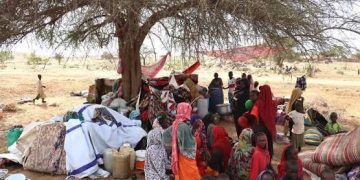


Christmas is meant to be a season of joy, generosity, goodwill, and family togetherness. Across Nigeria, it is traditionally the one period when distance, hardship, and time are set aside as people return home to reconnect with loved ones. Yet beneath the carols and celebrations lies a recurring national ordeal that has grown more brutal each year transportation during the Christmas season.
For millions of Nigerians particularly those travelling to the South East Christmas travel has become a test of endurance, sacrifice, and survival. Expectations of reunion now collide with economic reality, insecurity, and what can only be described as outright exploitation by transport operators.
To put the crisis in perspective, a bag of rice today costs less than ₦60,000 an amount now lower than what some Nigerians pay just to travel one way for Christmas. Road transporters heading to the South East routinely increase fares by over 150 percent during the festive season, with little explanation beyond “Christmas period.” There is no mercy, no restraint, and no consideration for the battered state of the economy.
The aviation sector is far from blameless. A comparison between domestic and regional international flights exposes a troubling contradiction. Flights from Abuja to Accra an international journey covering roughly 902–933 kilometres often range between ₦300,000 and ₦500,000. Yet within Nigeria, passengers can pay up to ₦600,000 to fly from Abuja to Maiduguri.
Domestic airfares on some routes have surged by more than 150 percent during the Yuletide season, with ticket prices crossing ₦400,000 and above, largely due to overwhelming passenger demand. While airlines cite operational costs, taxes, and limited aircraft availability, the burden is placed squarely on travellers who have little choice but to pay or stay back.
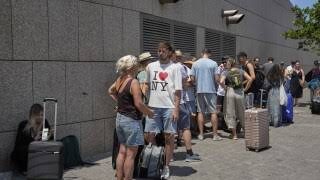
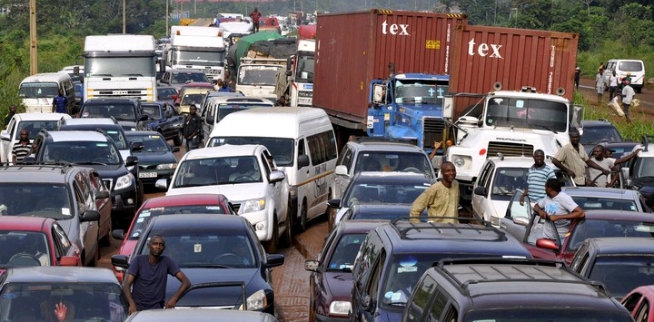
Those who can afford to fly may never fully grasp what road travellers endure: endless queues, overcrowded vehicles, gridlocked highways, bad roads, reckless driving, and the constant fear of kidnappings. For many Nigerians, flying is not a luxury they can simply afford.
Christmas travel in Nigeria follows a predictable pattern. Massive demand especially on Lagos–South East and North–South East routes—triggers sharp fare increases across buses and flights. Operators raise prices by 100 to 150 percent at best, and far more at peak periods, exploiting the festive rush and the emotional pressure of the season. Nigerians travel not only for celebration, but for burials, traditional marriages, urgent family matters, and to see ageing parents they may only meet once a year.
This crisis is unfolding against a backdrop of deepening insecurity. Social media is awash with disturbing footage of kidnapped Nigerians being forced to beg for ransoms—₦20 million, ₦50 million, even ₦100 million. The tragedy is that many of these victims were simply trying to travel home for Christmas or attend unavoidable family events.
In December 2025, the Dangote Refinery announced a major cut in its ex-depot petrol (PMS) price, slashing it to ₦699 per litre from about ₦828. Described as a “shock” to the market, this marked the refinery’s 20th price adjustment in 2025 and was presented as a deliberate effort to ease festive hardship and stabilise fuel costs. With local production exceeding national demand, the refinery aims to reduce dependence on imports and encourage competitive pricing.
Yet for the ordinary Nigerian traveller, the relief feels distant. Transport fares have remained largely unaffected swallowed up by greed, inefficiency, and weak regulation.
Government interventions have existed, but their impact remains limited. President Bola Tinubu previously approved free train rides and 50 percent bus fare subsidies through ALBON during the 2023–2024 festive season. The House of Representatives has also urged the Federal Government to cut aviation taxes by 50 percent to reduce airfares. While commendable, these measures have been temporary, insufficient, or poorly felt by those who need them most.
Some airlines, such as Aero Contractors, offered modest relief in 2024, but these efforts were insignificant compared to the scale of the problem.
Despite everything the inflated fares, kidnappings, bad roads, overcrowding, and fear Nigerians continue to travel. The popular refrain, “no matter what, we move,” has become both a badge of resilience and a sad indictment of national failure. People endure because they must travel and because family matters. Their absence carries its own emotional cost.
As Nigerian Christians prepare to celebrate Christmas amid widespread hardship, many families are forced to choose between presence and poverty, safety and sacrifice. Parents wait endlessly for children who cannot afford the journey. Some people can’t postpone visits to their ageing parents and the only choice is to take the dangerous risks simply to show up.
The questions that linger are uncomfortable but necessary: Who is speaking for the less privileged Nigerian traveller? Who is regulating the excesses of transport operators? Who is ensuring that the joy of Christmas does not come at the price of fear, debt, or loss?
Until these questions are answered with decisive action, Christmas travel in Nigeria will remain a season not just of reunion, but of suffering. And for the ordinary Nigerian, the hope that “it will get better” continues to be delayed at the motor park, stuck in traffic, and priced out of the sky.
This season is meant for joy. Yet transporters have turned that joy into pain.
Daniel Nduka Okonkwo is a seasoned writer, human rights advocate, and public affairs analyst, widely recognized for his incisive commentary on governance, justice, and social equity. Through his platform, Profiles International Human Rights Advocate, he has consistently illuminated critical social and political issues in Nigeria and beyond, championing accountability, transparency, and reform. With a portfolio of more than 1,000 published articles available on Google, Okonkwo’s works have appeared in prominent outlets such as Sahara Reporters and other leading media platforms. Beyond journalism, he is an accomplished transcriptionist and experienced petition writer, known for his precision and persuasive communication. He also works as a ghostwriter and freelance journalist, contributing his expertise to diverse projects that promote truth, integrity, and the protection of human rights.