
















By Ifeanyi Ejiofor
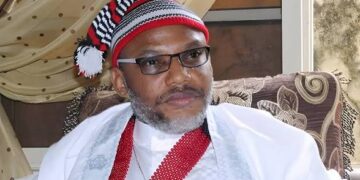
In the turbulent legal theatre of 2016–2017, when the fundamental rights of Nnamdi Kanu were under sustained assault following his arrest under the administration of Muhammadu Buhari, we pursued a multidimensional legal strategy. It was not enough to contest injustice locally; we elevated the matter to the international stage, before the ECOWAS Court of Justice in Abuja.
I had the solemn responsibility of leading that charge from commencement to conclusion. The proceedings before the Court were rigorous, exposing uncomfortable truths and placing the Nigerian Government under intense international scrutiny. It is not an overstatement to assert that the pressure generated therein contributed significantly to the eventual grant of bail to Kanu in April 2017 by the Federal High Court, Abuja, even as the ECOWAS proceedings remained active.
Predictably, there were subtle, yet unmistakable, attempts to bend the course of justice. Pressure, diplomatic and otherwise, was brought to bear on the Court. However, the ECOWAS Court, to its credit, proved less pliable than anticipated. Justice, at least on that occasion, refused to be auctioned.
Curiously, and perhaps conveniently, the sitting was relocated to the ECOWAS Annex in Bamako Mali, Bamako. One might call it administrative logistics; others may prefer a more imaginative interpretation.
Upon arrival in Bamako, I briefly lost contact with my designated local handlers, a situation that could unsettle even the most seasoned traveller. Yet, what followed was a testament to the enduring humanity of the Malian people. Strangers became guides; assistance came unbidden. It was my first intimate encounter with a nation under siege, yet unbroken in spirit.
During the drive from the airport, reality announced itself with chilling clarity. I was shown areas under active threat from insurgent groups linked to Al-Qaeda in the Islamic Maghreb and later the emergent coalition known as Jama’at Nusrat al-Islam wal-Muslimin. Gunfire echoed in the distance, no cinematic exaggeration, but a stark reminder of a nation fighting for its soul.
And yet, amid this turmoil, there was order. Soldiers remained resolute. Civilians, remarkably, did not retreat into fear, they organised, volunteered, and resisted. It was a unified front: no whispers of sabotage, no theatre of divided loyalties, just a collective determination to defend the homeland.
The proceedings in ECOWAS court Bamako, however, were plagued by delays, most notably the failure to constitute a full judicial panel. One is left to ponder whether this was mere coincidence or design. I addressed these frustrations in a world press conference held in Bamako Mali, that resonated across major international media platforms. The fuller account, as earlier hinted, lies within the pages of my forthcoming work: “Sacrifices for Defending Motherland – Betrayals and Consequences.”
Mali, despite its harsh climate, impressed me as a nation striving, earnestly, for transparency, order, and the welfare of its people. Which is why recent developments are not only troubling but profoundly instructive.
The tragic death of Mali’s Defence Minister, Souleymane Doucouré amidst escalating coordinated attacks by extremist factions, signals a dangerous phase in the region’s security crisis. Groups such as JNIM and affiliates of Islamic State in the Greater Sahara have demonstrated increasing sophistication and coordination.
Now, here lies the uncomfortable question, one that polite diplomacy often tiptoes around: are these groups merely organic insurgencies, or are they, in part, beneficiaries of external indulgence?
History is not silent on this matter. From Libyan Civil War to the destabilisation of the Sahel region, there exists a pattern, interventions that begin with lofty ideals and end in prolonged instability. Weapons flow more freely than humanitarian solutions. Chaos, it seems, travels well.
To suggest that certain Western interests have, at times, turned a blind eye, or worse, played indirect roles, in fuelling such conflicts is not conspiracy; it is a debate grounded in documented geopolitical realities. One need not shout to be heard, facts, when patiently assembled, speak loudly enough.
This is not merely Mali’s battle. It is West Africa’s frontline. And Nigeria, already grappling with insurgency, would be dangerously naïve to assume immunity.
The response, therefore, must be decisive. The Economic Community of West African States cannot afford hesitation. Regional cooperation must transcend rhetoric. Intelligence sharing, military coordination, and political will must align with urgency.
If Mali falls, it will not fall alone. The embers of instability do not respect borders, they travel, they spread, and they consume. What begins in the Sahel may well engulf the Gulf of Guinea.
African leadership must rise above complacency and confront this threat with clarity and courage. The time for cautious diplomacy has passed; what is required now is strategic unity and unflinching resolve.
To ignore the warning signs is to invite a future we may not be able to control.
SaveMali
DefendWestAfrica
ECOWASActionNow
TerrorismInSahel
AfricanSecurity
GeopoliticsExposed
StandWithMali
RegionalStability
BarEjioforWrites
Signed
Sir Ifeanyi Ejiofor, Esq., KSC
Dunu-Eseugosinachi
April 27, 2026