













America is not a staging ground for ideological or religious projects of any kind. It is a constitutional republic sustained by shared civic loyalty. When that line appears blurred, it validates the fears of those already hostile to immigration.
When a high-profile former refugee, particularly one embroiled in controversial allegations, such as claims of marrying her brother, appears, whether rightly or wrongly, to challenge the legitimacy of the host nation’s institutions, constitutional norms, or foreign policy from a position of authority, it inevitably amplifies the rhetoric of anti-immigration movements. These movements often operate on broad generalizations rather than individual distinctions, portraying isolated cases as representative of an entire group. As a result, asylum seekers may be unfairly recast not as humanitarian beneficiaries deserving protection, but as potential political liabilities whose presence is framed as a threat to national cohesion or stability.
This dynamic emphasizes how personal controversies, regardless of their veracity, can be weaponized in public discourse to erode support for refugee and asylum policies. It also highlights the precarious position of vulnerable populations, whose legitimacy and acceptance can be undermined by the actions, or perceived actions, of a few prominent figures.
More damaging still is the widespread belief among her harshest critics that Omar’s politics are driven primarily by identity-based or transnational loyalties rather than a unifying civic vision. Whether accurate or not, the perception that a U.S. lawmaker prioritizes ideological or religious solidarity over national interest is politically radioactive, especially when attached to a former refugee elevated by American generosity.
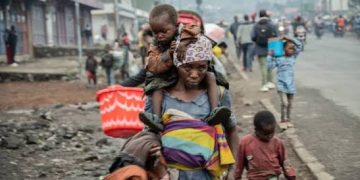
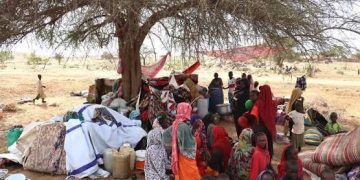
For decades, the United States and much of Europe have served as safe havens for people fleeing war, persecution, and state collapse. A significant share of these refugees have come from Muslim-majority countries such as Syria, Afghanistan, Sudan, Iraq, and Somalia, nations devastated by civil war, terrorism, or prolonged instability. Today, Muslims make up roughly 29 percent of all international migrants, slightly higher than their 25 percent share of the global population, reflecting the concentration of conflicts in Muslim-majority regions.
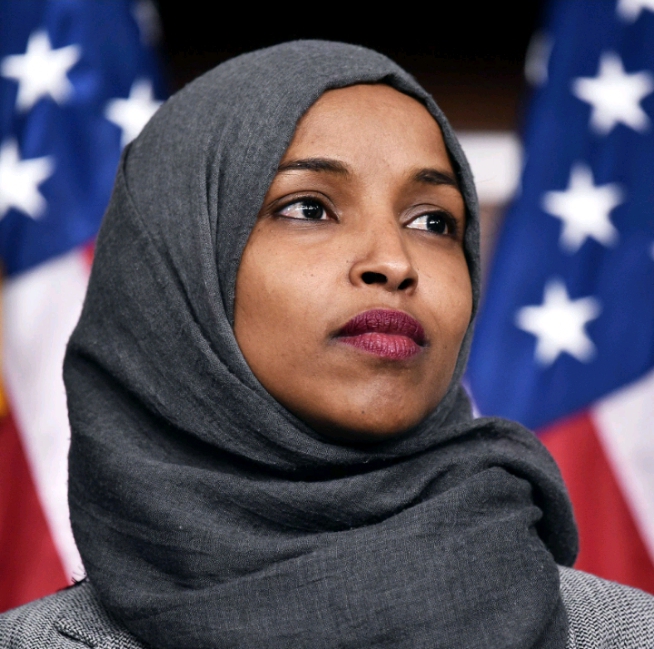
Few stories symbolize Western humanitarian openness more clearly than that of Congresswoman Ilhan Omar.
Born in Mogadishu in 1982, raised partly in Baidoa, and displaced by Somalia’s brutal civil war, Omar spent four formative years in the Dadaab refugee camp in Kenya before receiving asylum in the United States in 1995. Like many refugee families, hers arrived with little. Her father worked first as a taxi driver and later for the U.S. Postal Service. She became a U.S. citizen at 17, pursued higher education, and ultimately rose to one of the most powerful political institutions in the world: the United States Congress.
Her journey is, by any measure, an extraordinary American success story, but many believe that she doesn’t deserve an American life
Yet it is precisely because of this background that Omar’s politics, and the controversies surrounding them, carry consequences far beyond her congressional district in Minnesota.
Western asylum systems are built on law, humanitarian values, and public trust. Refugee resettlement depends not only on statutes and international conventions but also on public confidence that newcomers will respect the constitutional order of their host countries while participating fully in civic life.
In recent years, Ilhan Omar has emerged as one of the most polarizing figures in American politics. As one of the first two Muslim women elected to Congress and the first Somali-American lawmaker, she has broken barriers. But she has also become a focal point for debates about allegiance, integration, and the limits of identity-based advocacy.
Her fierce criticism of U.S. immigration enforcement agencies, repeated calls to abolish ICE, advocacy for sweeping citizenship pathways for undocumented migrants, and confrontational stance toward Israel, along with her support for the Boycott, Divestment, and Sanctions (BDS) movement.
In early 2024, a clip of Omar speaking in Somali went viral, accompanied by a translation suggesting she had pledged loyalty to Somalia over the United States. The translation was later widely debunked by journalists and language experts, who concluded she was expressing concern over Somalia’s territorial integrity in response to an Ethiopia–Somaliland agreement, not declaring foreign allegiance.
Prominent Republicans filed ethics complaints. Calls for censure followed. Old controversies, many previously examined or dismissed, resurfaced. While no criminal charges have been filed and deportation of a naturalized U.S. citizen would require an extraordinarily high legal threshold, politics does not operate solely on legal outcomes.
To millions of Americans already skeptical of immigration, Ilhan Omar became, fairly or unfairly, a symbol of what they perceive as ingratitude toward the country that offered refuge, opportunity, and power.
The real danger is not confined to Ilhan Omar’s political career. It is borne by future refugees.
Across Europe and North America, immigration policies are hardening. Asylum caps are shrinking. Vetting processes are tightening. Politicians increasingly cite “integration failures” and “national security concerns” to justify restrictions.
This is occurring even as wealthy Muslim-majority Gulf states, many of them not signatories to the 1951 UN Refugee Convention, accept relatively few refugees, leaving Western democracies to carry the moral and logistical burden.
For Omar’s critics, the unease goes beyond ideology. It strikes a deeper nerve: responsibility.
Ilhan Omar is not merely another progressive legislator. She is a direct beneficiary of America’s asylum system at a time when that system faces existential political pressure. To many Americans, there is an implicit expectation, fair or not, that those rescued by the system will approach power with restraint, humility, and a clear commitment to national cohesion.
Instead, Omar has frequently adopted a combative posture toward core American institutions and alliances. Her language often suggests not reform, but repudiation. This reinforces the perception that she seeks to delegitimize the very system that made her rise possible.
Unresolved personal and ethical controversies, regardless of legal outcomes, have compounded this perception. Repeated explanations, investigations, and denials may satisfy legal standards, but they do not always restore public confidence. In politics, reputations are shaped as much by accumulation as by evidence.
Omar’s defenders insist that criticism of U.S. policy is not disloyalty but democracy in action. They correctly note that lawmakers swear allegiance to the Constitution, not to silence or conformity. They argue that immigrant advocacy is consistent with America’s civil rights tradition.
But leadership, particularly from someone whose life was saved by asylum, comes with heightened moral weight. Words spoken by a former refugee in Congress are not neutral. They are amplified, scrutinized, and often weaponized.
Whether intended or not, Omar’s political posture risks reinforcing the narrative that refugees do not seek integration, but transformation, of values, institutions, and national identity.
Ilhan Omar remains a duly elected member of Congress. She has not been proven to have violated her oath. But her case illustrates a hard truth: individual conduct can shape collective fate.
If Western publics conclude that refugee resettlement produces leaders perceived as hostile to national interests, immigration doors will close further, not just to Somalis, not just to Muslims, but to all who flee war and persecution.
America and Europe may still be safe havens. But safe havens are sustained by trust. And trust once eroded by fact, misinterpretation, or political exploitation, is extraordinarily difficult to rebuild.
Daniel Nduka Okonkwo is a seasoned writer, human rights advocate, and public affairs analyst, widely recognized for his incisive commentary on governance, justice, and social equity. Through his platform, Profiles International Human Rights Advocate, he has consistently illuminated critical social and political issues in Nigeria and beyond, championing accountability, transparency, and reform. With a portfolio of more than 1,000 published articles available on Google, Okonkwo’s works have appeared in prominent outlets such as Sahara Reporters and other leading media platforms. Beyond journalism, he is an accomplished transcriptionist and experienced petition writer, known for his precision and persuasive communication. He also works as a ghostwriter and freelance journalist, contributing his expertise to diverse projects that promote truth, integrity, and the protection of human rights.