






























By Daniel Nduka Okonkwo
Nigeria’s public debt is approaching a threshold that demands more than political assurances and headline economic growth figures. Since President Bola Ahmed Tinubu assumed office in May 2023, the country’s total public debt has risen from ₦87.38 trillion in June 2023 to ₦166.79 trillion as of June 30, 2026, an increase of ₦79.41 trillion. The Debt Management Office (DMO) reported that the latest stock comprised ₦91.59 trillion in domestic debt and approximately ₦75.20 trillion in external debt. The scale of this increase raises a fundamental question: can Nigeria expand its revenue sufficiently to service its obligations without sacrificing essential public services and long-term economic development?
The administration’s borrowing strategy must be examined against two competing realities. On one hand, the naira’s depreciation has inflated the domestic-currency value of existing foreign-currency liabilities, meaning that not every increase in the naira-denominated debt figure represents fresh borrowing or new expenditure. On the other hand, Nigeria has continued to accumulate financial obligations, and its latest borrowing proposals indicate that additional financing remains central to the government’s fiscal plans. An evidence-based investigation must therefore distinguish exchange-rate revaluation from new borrowing while examining whether the resulting debt stock can be supported by the country’s actual revenue-generating capacity.
The exchange-rate effect is central to understanding the apparent explosion in public debt. When the naira depreciates against the US dollar, dollar-denominated obligations become more expensive when converted into naira, even if the underlying dollar principal has not changed. The DMO’s June 2026 figures illustrate the scale of this valuation effect: the reported ₦75.20 trillion in external debt, divided by $54.52 billion, produces an implied conversion ratio of approximately ₦1,380 to the dollar. This is an aggregate calculation, not necessarily the exchange rate applied to every liability, because Nigeria’s external debt includes obligations denominated in different currencies. Nevertheless, the underlying principle remains clear: a weaker naira increases the domestic-currency value of existing foreign obligations without necessarily generating new borrowing or bringing additional money into government coffers.
The DMO’s figures offer a clearer way to examine the underlying increase in foreign obligations. Nigeria’s external debt rose from approximately $43.16 billion in June 2023 to $54.52 billion by June 30 2026, an increase of $11.36 billion in dollar terms. This comparison reduces the distortion caused by translating foreign-currency liabilities into naira at changing exchange rates, although it does not, by itself, reveal the exact amount of gross new borrowing. Repayments, disbursements, exchange-rate movements involving other currencies, and other adjustments must also be considered. The dollar increase nevertheless establishes that currency revaluation alone cannot explain the entire expansion of Nigeria’s external debt obligations.
Domestic debt presents a different but equally important picture. By June 30, 2026, domestic obligations stood at ₦91.59 trillion, accounting for approximately 54.91 percent of total public debt, while external debt represented the remaining 45.09 percent. These domestic obligations include government bonds, treasury bills, and other instruments through which public authorities raise financing from the domestic market. The portfolio also contains legacy liabilities converted into recognised debt instruments. A proper assessment must identify which obligations represent new financing, which reflect the restructuring or formal recognition of earlier liabilities, and which result from valuation changes, rather than treating the entire increase as fresh cash expenditure.
One significant historical component is the securitisation of the Central Bank of Nigeria’s Ways and Means advances to the Federal Government. These overdrafts, accumulated under the previous administration, were converted into formal debt instruments, bringing previously accumulated financing obligations into the recognised public-debt structure. Their inclusion affects the composition and visibility of the debt stock, but it would be misleading to describe the entire amount as newly undertaken borrowing by the Tinubu administration. Equally, the fact that some liabilities were inherited does not remove the present government’s responsibility to manage their repayment, interest costs, and implications for public finances.
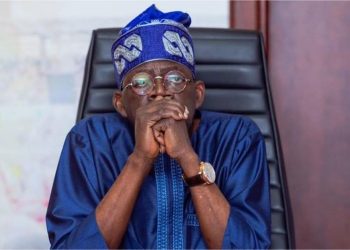
The distinction between inherited liabilities and fresh borrowing becomes more urgent in light of the administration’s financing pipeline. On October 27, 2026, President Tinubu wrote to the Senate seeking approval for a supplementary external borrowing plan for 2026 to 2027 totalling $20,517,755,901 and €1,045,083,643, according to the letter read at plenary by Senate President Godswill Akpabio. The letter stated that the funds would finance projects and programmes in infrastructure, agriculture, healthcare, education, water supply, security, employment generation, and financial management reforms, with the projects selected after technical and economic evaluation. The Senate referred the request to its Committee on Local and Foreign Debts for consideration and a report within one week. These are proposed facilities, not money already disbursed, and they should not be added to the existing debt stock as though the full amounts had already been borrowed. Their eventual impact will depend on legislative approval, loan agreements, disbursement schedules, and actual implementation.
The supplementary request follows an earlier external borrowing plan that President Tinubu submitted to the National Assembly in May 2025 and that the Senate approved in July 2025 for the 2025 to 2026 fiscal cycle. The approved package comprised $21.19 billion in direct foreign loans, €4 billion, ¥15 billion, a $65 million grant, about ₦757 billion in domestic bonds, and authority to raise to $2 billion through a foreign-currency-denominated instrument in the domestic market. Some accounts rounded the dollar component to about $21.5 billion, the figure reported when the request was first made. A senator told the chamber that disbursement would span six years rather than only 2025. The precise amounts drawn down, repaid, and outstanding under each facility must be established from National Assembly records, loan agreements, and DMO publications before their full values can be treated as existing debt. This distinction is essential to credible financial reporting. A borrowing ceiling authorises financing within specified limits; it does not necessarily mean that the entire amount has been drawn down. Nevertheless, successive large borrowing proposals deserve scrutiny because they create the possibility of further debt accumulation before the returns on existing investments are fully realised.
If additional facilities are approved and substantially disbursed, Nigeria’s public debt could move towards the ₦200 trillion level, depending on exchange rates, repayments, new domestic borrowing, and other adjustments. That figure should be treated as a scenario rather than a confirmed forecast or an inevitable outcome. As an illustration only, converting the $20.52 billion component at the aggregate implied rate of roughly ₦1,380 to the dollar gives about ₦28.3 trillion, which would lift the June 2026 debt stock of ₦166.79 trillion to roughly ₦195 trillion before accounting for the euro component, any new domestic borrowing, repayments, or exchange-rate changes. The calculation assumes full drawdown of the dollar component at a constant rate and is not a forecast. The central concern is not merely whether the headline debt crosses a particular numerical threshold. It is whether the government can demonstrate that the economic benefits of additional financing will be sufficient to justify future principal and interest payments, and whether projects can be delivered without cost overruns, delays, or diversion of funds. The credibility of the borrowing strategy ultimately depends on measurable outcomes rather than the announcement of ambitious infrastructure plans.
The most revealing test of Nigeria’s debt sustainability is the relationship between debt obligations and government revenue. Debt-to-GDP ratios are useful indicators of the size of a country’s liabilities relative to its economic output, but GDP is not money sitting in the Treasury. Governments service debt from revenue, including taxes, oil and gas receipts, customs collections, and other income available to the relevant level of government. Nigeria’s persistently narrow revenue base, therefore, makes its debt burden particularly challenging. Even if the debt-to-GDP ratio appears manageable by international comparison, a government that collects insufficient revenue may struggle to meet its obligations without additional borrowing, expenditure reductions, or increased taxation.
The first-half 2026 fiscal figures illustrate both the pressure and the progress. According to the World Bank’s October 2026 Nigeria Development Update, federal government revenue rose to approximately ₦6.2 trillion in the first six months of 2026, up from about ₦3.6 trillion a year earlier, an increase of roughly 72 per cent. Interest payments also rose, from ₦5.6 trillion to ₦7.7 trillion. On those reported figures, interest payments amounted to approximately 124 per cent of revenue, compared with roughly 156 per cent in the first half of 2025. The improvement is significant, but the ratio still raises serious questions about short-term fiscal liquidity.
The Federal Ministry of Finance has disputed the interpretation of this comparison. It argues that the interest figure includes debt serviced by the Federal Government on behalf of other tiers of government, including external loans to states, while the revenue denominator does not capture the same breadth of resources. The ministry also says the comparison excludes independent revenue earned by government agencies and enterprises but not yet remitted to the Treasury, and that a first-half snapshot does not account for seasonal revenue patterns. It has pointed to a decline in the full-year debt-service-to-revene ratio, from 97 per cent before the reforms to below 60 per cent in 2025, and to a World Bank projection of 46 percent for 2026. The ministry’s explanation must be considered, but the comparison still requires transparent reconciliation against complete, comparable fiscal records. Interest payments and total debt service are not interchangeable measures, and different revenue definitions can produce different ratios. The appropriate response is to examine the underlying figures rather than dismiss either the reported pressure or the government’s explanation.
The difference between interest payments and total debt service also matters. Interest is the cost of borrowing; total debt service can include principal repayments as well as interest. The ₦7.7 trillion reported for the first half of 2026 concerns interest payments and should not automatically be described as the entirety of Nigeria’s debt-service expenditure. The government has also challenged the use of the 124 percent ratio as a measure of Federal Government fiscal sustainability because, in its view, the numerator and denominator do not cover the same level of government. That qualification is material and should accompany any use of the figure. Nevertheless, the reported interest burden raises questions about how the government will finance recurrent obligations, repay maturing principal, meet capital commitments, and absorb unexpected fiscal shocks. A sustainable debt strategy must explain not only how loans will be obtained, but how their servicing will be financed from dependable revenue.
The pressure is also reported to be visible in capital expenditure. The World Bank update is cited as showing that federal capital spending fell to approximately ₦700 billion in the first half of 2026, equivalent to about 0.3 percent of GDP, compared with around 1 percent of GDP in the corresponding period of 2025. The World Bank’s April 2026 update had already recorded federal capital spending falling from 1.3 percent of GDP in 2024 to 1.0 percent in 2025, with only 24 percent of the prorated 2025 capital budget of ministries, departments, and agencies implemented. This creates a troubling fiscal contradiction: the government is seeking substantial external financing for development, while reported spending on capital projects has contracted sharply. The figures do not, by themselves, prove that debt servicing directly caused every reduction in capital spending. They do, however, demonstrate why the timing and composition of public expenditure matter. Borrowing for infrastructure cannot deliver its promised benefits if budgeted projects are delayed, inadequately funded, or left incomplete.
The currency consequences extend beyond the accounting presentation of the national balance sheet. Nigeria’s external debt creates obligations that must be met in foreign currency. When the naira weakens, servicing a given dollar payment requires more naira, placing additional pressure on the budget and on the country’s capacity to obtain foreign exchange. The scale of that pressure depends on the timing of repayments, export earnings, reserve adequacy, and the terms of individual loans. It would be too simplistic to conclude that every external debt payment directly drains the Central Bank’s reserves, since the government may obtain foreign currency through several channels. The broader risk remains,that persistent foreign-currency obligations increase Nigeria’s exposure to exchange-rate volatility and external financing conditions.
Domestic borrowing brings a separate challenge. When government securities offer attractive yields, banks and other investors may prefer them to lending to businesses, particularly when private borrowers are considered riskier. This can raise financing costs for manufacturers, agricultural enterprises, and small businesses seeking capital for expansion. The extent of this crowding-out effect depends on banking-sector liquidity, monetary policy, investor demand, and the availability of alternative funding. Nevertheless, sustained reliance on expensive domestic financing can weaken private investment and job creation. If firms struggle to obtain affordable credit, the economy may generate less employment, lower taxable profits, and slower household-income growth, making it harder for the government to expand the revenue base needed to support its obligations.
For ordinary Nigerians, the implications are measured not only in trillion-naira balances but also in the quality and affordability of public services. A government facing substantial interest costs has less flexibility to expand healthcare, education, water supply, transport, and social protection unless revenue rises or other spending is reduced. Businesses confronting expensive credit may delay expansion, while households may experience weaker employment opportunities and continuing pressure on disposable income. Debt accumulation does not automatically cause inflation or poverty, and well-chosen public investment can improve productivity and living standards. The decisive question is whether borrowed funds produce economic and social returns that exceed their financial costs. Citizens are entitled to see project-level evidence, delivery timelines, procurement records, and independent assessments of those returns.
The administration’s strongest defence is that borrowing can finance infrastructure and reforms capable of stimulating long-term growth. Projects such as the proposed Sokoto-Badagry Superhighway and Eastern Rail Corridor may improve connectivity and economic activity if properly designed, financed, and completed. But the case for borrowing must be demonstrated project by project. The government should publish the amounts allocated and disbursed, procurement arrangements, contractors, implementation milestones, independent cost assessments, and expected economic benefits. It should also explain how those benefits will translate into higher government revenue, rather than assuming that infrastructure investment automatically generates enough taxable activity to pay the loans. The same scrutiny should apply to the proposed external facilities for agriculture, healthcare, education, water, and employment programmes. Transparent reporting would help citizens distinguish productive investment from borrowing that merely postpones fiscal pressure.
The reported 72 percent rise in federal revenue indicates a substantial improvement in collections. Separately, the Nigeria Revenue Service says it collected ₦27.1 trillion in the first seven months of 2026 and reported that the tax-to-GDP ratio rose from 10.3 percent in 2023 to 13 per cent. These figures should not be treated as directly interchangeable: the revenue growth comparison covers the first half of 2026, the NRS collection figure covers seven months, and tax-to-GDP estimates may differ according to methodology and the revenue categories included. The OECD, using an internationally comparable methodology, put Nigeria’s tax-to-GDP ratio at 8.2 percent in 2023, against an African average of about 16.1 percent. The difference between the reported Nigerian and OECD figures makes methodological clarity essential. The sustainability of recent gains matters more than a single period’s growth rate. Nigeria’s historically narrow tax base limits the revenue available to support an expanding debt burden. Broadening that base requires bringing more economic activity into the formal system, closing revenue leakages, improving compliance, and strengthening tax administration. It cannot be reduced to imposing higher rates on salaried workers and formal businesses already carrying significant obligations. Higher taxes also compete with the cost-of-living pressures facing households and the financing constraints confronting businesses. Taxation can therefore be part of the answer, but only if revenue growth is sustained, fairly distributed, and sufficient to outpace the cost of servicing accumulated obligations.
Nigeria’s approaching ₦200 trillion debt threshold is a test of fiscal credibility, not simply a contest over alarming figures. Exchange-rate revaluation and inherited liabilities explain part of the increase, but they do not eliminate the significance of additional borrowing, high interest costs, and weak capital execution. The government must demonstrate through reconciled public accounts and independently verifiable project records how it intends to raise sustainable revenue, control borrowing costs, protect essential public spending, and ensure that borrowed funds generate measurable returns. The National Assembly must scrutinise proposed loans and their terms, while the DMO and fiscal authorities should provide clear information on disbursements, repayments, currency exposure, and project performance. The point of no return is not established by a round number; it is approached when a government’s financial commitments consistently outrun its capacity to meet them without undermining the welfare and prospects of its citizens.
Daniel Nduka Okonkwo is an investigative journalist, human rights advocate, and policy analyst based in Nigeria. He is the founder and publisher of Profiles International Human Rights Advocate (PIHRA), a platform documenting the courage of human rights defenders and examining issues of governance, accountability, security, and fundamental rights.
His reporting on Nigerian governance, security-sector accountability, public finance, and human rights has appeared in Sahara Reporters, Vanguard, Daily Trust, African Defence Forum, Opinion Nigeria, and Daily Intel.
Read more of his work on the PIHRA website:
https://www.profilesinternationalhumanrightsadvocate.com.ng/
For tips, feedback, or collaboration, contact him at dan.okonkwo.73@gmail.com.