



















By Daniel Nduka Okonkwo
A country does not remain underdeveloped simply because it lacks natural resources, human talent, or economic potential. It can, however, struggle to achieve sustainable prosperity when public resources are diverted into private hands, institutions fail to enforce accountability and those entrusted with public power exploit their positions at the expense of the population.
Nigeria illustrates this contradiction. Despite its substantial oil and gas resources, entrepreneurial population, large domestic market, and internationally influential diaspora, millions of citizens continue to face inadequate infrastructure, unreliable electricity, underfunded public services, and limited economic opportunities. Although insecurity, policy failures, and economic shocks also contribute to these challenges, corruption can compound them by reducing the value citizens receive from national resources.
The central question is not merely how much money has allegedly been stolen, but how the diversion of public wealth perpetuates underdevelopment while individuals who unlawfully benefit from public office may preserve their gains for future generations. Answering it requires examining household bribery, public procurement, illicit financial flows, recruitment practices, asset recovery, and the institutions responsible for protecting the common good.
A widely cited estimate puts Nigeria’s cumulative losses to corruption since independence in 1960 estimated by economic experts to be well over $700 billion, if not more. The figure is commonly traced to an estimate attributed to the London think tank Chatham House and cited by The Economist in 2019, so it predates the most recent years. Human rights advocate Funmi Falana repeated it in December 2024, saying Nigeria had reportedly lost that amount. It is not a comprehensive, independently audited calculation of every dollar stolen over six decades. Its significance lies in the scale of the historical accountability question it raises
The consequences of corruption extend beyond the amount directly diverted. Money lost through manipulated contracts, fraudulent claims, unlawful revenue deductions or other proven misconduct cannot deliver the public benefits for which it was intended. Hospitals may remain inadequately equipped, roads may deteriorate prematurely, schools may lack essential facilities and communities may wait for projects that public funds were supposed to finance. These are potential consequences of public-resource diversion, although the loss associated with each project must be established through evidence.
The National Bureau of Statistics and the United Nations Office on Drugs and Crime documented Nigerians’ experiences of bribery in their national corruption survey, published as Corruption in Nigeria Patterns and Trends. The report draws on a household survey of 33,035 households conducted in October and November 2023, covering the preceding 12 months. It is estimated that citizens paid approximately ₦721 billion in cash bribes to public officials over that period, equal to about $1.26 billion and 0.35 per cent of Nigeria’s GDP. The reported average cash bribe paid to public officials was ₦8,284, and the average bribe payer paid 5.1 bribes in the year. The report also recorded some improvement: the share of citizens in contact with public officials who paid a bribe fell from 29 per cent in 2019 to 27 per cent in 2023, and, adjusted for inflation, the average bribe was 29 per cent lower than in 2019. These are survey-based estimates for the period studied, not newly measured totals for 2026.
For households already struggling with food prices, rent, transport, and medical expenses, an improper payment represents an additional financial burden. Repeated across millions of encounters, such payments can reduce household savings, discourage productive spending, and make access to public services more expensive. Citizens who cannot afford unofficial payments may also face delays or difficulty obtaining services to which they are legally entitled. Legitimate government fees must, however, be distinguished from bribes: the existence of a payment alone does not establish corruption.
The survey also shows where bribery risk was highest. Among citizens who had dealings with prosecutors, 67 per cent paid a bribe or were asked for one and refused, compared with 58 per cent for land registry officers and 54 per cent for customs and immigration officers. These figures include people who refused, and they describe the experience of those who dealt with each category of official, not the share of all Nigerians. Only about 1.5 per cent of adults had contact with a prosecutor in the period studied. The survey also found that about 70 per cent of people who were asked for a bribe refused at least once. That suggests citizens are not passive participants in corrupt systems, and it places a duty on institutions to protect those who refuse unlawful demands and to offer complaint channels that do not expose them to retaliation.
Corruption at the institutional level can take several forms, including manipulated procurement, inflated contract prices, undisclosed conflicts of interest, fraudulent project certification, unlawful revenue diversion, and the misuse of public assets. Each case requires evidence. An expensive contract, a business relationship with an official, or ownership of valuable property does not independently establish criminal conduct, but documentary evidence of collusion, concealment, or unlawful diversion warrants investigation.
Where illicit enrichment is established, the proceeds may be used to purchase property, acquire businesses, invest in financial assets, or provide long-term security for beneficiaries. This creates a damaging imbalance: resources intended for public development can become private wealth, while citizens bear the cost of missing infrastructure and inadequate services. The legitimate accumulation and inheritance of wealth must remain protected; the issue is whether particular assets can be traced to unlawful conduct and recovered through due process.
Court records show how proceeds can be held through others and pursued across borders. In May 2020, the United States Department of Justice transferred $311,797,876.11 to the Nigerian government under a February 2020 agreement among the United States, Nigeria, and the Bailiwick of Jersey. The assets had been forfeited in civil proceedings and were traceable to the kleptocracy of the late military ruler Sani Abacha and his co-conspirators, more than two decades after he died in 1998. The Department said the case began in 2014 with a civil forfeiture complaint against more than $625 million. Press reports on the agreement said the Jersey funds were held in the name of a British Virgin Islands company and of Abacha’s son, and that the returned money was to go to previously approved public infrastructure projects.
Return is only the first step. Whether the Abacha money served the public depends on whether it can be traced to completed work, which requires published allocations, disbursements, contractors, and project milestones. Without that, citizens may know that money was recovered but not whether it improved their lives.
A recent Nigerian case points the same way. On 21 February 2025, the Federal High Court in Lagos ordered the final forfeiture of $4,719,054, ₦830,875,611, and several properties linked to former Central Bank governor Godwin Emefiele. The assets included an investment of $900,000 traced to a person the judge described as a close associate of his. The Economic and Financial Crimes Commission told the court that associates and companies were used to conceal the funds, and the court held that the assets were proceeds of unlawful activities. The route was contested: according to The Will, another judge of the same court had vacated an earlier interim order in May 2024 before the commission returned to court.
These are findings about assets, not criminal convictions. Non-conviction forfeiture is a civil process in which the court looks to the holder of the assets for an explanation of their legitimate source, a lower threshold than a criminal conviction, and orders can be appealed. Mr Emefiele was separately arraigned in April 2024 on criminal charges that the forfeiture order does not decide. In July 2026 the Court of Appeal, in a case involving a retired military officer, held that civil forfeiture can proceed while a criminal trial is pending.
Public institutions depend on competent personnel to administer services, enforce regulations, and manage public funds. When recruitment is influenced by bribery, nepotism, or improper political connections, qualified applicants may be disadvantaged, and institutional performance may suffer. The NBS-UNODC survey found that about 60 per cent of people who secured public sector jobs in the three years before the 2023 survey said they used bribery, nepotism, or both: 27 per cent bribery alone, 13 per cent nepotism alone, and 19 per cent both, and 46 per cent in all admitted paying a bribe. This describes recent recruits who answered the survey, not every public sector appointment in Nigeria, and it relies on what respondents were willing to admit.
The wider concern remains serious. Where recruitment is not transparent, public confidence in fairness declines, and institutions risk losing capable personnel. The survey also points to an association between formal assessment and lower reported bribery: 41 percent of recruits who sat a written test or oral interview admitted to using bribery, against 53 percent of those who were not formally assessed. That does not prove that assessment eliminates corruption, but it strengthens the case for transparent, documented recruitment. If an individual obtains a position through an improper payment, there may also be an incentive to recover that investment through subsequent misconduct, although that is a risk, not an inevitable outcome. Transparent recruitment criteria, independently verifiable results, credible complaint procedures, and proportionate sanctions are therefore essential to protecting the integrity of public service.
Corruption must also be investigated beyond Nigeria’s borders. Illicit financial flows can involve proceeds of corruption, tax evasion, criminal activity, trade misinvoicing, and other unlawful transfers. These categories overlap, but they are not interchangeable: estimates of illicit financial flows must not automatically be described as money stolen by public officials.
The United Nations Conference on Trade and Development estimated in its 2020 Economic Development in Africa report that the continent loses approximately $88.6 billion annually through illicit financial flows, equal to 3.7 percent of Africa’s GDP. Nearly half of that total was attributed to under-invoiced commodity exports such as gold, diamonds, and platinum, so the figure captures trade and tax abuse as well as corruption. It is a continental estimate, not a verified annual loss attributable exclusively to Nigeria. Nigeria’s Minister of State for Finance applied a 20 percent share to it in 2025, which gives about $17.72 billion a year, but that is a prorata estimate, not a measured Nigerian loss. A rigorous Nigerian investigation must establish the scale of the country’s own losses using reliable evidence, including tax records, customs documentation, financial investigations, and independently verifiable audit findings.
Tracing suspicious transactions requires cooperation among tax authorities, customs agencies, financial intelligence units, anti-corruption bodies, prosecutors, and foreign jurisdictions. Investigators must identify the transactions involved, the individuals or companies that benefited, the laws allegedly breached, and the outcomes of any enforcement action. Transparency in beneficial ownership and lawful international asset recovery can help prevent illicit proceeds from being concealed through complex corporate and financial arrangements.
Corruption can weaken economic development by distorting competition, discouraging investment, and increasing the cost of delivering public services. Businesses may face additional expenses when licences, contracts, or regulatory decisions depend on improper payments. Public projects may deliver less value than their budgets suggest, leaving governments with fewer resources for new infrastructure and essential services.
The consequences are particularly severe for citizens who depend on public schools, hospitals, transport, and other government services. Wealthier households may sometimes afford private alternatives, while poorer families have fewer options when public institutions fail. Corruption can therefore deepen inequality both by enriching its beneficiaries and by reducing the opportunities available to people who depend most heavily on public provision. It is not the sole cause of Nigeria’s economic difficulties, but it can make existing weaknesses more expensive and harder to overcome.
Transparency International’s Corruption Perceptions Index 2025, published in February 2026, gave Nigeria a score of 26 out of 100 and ranked it 142nd among 182 countries and territories. The score was unchanged from the previous year, but the ranking slipped from 140th in an index that now covers two more countries. The index measures perceptions of public-sector corruption among experts and business people; it does not calculate the amount stolen or establish the criminal liability of any individual.
The Economic and Financial Crimes Commission reported on 31 August 2026 that it had recovered ₦1.233 trillion in naira, alongside $684.48 million, £373,905.78, and €9.34 million, during the first 34 months of its chairman’s leadership, up from the ₦566 billion and $411 million it announced in October 2025. These are the commission’s own figures and should be understood as its official recovery claims, not as an independent audit of every asset or a measure of Nigeria’s total historical losses. By the commission’s own breakdown, only about ₦397.26 billion, or 33 per cent, was recovered directly for the Federal Government. The other ₦836.34 billion, or 67 per cent, was recovered on behalf of ministries, departments and agencies, state revenue services, companies, individuals and foreign victims, so the headline figure should not be read as money that went to the federal treasury.
Recovering assets is important, but the public also needs to know the legal status of the recoveries, whether relevant court orders are final, where recovered funds are held, and how money returned to the government is ultimately used. Recovery figures should be accompanied by transparent records and verifiable outcomes. Arrests, seizures, and announcements alone cannot establish that justice has been completed or that the public has received the full benefit of recovered resources.
Nigeria needs a system that makes corruption harder to commit, easier to detect, and more likely to result in lawful consequences. Public contracts should disclose awards, values, the identities of contractors and their beneficial owners, variations to contract terms, implementation timelines, and independently verified completion reports, so that journalists, civil society groups, and citizens can compare approved budgets with what was actually delivered. Independent audits and technical inspections should establish whether projects deliver what the government paid for, while credible findings of misconduct should lead to appropriate corrective or legal action.
Asset declarations, conflict-of-interest rules, and beneficial-ownership records should be subject to lawful verification. Where evidence indicates unexplained wealth connected to public office, competent authorities should investigate the source and pursue recovery where the law permits. Possession of wealth alone is not proof of wrongdoing, and family members must not be presumed guilty because of another person’s conduct.
Nigeria has begun building some of these tools. The Companies and Allied Matters Act 2020 requires companies to report persons with significant control, and the Corporate Affairs Commission runs a register that the public can search free of charge. The research group Open Ownership said in April 2026 that Nigeria was the first country in Africa with a comprehensive, publicly accessible, and free beneficial ownership register, but it recommended a dedicated unit at the commission to verify ownership and resolve discrepancies, and the Registrar-General has himself called for the separate registers, including the one for free trade zones, to be harmonised. The Proceeds of Crime (Recovery and Management) Act 2022 added non-conviction-based forfeiture and a designated account at the Central Bank for forfeited proceeds. A register is only as useful as the accuracy of what it contains, and a law is only as strong as its enforcement.
Public revenue should be traceable from collection to expenditure, while recruitment must be based on transparent, merit-based procedures. Courts and investigative institutions need the independence, resources, and safeguards required to investigate cases fairly and efficiently. International cooperation should help trace and recover proven proceeds of corruption, and governments should publish measurable results showing whether reforms have improved procurement, case resolution, revenue accountability, and access to essential services.
The Federal Audit Service Bill shows how slowly some of these reforms move. The Senate passed it on 17 December 2025, and it was sent to President Bola Tinubu, but as of 25 September 2026, civil society groups were still urging him to sign it. The Guardian reported in July that the Auditor-General had not received the federal government’s financial statements for 2023, 2024, and 2025. Section 58(4) of the Constitution gives the president 30 days to signify assent or withhold it, and civil society groups said in June that no reasons for withholding it had been made public. The bill would give the Auditor-General greater control over the office’s budget, funding, and staff, and would require the federal government to submit its financial statements by 30 June of the following year.
Nigeria’s development crisis is partly a question of how effectively national resources are protected and converted into public benefits. The estimated ₦721 billion paid in cash bribes during the period covered by the NBS-UNODC survey illustrates the financial burden of everyday corruption. The widely cited $700 billion historical estimate raises a much larger accountability question, while Nigeria’s Corruption Perceptions Index score offers a separate measure of international concern about public-sector integrity. These figures measure different things and must not be combined as though they constitute one audited account.
The test of anti-corruption reform is whether citizens experience better schools, more reliable hospitals, functional infrastructure, fair recruitment, and public services free from improper demands. Where unlawful enrichment is proven, those responsible should face lawful consequences, and assets should be recovered and accounted for transparently. At the same time, legitimate wealth and the rights of individuals must remain protected under the law.
A country cannot sustainably develop when public resources are diverted for private advantage and the costs are distributed across the population. Nor can public confidence be restored through announcements alone, without credible evidence, impartial justice, and verifiable results. Nigeria’s commonwealth must serve the common good, not become a private inheritance created through the abuse of public trust.
The commonwealth belongs to the Nigerian people. Protecting it is not an act of generosity by those in power; it is a public duty.
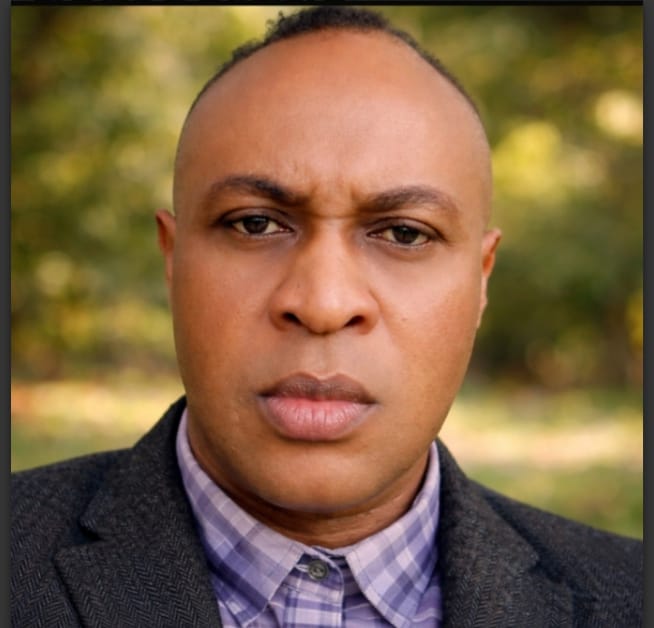
Daniel Nduka Okonkwo is an investigative journalist, human rights advocate, and policy analyst based in Nigeria. He is the founder and publisher of Profiles International Human Rights Advocate (PIHRA), a platform documenting the courage of human rights defenders and examining issues of governance, accountability, security, and fundamental rights.
His reporting on Nigerian governance, security-sector accountability, public finance, and human rights has appeared in Sahara Reporters, Vanguard, Daily Trust, African Defence Forum, Opinion Nigeria, and Daily Intel.
Read more of his work on the PIHRA website:
https://www.profilesinternationalhumanrightsadvocate.com.ng/
For tips, feedback, or collaboration, contact him at dan.okonkwo.73@gmail.com.