
























Preventing terrorist attacks through early warning remains one of the most effective safeguards against mass violence. This requires a coordinated mix of credible intelligence gathering, community vigilance, and proactive, yet non-coercive, measures to disrupt radicalization before it escalates into bloodshed. Recent terrorist attacks in Kwara State raise serious questions about whether such measures, if fully activated, might have mitigated or even prevented the tragedy. Strengthened border management to curb the movement of foreign terrorist fighters also remains a critical gap in Nigeria’s security framework.
Nigeria continues to suffer a recurring cycle of largely preventable terrorist violence, leaving citizens trapped in fear, mistrust, and vulnerability. The recent attack on communities in Kaiama Local Government Area of Kwara State, particularly Woro, has once again exposed apparent weaknesses in intelligence handling, response time, and civilian protection mechanisms.
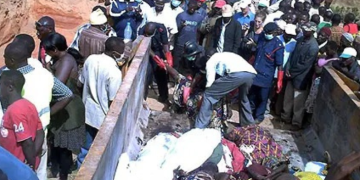
According to accounts from survivors, community leaders, and reports by human rights organizations, warnings of a planned assault were allegedly received in advance. Despite these reports to security authorities, the attack proceeded, resulting in the deaths of an estimated dozens to over a hundred people, including both Christians and Muslims, in what many observers have described as a massacre.
In a widely reported account, the traditional leader of Woro, Umar Bio Salihu, disclosed that the attackers had written to him months earlier, explicitly threatening an attack. He stated that the letter was promptly forwarded to the Department of State Services (DSS) and reported through the appropriate emirate channels.
Further compounding concerns, Amnesty International later reported that extremist religious leaflets had allegedly been circulated in affected communities for several months before the attack, an activity that, in hindsight, appeared to be a significant warning sign of impending violence.
Woro and neighboring villages had previously hosted a small military post reportedly manned by about 15 soldiers. Following an earlier security incident, the troops were withdrawn. The communities were left without a sustained security presence, despite mounting threats and visible extremist activity.
When the attackers eventually struck, residents said they alerted security agencies at approximately 5:00 p.m. Interviews aired on ARISE News indicated that security forces arrived around 3:00 a.m. the following morning nearly ten hours later, by which time significant loss of life and property had already occurred.
This delayed response has intensified long-standing public concerns that security agencies often mobilize only after attacks have concluded, even where warnings or intelligence reports are believed to exist.
A particularly troubling issue raised by residents and analysts is the fear of intelligence compromise. Many civilians increasingly worry that reporting suspicious activity could expose them to retaliation if sensitive information is leaked.
This concern was publicly echoed during the ARISE News interview when journalist Reuben Abati posed a critical question: Who exactly received the intelligence reports within the DSS, and how did the attackers appear to be aware that they had been reported?
Such questions cut to the core of Nigeria’s security crisis. Without accountability, internal oversight, and transparent review processes, allegations of compromised intelligence channels will continue to erode public trust and discourage community cooperation.
Survivors further alleged that the attackers demanded residents renounce allegiance to the Nigerian state and submit to an extremist ideology described by local leaders as a gross distortion of Islam, one they insist is fundamentally inconsistent with the teachings of the Qur’an.
The traditional ruler, who was reportedly away at the time of the attack, later disclosed that the assailants first targeted his residence, abducting members of his family. Upon his return, he reportedly found his home destroyed and relatives killed, a personal loss that mirrors the wider suffering inflicted on the community.
The United States government has since condemned the attack, joining international voices expressing concern. Amnesty International described the killings as indicative of systemic neglect of rural communities, where residents remain exposed despite repeated warnings and known security vulnerabilities.
President Bola Ahmed Tinubu has subsequently ordered the deployment of an army battalion to Kaiama Local Government Area. While the move has been welcomed, many Nigerians continue to ask a painful and pressing question: Why did protection arrive only after such devastating loss of life?
What is clear is that these attacks were preceded by warnings, visible extremist activity, and reported intelligence signals. The failure, therefore, appears not only to lie with the perpetrators, but also with institutional gaps that allow early warnings to go unaddressed, responses to be delayed, and communities to remain unprotected.
To restore public trust and prevent future tragedies, the Federal Government must urgently:
Investigate how reported intelligence was received, processed, and acted upon
Identify any potential lapses, leaks, or internal failures within the intelligence chain
Review response-time delays and operational command structures
Reinstate and sustain security presence in vulnerable rural communities
Establish secure, confidential, and trusted channels for civilian intelligence reporting
Nigeria cannot afford to normalize mass killings as routine security incidents. Every ignored warning costs lives. Every delayed response deepens public mistrust.
This moment demands more than sympathy, it requires decisive, transparent, and sustained action against both the enemies of the state and the structural weaknesses within Nigeria’s own security architecture.
Daniel Nduka Okonkwo is a Nigerian investigative journalist, publisher of Profiles International Human Rights Advocate, and policy analyst whose work exposes corruption, institutional failures, and the subtle forces shaping governance and global influence. With over a thousand published pieces featured on Sahara Reporters, African Defence Forum, Daily Intel Newspapers, Opinion Nigeria, African Angle, and other international platforms, he blends rigorous research with compelling storytelling to drive accountability and reform. A human rights advocate, ghostwriter, and strategic communicator, Daniel transforms complex issues into clear, actionable insights that resonate locally and globally.
📧 Email: dan.okonkwo.73@gmail.com