






























The economic consequences of sit-at-home orders in Nigeria’s South-East have been nothing short of catastrophic. Between August 2021 and 2025, the region is estimated to have lost approximately ₦7.6 trillion, driven by recurring weekly lockdowns that have crippled commerce, weakened Internally Generated Revenue (IGR), triggered capital flight, and deepened poverty across the region.
At the heart of this economic disruption are forced business shutdowns, paralysed transportation systems, shuttered schools, shattered consumer demand, and a sustained erosion of investor confidence. However, the recent decision by Governor Chukwuma Charles Soludo to shut down the Onitsha Main Market for one week represents an entirely different, and far more contentious, dimension of the sit-at-home crisis.
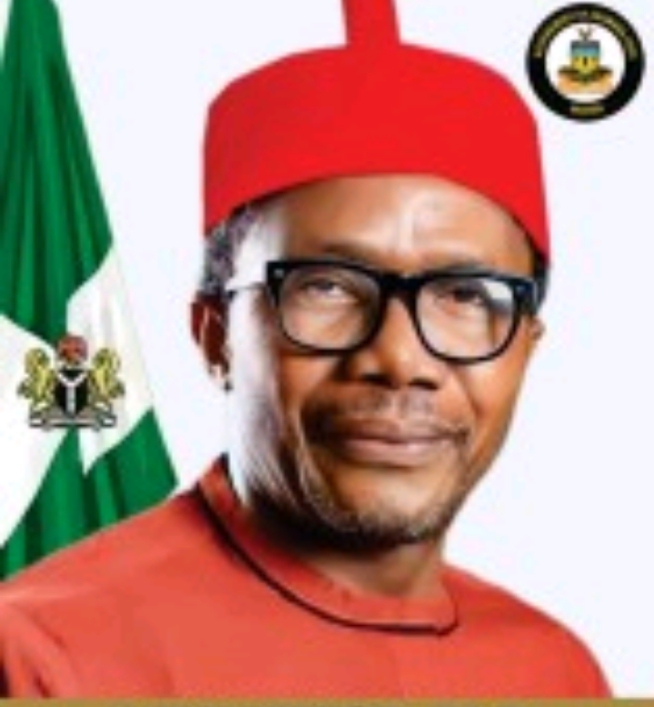
In an exclusive interview with Dr. Law Mefor, Commissioner for Information, Anambra State, I raised concerns over what many traders and residents regard as a drastic and high-risk policy decision.
I questioned whether adequate security arrangements were in place to protect traders who might defy the Monday sit-at-home order, particularly in light of persistent threats from unknown gunmen. The fear among traders, I noted, is not theoretical, it is rooted in years of violent enforcement of sit-at-home directives.
Dr. Mefor responded by asserting that the sit-at-home agenda is politically driven and promoted by the Indigenous People of Biafra (IPOB) and associated agitators. According to him, the Onitsha Main Market is currently protected by approximately 150 armed vigilante personnel, tasked with securing the market environment.
However, when I probed whether these arms were comparable to those wielded by unknown gunmen, widely believed to carry assault rifles, the commissioner acknowledged that the vigilantes are likely armed with pump-action shotguns. He maintained that if market security operatives felt inadequately equipped, they should have formally requested reinforcement from the state government, something he said they never did.
This is not security; it is politics. Dr. Mefor was emphatic in framing sit-at-home enforcement as a political strategy rather than a failure of security. He argued that the Onitsha Main Market and Nnewi Market had been transformed into symbolic centres of Biafra agitation.
“The symbolic meaning of sit-at-home is being driven through these markets,” he said. “That is not good for us.”
To reinforce his position, the commissioner noted that other markets across Anambra State, including several markets within Onitsha, operate on Mondays despite the sit-at-home order. When asked directly whether these markets open on Mondays, he answered in the affirmative.
According to him, the selective closure of the Onitsha Main Market and Nnewi Market underscores the political symbolism attached to them, rather than genuine security concerns.
When pressed to identify those responsible for enforcing sit-at-home and instigating market closures, Dr. Mefor admitted he could not provide specific names, though he insisted that “someone is responsible.”
I further asked whether Governor Soludo had directly engaged the Main Market leadership to negotiate a pathway out of the crisis. The commissioner stated that the governor had held numerous meetings with market stakeholders and that the state maintains a Special Adviser on Trade and Markets, Chief Evarist Uba, who meets with market leaders weekly.
However, this claim sharply contradicts accounts from several traders and market executives, who insist that no such regular meetings took place before the shutdown. Many traders said they were shocked by the closure and never believed the governor would resort to such an action.
Dr. Mefor acknowledged the profound human toll of the sit-at-home policy. He highlighted the plight of artisans, casual traders, loaders, and “Oso Ahia” middlemen and brokers who depend entirely on daily transactions for survival.
“What they make today is what they eat today,” he said, noting that the closure further compounds years of hardship caused by repeated sit-at-home enforcement.
He disclosed that the Onitsha Main Market has been closed for a cumulative 262 days over the past five years, and that Anambra State has lost over ₦8 billion directly due to sit-at-home disruptions.
Why Anambra alone? A lingering question, one of the most pressing questions raised during the interview was why sit-at-home enforcement appears uniquely persistent in Anambra State.
Dr. Mefor noted that there is no sit-at-home in Enugu, Imo, Ebonyi, or Abia States, including states of origin of prominent agitators. He cited Enugu State as an example, where the governor once shut down Ogbete Main Market to decisively end sit-at-home disruptions.
“Heaven did not fall,” Dr. Mefor said. “So when people say Governor Soludo has no power to shut the market, they should ask under what law the Ogbete Main Market was shut.”
He questioned why Anambra should be subjected to economic paralysis every Monday while the rest of the South-East conducts normal business, banks open, schools functioning, and commerce thriving.
Addressing public compliance with sit-at-home orders, Dr. Mefor claimed that over 80 percent of protesters are neither from Anambra State nor shop owners in the Main Market.
According to him, video evidence suggests that many protesters are minors or individuals without shop ownership.
“Do you know what it takes to own a shop in the Main Market?” he asked. “People spend years as apprentices. Someone who has built a business over decades does not have time for street protests.”
While he insisted the government knows who is behind the disruptions and where they come from, he emphasized that the state has chosen not to profile or stigmatise any group.
Dr. Mefor concluded by stating that the sit-at-home began in August 2021, and that its continued enforcement has ensured that everyone loses, government, traders, artisans, and ordinary citizens alike.
According to him, Governor Soludo’s decision to shut down the Onitsha Main Market is intended to end the crisis decisively, restore economic normalcy, and prevent Anambra State from being uniquely sacrificed to a regional agitation that is not uniformly enforced elsewhere.
Daniel Nduka Okonkwo is a seasoned writer, human rights advocate, and public affairs analyst renowned for his incisive commentary on governance, justice, and social equity. Through Profiles International Human Rights Advocate, he champions accountability, transparency, and institutional reform in Nigeria and beyond. With over 1,000 published articles indexed on Google, his work has appeared on Sahara Reporters and other leading international media platforms.
He is also an accomplished transcriptionist, petition writer, ghostwriter, and freelance journalist, widely recognised for his precision, persuasive communication, and indefatigable commitment to human rights.
📧 Contact: dan.okonkwo.73@gmail.com
Signed:
Daniel Nduka Okonkwo.