
















• About Us
  • Advertise With Us
  • Contact Us
  • Donate
Wednesday, August 19, 2026
Daily Intel Newspapers
  • Login
  • Welcome
  • Special reports
    • All
    • Unedited for the record
    Contrary to many accounts, Abacha died of cardiac arrest during sexual intercourse  — Ex-DSS officer

    Contrary to many accounts, Abacha died of cardiac arrest during sexual intercourse — Ex-DSS officer

    Trump threatens to take out Pickaxe Mountain in Iran

    Trump threatens to take out Pickaxe Mountain in Iran

    REA admits govt failure, says private solar now supplies 20% of Nigeria’s electricity, may hit 50% by 2028

    REA admits govt failure, says private solar now supplies 20% of Nigeria’s electricity, may hit 50% by 2028

    Allege kickbacks from contractor: Court remands ex-CCT Chairman Danladi Umar, who suspended ex-CJN Onnoghen, in Kuje prison

    Allege kickbacks from contractor: Court remands ex-CCT Chairman Danladi Umar, who suspended ex-CJN Onnoghen, in Kuje prison

    ADC calls for independent judicial panel probe into PFIPC Scandal, says ICPC may compromise

    ADC calls for independent judicial panel probe into PFIPC Scandal, says ICPC may compromise

    Slashed duties on imported vehicles takes effect, says FG

    Slashed duties on imported vehicles takes effect, says FG

  • Metro News
    Wike ban use of green areas in FCT as car dealers stand

    Wike ban use of green areas in FCT as car dealers stand

    Bicycle as alternative mode of transportation in Nigeria: The FRSC perspective

    Court convict motorist for assaulting FRSC mashal, dangerous driving in Abuja

    Tinubu’s harsh economic policies pushing us into cab driving- Abuja civil servants

    Tinubu’s harsh economic policies pushing us into cab driving- Abuja civil servants

    FCT NAWOJ demands justice for women

    FCT NAWOJ demands justice for women

    FCT suspends riders, drivers  levy over multiple taxation complaints

    FCT suspends riders, drivers levy over multiple taxation complaints

    Wike nullifies 485 R of O applications over fake allocation papers

    Wike nullifies 485 R of O applications over fake allocation papers

  • Latest News
    • All
    • Crime watch
    ICC rejects US sanctions, calls it attack on rule of law

    ICC rejects US sanctions, calls it attack on rule of law

    Wike ban use of green areas in FCT as car dealers stand

    Wike ban use of green areas in FCT as car dealers stand

    Kano govt launches N27.8bn ICT, CBT project to take digital exams to grassroots

    Kano govt launches N27.8bn ICT, CBT project to take digital exams to grassroots

    ESPN founder Bill Rasmussen dies after battle with Parkinson disease

    ESPN founder Bill Rasmussen dies after battle with Parkinson disease

    NDC national leader Dickson appoints political, technical, media aides

    NDC national leader Dickson appoints political, technical, media aides

    NBTE, SMEDAN move to strengthen entrepreneurship training in polytechnics

    NBTE, SMEDAN move to strengthen entrepreneurship training in polytechnics

    Trending Tags

  • Infotech
    Kano govt launches N27.8bn ICT, CBT project to take digital exams to grassroots

    Kano govt launches N27.8bn ICT, CBT project to take digital exams to grassroots

    NASENI to empower women, youths through capacity-building orogrammes in Kano

    NASENI to empower women, youths through capacity-building orogrammes in Kano

    FG unveils freeTV with over 100 free channels

    FG unveils freeTV with over 100 free channels

    No excuse for poor network delivery,  FG tells telecom Operators

    No excuse for poor network delivery, FG tells telecom Operators

    Amazon turns to artificial intelligence after cutting 16,000 jobs.

    Amazon turns to artificial intelligence after cutting 16,000 jobs.

    Cyber attack disrupts European airports

    Cyber attack disrupts European airports

  • World conflict & diplomacy
    Russia denies using Colombian mercenaries in Ukraine war

    Russia denies using Colombian mercenaries in Ukraine war

    Iran denies Trump’s claim of fresh US talks

    Iran denies Trump’s claim of fresh US talks

    US, Israel to pause Iran strikes, says Trump

    US, Israel to pause Iran strikes, says Trump

    Israel shared intel about new Iran plot to kill Trump — Reports

    Iran says Trump lied, ready for US strikes

    Iran attacks US bases in Middle East while Trump was meeting Netanyahu

    Iran attacks US bases in Middle East while Trump was meeting Netanyahu

    Israeli government approves  international stabilisation force in Gaza

    Israeli government approves international stabilisation force in Gaza

  • Africa
    Chad President pardons jailed political rival and fmr PM  Masra

    Chad President pardons jailed political rival and fmr PM Masra

    Nigeria accounts for largest cholera outbreak in West, Central Africa-UNICEF

    Nigeria accounts for largest cholera outbreak in West, Central Africa-UNICEF

    FG downplays suspicion, selects Plateau, Benue, FCT, two other states for pilot ranching programme

    FG downplays suspicion, selects Plateau, Benue, FCT, two other states for pilot ranching programme

    Ebonyi State Assembly passes law regulating house rent, agency fees to check arbitrary increase

    Ebonyi State Assembly passes law regulating house rent, agency fees to check arbitrary increase

    Kano marries off 1,500 couples

    Kano marries off 1,500 couples

    Nigeria, Burundi strengthen military cooperation against terrorism

    Nigeria, Burundi strengthen military cooperation against terrorism

No Result
View All Result
  • Welcome
  • Special reports
    • All
    • Unedited for the record
    Contrary to many accounts, Abacha died of cardiac arrest during sexual intercourse  — Ex-DSS officer

    Contrary to many accounts, Abacha died of cardiac arrest during sexual intercourse — Ex-DSS officer

    Trump threatens to take out Pickaxe Mountain in Iran

    Trump threatens to take out Pickaxe Mountain in Iran

    REA admits govt failure, says private solar now supplies 20% of Nigeria’s electricity, may hit 50% by 2028

    REA admits govt failure, says private solar now supplies 20% of Nigeria’s electricity, may hit 50% by 2028

    Allege kickbacks from contractor: Court remands ex-CCT Chairman Danladi Umar, who suspended ex-CJN Onnoghen, in Kuje prison

    Allege kickbacks from contractor: Court remands ex-CCT Chairman Danladi Umar, who suspended ex-CJN Onnoghen, in Kuje prison

    ADC calls for independent judicial panel probe into PFIPC Scandal, says ICPC may compromise

    ADC calls for independent judicial panel probe into PFIPC Scandal, says ICPC may compromise

    Slashed duties on imported vehicles takes effect, says FG

    Slashed duties on imported vehicles takes effect, says FG

  • Metro News
    Wike ban use of green areas in FCT as car dealers stand

    Wike ban use of green areas in FCT as car dealers stand

    Bicycle as alternative mode of transportation in Nigeria: The FRSC perspective

    Court convict motorist for assaulting FRSC mashal, dangerous driving in Abuja

    Tinubu’s harsh economic policies pushing us into cab driving- Abuja civil servants

    Tinubu’s harsh economic policies pushing us into cab driving- Abuja civil servants

    FCT NAWOJ demands justice for women

    FCT NAWOJ demands justice for women

    FCT suspends riders, drivers  levy over multiple taxation complaints

    FCT suspends riders, drivers levy over multiple taxation complaints

    Wike nullifies 485 R of O applications over fake allocation papers

    Wike nullifies 485 R of O applications over fake allocation papers

  • Latest News
    • All
    • Crime watch
    ICC rejects US sanctions, calls it attack on rule of law

    ICC rejects US sanctions, calls it attack on rule of law

    Wike ban use of green areas in FCT as car dealers stand

    Wike ban use of green areas in FCT as car dealers stand

    Kano govt launches N27.8bn ICT, CBT project to take digital exams to grassroots

    Kano govt launches N27.8bn ICT, CBT project to take digital exams to grassroots

    ESPN founder Bill Rasmussen dies after battle with Parkinson disease

    ESPN founder Bill Rasmussen dies after battle with Parkinson disease

    NDC national leader Dickson appoints political, technical, media aides

    NDC national leader Dickson appoints political, technical, media aides

    NBTE, SMEDAN move to strengthen entrepreneurship training in polytechnics

    NBTE, SMEDAN move to strengthen entrepreneurship training in polytechnics

    Trending Tags

  • Infotech
    Kano govt launches N27.8bn ICT, CBT project to take digital exams to grassroots

    Kano govt launches N27.8bn ICT, CBT project to take digital exams to grassroots

    NASENI to empower women, youths through capacity-building orogrammes in Kano

    NASENI to empower women, youths through capacity-building orogrammes in Kano

    FG unveils freeTV with over 100 free channels

    FG unveils freeTV with over 100 free channels

    No excuse for poor network delivery,  FG tells telecom Operators

    No excuse for poor network delivery, FG tells telecom Operators

    Amazon turns to artificial intelligence after cutting 16,000 jobs.

    Amazon turns to artificial intelligence after cutting 16,000 jobs.

    Cyber attack disrupts European airports

    Cyber attack disrupts European airports

  • World conflict & diplomacy
    Russia denies using Colombian mercenaries in Ukraine war

    Russia denies using Colombian mercenaries in Ukraine war

    Iran denies Trump’s claim of fresh US talks

    Iran denies Trump’s claim of fresh US talks

    US, Israel to pause Iran strikes, says Trump

    US, Israel to pause Iran strikes, says Trump

    Israel shared intel about new Iran plot to kill Trump — Reports

    Iran says Trump lied, ready for US strikes

    Iran attacks US bases in Middle East while Trump was meeting Netanyahu

    Iran attacks US bases in Middle East while Trump was meeting Netanyahu

    Israeli government approves  international stabilisation force in Gaza

    Israeli government approves international stabilisation force in Gaza

  • Africa
    Chad President pardons jailed political rival and fmr PM  Masra

    Chad President pardons jailed political rival and fmr PM Masra

    Nigeria accounts for largest cholera outbreak in West, Central Africa-UNICEF

    Nigeria accounts for largest cholera outbreak in West, Central Africa-UNICEF

    FG downplays suspicion, selects Plateau, Benue, FCT, two other states for pilot ranching programme

    FG downplays suspicion, selects Plateau, Benue, FCT, two other states for pilot ranching programme

    Ebonyi State Assembly passes law regulating house rent, agency fees to check arbitrary increase

    Ebonyi State Assembly passes law regulating house rent, agency fees to check arbitrary increase

    Kano marries off 1,500 couples

    Kano marries off 1,500 couples

    Nigeria, Burundi strengthen military cooperation against terrorism

    Nigeria, Burundi strengthen military cooperation against terrorism

No Result
View All Result
Daily Intel Newspapers
No Result
View All Result
Home Opinion

The Inalienable: Ifeanyi Ejiofor warns that no ethnic loyalty can wash blood from the hands of those who spilled it in Alaigbo

Daily Intel Newspaper by Daily Intel Newspaper
August 19, 2026
The Inalienable: Ifeanyi Ejiofor warns that no ethnic loyalty can wash blood from the hands of those who spilled it in Alaigbo
Share on FacebookShare on TwitterChat With Us Live

By Daniel Nduka Okonkwo

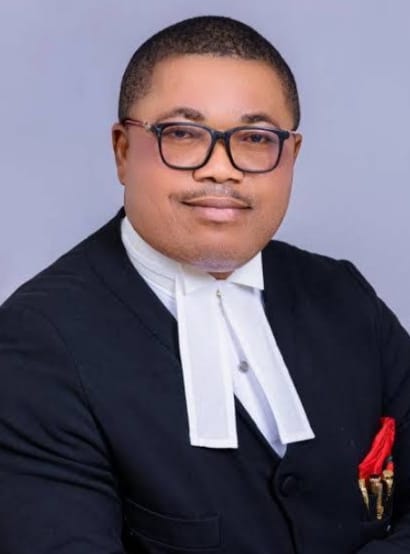
In Nigeria’s South East, the argument over marginalisation, self-determination, and the violent aftermath of the Biafran agitation has entered a difficult moral terrain, one in which legitimate grievances increasingly collide with an uncomfortable question: at what point does loyalty to a cause become complicity in the destruction of the very people that cause claims to represent? It is a question Sir Ifeanyi Ejiofor, Esq., KSC, is now asking with unusual directness.

In a strongly worded personal reflection dated 19 August 2026, titled “Midweek Musings: When a People’s Land Is Desecrated With Blood, History Will Not Laugh Away the Consequences,” the prominent human rights lawyer confronts what he describes as the dangerous intersection of ethnic sentiment, selective morality, and violence in Alaigbo. His central argument is uncompromising: the grievances of Ndigbo are real, but grievance cannot legitimise bloodshed, ethnic identity cannot confer moral immunity, and no rhetoric of liberation can erase the consequences of violence.

Ejiofor’s intervention is significant not because it denies the historical grievances of the Igbo people, but precisely because it acknowledges them before challenging what he sees as the increasingly dangerous tendency to use those grievances as a shield for conduct that should otherwise attract condemnation. “We cannot cure marginalisation by committing suicide,” Ejiofor writes, a statement that captures the philosophical centre of his intervention.

Ejiofor disclosed that his latest reflection followed a candid meeting with several media professionals of Igbo extraction. According to him, the gathering deliberately moved beyond familiar ethnic narratives and examined the assumptions, prejudices, misconceptions, and emotional attachments that have shaped public discourse about the South East. He said the conversation exposed what he considers one of the region’s most troubling contradictions, that some educated members of the Igbo elite can become so emotionally invested in ethnic narratives that they rationalise or excuse destructive conduct when it is presented as part of a struggle for emancipation. For Ejiofor, that is not patriotism. It is what he calls “intellectual bondage.” His argument is particularly pointed because it challenges the assumption that education necessarily produces independent judgment. In his view, a person may overcome ignorance through education and yet remain imprisoned by sentiment, and that distinction lies at the heart of his warning.

Ejiofor does not dismiss the marginalisation question. On the contrary, he expressly acknowledges that the Igbo people have experienced grave historical, political, and economic marginalisation within Nigeria. His intervention is therefore not an argument against the existence of an Igbo grievance, but an argument about the methods by which that grievance is pursued and the moral boundaries that should never be crossed. He rejects the idea that injustice committed against a people gives those people an unlimited moral licence to commit injustice themselves. A people cannot, in his formulation, secure justice by destroying their own communities, livelihoods, and future. That position places him squarely against the politics of moral equivalence, in which violence is condemned when perpetrated by an opponent but rationalised when carried out by someone claiming to fight for one’s own ethnic group.

The most explosive portion of the reflection comes when Ejiofor turns to what he describes as attempts to minimise, reinterpret, or deny violence that has left communities across Alaigbo traumatised. He refers broadly to killings, kidnappings, intimidation, and other grave abuses, and argues that those who orchestrated, facilitated, encouraged, financed, celebrated, or otherwise enabled such acts cannot simply escape accountability through propaganda. Yet Ejiofor is careful to draw a critical distinction between accusation and adjudication. He does not purport to pronounce anyone guilty. Instead, he insists that allegations of criminal conduct must be subjected to due process and determined by competent courts and tribunals with lawful jurisdiction. Evidence, not ethnicity. Due process, not propaganda. Law, not social media verdicts. These, he argues, must determine guilt or innocence. The warning is directed at both sides of the political and ethnic divide: nobody should be condemned merely because of identity, but neither should identity become a defence against credible allegations of serious wrongdoing.

Ejiofor’s reflection becomes intensely personal when he recalls the threats he says accompanied his own public opposition to violent activity in the South East. He specifically references Simon Ekpa, whom he describes as a self-proclaimed content creator, and recalls that a bounty was publicly placed on his head by Ekpa and persons he associates with Ekpa’s campaign. The reference gives historical context to Ejiofor’s present position. His criticism is not merely theoretical; he is speaking from the experience of having himself become a target in the turbulent environment he now describes. Even while referring, however, Ejiofor avoids turning his personal experience into a substitute for judicial determination. He maintains that where allegations of criminal conduct arise, Nigerian courts, and international courts or tribunals where their jurisdiction properly exists, remain the appropriate institutions for determining responsibility.

Perhaps the most uncomfortable challenge in Ejiofor’s reflection concerns the reaction of some members of the Igbo community to individuals associated with violent controversies. He expresses particular disappointment at what he describes as public praise or celebration of persons whose activities have been associated with serious allegations of bloodshed and devastation. He also refers to members of the legal profession who, in his view, participate in this selective morality, though he does not name the lawyers. Instead, he asks a broader question: can ethnic identity excuse conduct that would otherwise be condemned? His answer is unequivocal: no. For him, the problem is not merely political; it is moral. A society that condemns violence when its enemies commit it but celebrates the same conduct when committed by someone perceived as an ally is not pursuing justice. It is practising selective morality, and selective morality, he warns, eventually destroys the credibility of the very cause it claims to defend.

The most consequential element of Ejiofor’s argument may be his rejection of the romanticisation of political violence. Across history, violent movements have frequently sought legitimacy by presenting themselves as instruments of liberation. The language changes, revolution, resistance, emancipation, and self-determination, but the fundamental moral question remains the same: who bears the cost? In Alaigbo, the victims are not abstractions. They are families, traders, farmers, students, and communities, ordinary people whose lives and livelihoods can be destroyed by cycles of violence that are often justified in their name. Ejiofor’s warning is therefore directed not only at those accused of perpetrating violence but also at those who celebrate or rationalise it from the safety of public commentary. To celebrate violence from a distance, he suggests, does not make the consequences less real for those who live with them.

There is another important distinction running through the reflection. Ejiofor repeatedly separates accountability from revenge. He states that he does not pray for anyone’s destruction and does not advocate repaying evil with evil. What he seeks instead is accountability, moral, legal, and historical. That distinction matters because justice requires evidence and due process, while vengeance requires neither. By placing his argument within the framework of law, Ejiofor positions accountability not as a weapon against a particular ethnic or political constituency but as a universal principle. If wrongdoing has occurred, it should be investigated. If evidence exists, it should be tested. If guilt is established, the law should take its course. And if accusations cannot be proven, the accused should not be condemned by public sentiment. That, ultimately, is the standard he says must prevail.

Ejiofor’s broader message is directed at the future of Alaigbo. The answer to marginalisation, he argues, cannot be the destruction of Alaigbo itself. It cannot be the normalisation of fear, the destruction of businesses and livelihoods, or the silencing of dissent through violence. And it cannot be the elevation of individuals into untouchable icons simply because they claim to act in the name of the Igbo people. If the objective is to protect Ndigbo, then the lives of Ndigbo must matter. If the objective is justice, then the rule of law must matter. If the objective is political freedom, then the methods employed in its pursuit must themselves be capable of surviving moral scrutiny. And if the objective is to secure a future for the next generation, that future cannot be constructed upon graves.

There is an unmistakable warning beneath Ejiofor’s words. He argues that political narratives may change, governments may change, movements may rise and fall, and public opinion may shift, but the human consequences of violence do not disappear simply because the political atmosphere changes. The victims remember, their families remember, their communities remember, and ultimately, history remembers. That is why his most powerful appeal may also be his simplest: stop defending wrongdoing merely because the perpetrator speaks the same language.

The warning is broader than the present political controversy. It is a warning against the transformation of ethnicity into a moral sanctuary. No community is strengthened when it refuses to confront wrongdoing committed in its name. No political movement becomes legitimate simply because it has popular support. And no liberation narrative can permanently erase the suffering inflicted upon innocent people.

Ejiofor’s reflection ultimately forces a difficult proposition into the centre of the national conversation: a people can be victims of injustice and still produce perpetrators of injustice. The existence of one wrong does not sanctify another. The historical marginalisation of Ndigbo deserves serious examination, justice, and redress, but confronting that marginalisation requires a moral and political strategy capable of protecting life, preserving communities, and winning legitimacy beyond the boundaries of ethnic sentiment. Anything less risks turning a legitimate struggle into an engine of self-destruction.

For Ejiofor, the choice before the South East is therefore not between defending its people and condemning violence. It is precisely because the people must be defended that violence, criminality, and the exploitation of ethnic grievances must be confronted. The future cannot be built by pretending the blood was never spilled, nor can it be secured by turning those accused of spilling it into untouchable heroes. The land remembers, the victims remember, and history remembers, and when the noise of propaganda finally subsides, the evidence will remain, the victims’ stories will remain, and the truth, whatever that truth ultimately proves to be, will have to answer for itself. In that reckoning, ethnicity will not be a defence, rhetoric will not be evidence, and loyalty will not wash blood from anyone’s hands.

The question, ultimately, is not whether Ndigbo deserve justice. They do. The harder question is whether the pursuit of that justice will be strong enough to reject every form of violence, including violence committed in its name. That is the reckoning Sir Ifeanyi Ejiofor has placed before his people, and by implication, before Nigeria.

The reflection was dated 19 August 2026 and signed by Sir Ifeanyi Ejiofor, Esq., KSC, under his traditional title, Dunu-Ezeugosinachi.

Share186Tweet116SendShare
Support Us Support Us Support Us
Daily Intel Newspaper

Daily Intel Newspaper

Leave a Reply Cancel reply

Your email address will not be published. Required fields are marked *

POPULAR POST

  • JUST IN: Tinubu directs Civil Defence to take over the protection of VIPs, orders withdrawal of police personnel 

    How Tinubu’s administration paid billions of naira for the release of Niger State kidnapped schoolchildren

    872 shares
    Share 349 Tweet 218
  • CBN gives Moniepoint, OPay, others go ahead to onboard new customers

    814 shares
    Share 326 Tweet 204
  • National Academy of Sciences endorses embryonic engineering

    671 shares
    Share 268 Tweet 168
  • South-East importers, exporters threaten strike over Nigerian Shippers’ Council’s 200% rates hike

    654 shares
    Share 262 Tweet 164
  • BREAKING: President Tinubu approves the reappointment of Adaji as DG of NBC

    645 shares
    Share 258 Tweet 161

STAY CONNECTED

Follow Us

Categories

  • Africa
  • Aviation
  • Business
  • Citizen reporter
  • Corruption
  • Crime watch
  • Culture
  • Document
  • Education
  • Entertainment
  • Exclusive
  • Featured
  • Finance & economy
  • Foreign News
  • Health
  • Human rights & the people
  • Infotech
  • Interviews
  • Investigation
  • Judiciary
  • Latest News
  • Maritime
  • Metro News
  • News
  • Oil & gas
  • Opinion
  • Politics
  • Promoted
  • Science & Technology
  • Special reports
  • Special updates
  • Sports
  • Unedited for the record
  • World conflict & diplomacy

LATEST NEWS

The Inalienable: Ifeanyi Ejiofor warns that no ethnic loyalty can wash blood from the hands of those who spilled it in Alaigbo

The Inalienable: Ifeanyi Ejiofor warns that no ethnic loyalty can wash blood from the hands of those who spilled it in Alaigbo

August 19, 2026
ICC rejects US sanctions, calls it attack on rule of law

ICC rejects US sanctions, calls it attack on rule of law

August 19, 2026
  • About Us
  • Advertise With Us
  • Contact Us
  • Donate

© 2025 All Rights Reserved Daily Intel Newspapers

No Result
View All Result
  • Home
  • Special reports
  • Special updates
  • World conflict & diplomacy
  • Infotech
  • Metro News
  • Latest News
    • Human rights & the people
    • Unedited for the record
    • Judiciary
  • Finance & economy
  • Exclusive
  • Africa
  • Document
  • Education
  • Entertainment
  • Infotech
  • Investigation
  • Science & Technology
  • Aviation
  • Sports
  • Business
  • Culture
  • Finance & economy
  • Foreign News
  • Health
  • Corruption
  • Promoted
  • Crime watch

© 2025 All Rights Reserved Daily Intel Newspapers

Welcome Back!

Login to your account below

Forgotten Password?

Retrieve your password

Please enter your username or email address to reset your password.

Log In