




























Nigeria’s contemporary political theatre is undergoing a transformation of a magnitude rarely witnessed in the annals of the nation’s democratic experience. What we are observing is not merely the routine evolution of partisan competition, but rather a profound and unsettling reconfiguration of the political ecosystem itself, one driven less by ideology or policy vision than by the unrelenting calculus of power preservation.
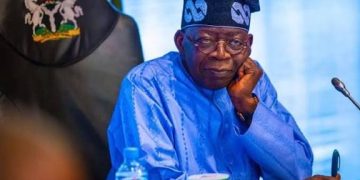
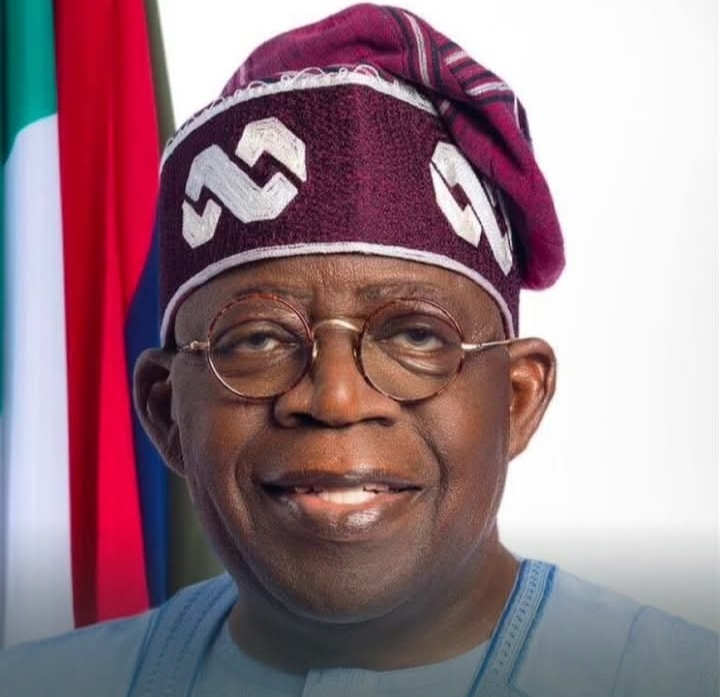
Recent political developments, particularly the judicial upheaval that culminated in the sack of the national leadership of the African Democratic Congress (ADC) by the Court of Appeal, have lent striking credence to a prediction I reluctantly articulated some time ago. At the time, many dismissed the prognosis as exaggerated political pessimism. Yet events appear to be steadily validating the thesis that Nigeria may be drifting toward a political environment in which President Bola Ahmed Tinubu could, metaphorically speaking, find himself contesting the 2027 presidential election against little more than his own shadow.
The dynamics currently unfolding under the leadership of the ruling All Progressives Congress (APC) are historically novel in Nigeria’s democratic trajectory. At the heart of this phenomenon lies an unmistakable driver: the fierce and unrestrained desperation to retain political authority at all costs. In this unfolding drama, the traditional guardrails of democratic pluralism appear increasingly fragile.
Opposition parties, once conceived as the indispensable pillars of democratic balance, have gradually been stripped of their mystique and potency. Many have either succumbed to internal implosions or been weakened by political co-optation, economic vulnerability, and relentless institutional pressure. What remains is an opposition landscape that appears fragmented, compromised, and often incapable of mounting a coherent challenge to the ruling establishment.
The weaponisation of poverty has become a subtle yet formidable instrument within this political architecture. In a nation where economic hardship afflicts vast segments of the population, patronage networks become powerful tools for political alignment. Political loyalty, in many cases, is no longer anchored in ideological conviction but in the pragmatic necessity of survival.
Simultaneously, the anti-corruption campaign, while undeniably necessary in principle, has increasingly assumed a selective and strategic character within the theatre of Nigerian politics. It is an open secret that few political actors in the country can claim immaculate records. The corridors of power across party lines have historically been populated by individuals whose political fortunes are often intertwined with questionable financial legacies.
Thus emerges a curious paradox: politicians who once stood accused of grave improprieties often find redemption not through judicial exoneration but through political realignment. The moment they gravitate toward the ruling centre, their past indiscretions mysteriously lose urgency. Yet those who fall out of favour soon rediscover the formidable reach of investigative agencies.
This cyclical pattern has created a political climate where allegiance to power functions almost as an informal shield against accountability. In essence, many political actors appear to queue behind the throne not necessarily out of conviction, but out of instinctive self-preservation.
One is therefore tempted to pose an uncomfortable question: if indeed vast public resources have been misappropriated over the years, would it not be more effective for anti-corruption agencies to intervene at the moment of accumulation rather than embarking on symbolic recoveries long after political tenures have expired? Early intervention would not merely deter corruption but could redirect public wealth toward urgent national priorities. education, healthcare, infrastructure, and social welfare.
Instead, the current pattern often results in belated recoveries that resemble fiscal crumbs when compared to the magnitude of the original plunder.
Meanwhile, Nigeria’s democratic institutions appear to be steadily consolidating around the sustenance of the present political order well beyond the horizon of 2027. The judiciary, the security apparatus, political institutions, and even segments of the media establishment seem increasingly entangled within a system that privileges stability of power over the vibrancy of dissent.
With the apparent destabilisation of the ADC’s leadership structure and the persistent fragmentation of other opposition platforms, the prospect of a credible nationwide political alternative grows increasingly remote.
For students of political history, this trajectory evokes uncomfortable parallels with earlier periods across the African continent where competitive democracies gradually morphed into de facto one-party state, not always by constitutional decree, but through systematic erosion of opposition capacity.
When dissenting voices are gradually muted, when opposition parties become shadows of themselves, and when political survival depends largely on proximity to the ruling authority, the architecture of democracy begins to hollow from within.
Nigeria, regrettably, appears to be approaching that delicate threshold.
In the folklore of my people there is a saying: “Eze Onye Agwalam.”
It loosely conveys the tragic moment when the king proclaims that no one must speak again, not because truth has vanished, but because truth has become inconvenient.
A nation reaches a perilous juncture when criticism of government policy is perceived not as civic duty but as political hostility. Democracy thrives on argument, scrutiny, and dissent. Once these pillars begin to weaken, the system may continue to wear the garments of democracy while its spirit quietly withers.
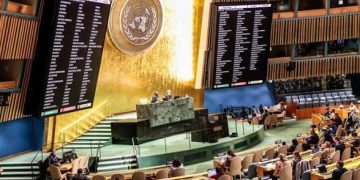
Today, within the committee of nations, Nigeria continues to answer “Present.” Yet the deeper question remains: what precisely are we presenting to the world, a vibrant republic of competing ideas, or an increasingly centralised political order in which power circulates within an ever-narrowing orbit?
History teaches us that democracy rarely collapses in a single dramatic moment. More often, it erodes gradually. through silent compromises, institutional fatigue, and the slow normalisation of political dominance.
The destiny of a nation cannot be entrusted solely to the will of those who hold power today; it must equally accommodate the voices of those who challenge it.
For when a nation finally arrives at the point where only one voice can be heard, it may have already travelled too far down a road from which democratic recovery becomes painfully difficult.
The time for reflection, therefore, is not tomorrow.
It is now.