

























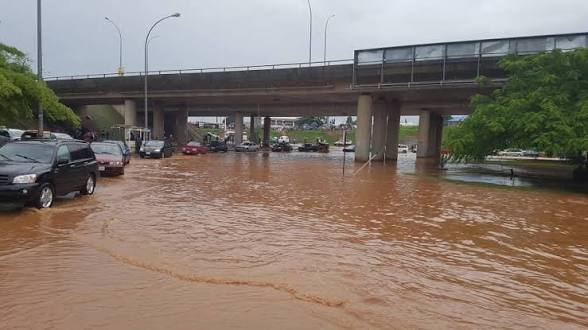
For years, the warnings arrived like clockwork and were dismissed with the same rhythm. Environmental activists said the sale of Abuja’s green belts and waterway buffers to developers would eventually flood the city centre. Investigative journalists documented, in granular detail, who was receiving those plots and how. And each time, the response from the Federal Capital Territory Administration amounted to a shrug — until Saturday, 15 August, when the rain fell as it always does in August, and Nigeria’s capital went under water anyway.
This time it was not the usual story of Lokogoma or Trademore Estate, the low-lying settlements on Abuja’s fringes that have flooded so often the disaster barely makes the news. Floodwater surged through Wuse 1 and Wuse 2, Adetokunbo Ademola Crescent, Garki, Katampe, Gudu, Durumi and Gaduwa the manicured heart of the city, the districts where ministers live and diplomats are chauffeured. Cars were swallowed outside event centres. A bridge disappeared beneath brown water. Motorists sat marooned for hours. Abuja’s elite discovered, rather suddenly, that the drainage crisis they had spent years explaining away as somebody else’s problem was in fact their own.
It should not have been a surprise. Federal agencies had spent the better part of the rainy season warning that Abuja and dozens of other local government areas faced serious flood risk this year. The Nigeria Hydrological Services Agency and the Meteorological Agency had done their job. What failed was everything downstream of the warning, literally.
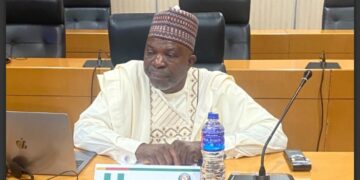
The FCT Minister, Nyesom Wike, has not lacked for critics on this point, and they have not lacked for evidence. In July last year, an investigation alleged that Wike had signed off on more than 2,000 hectares of prime Abuja real estate for his son, alongside dozens of further allocations to relatives and associates, including a plot handed to his own father in the well-heeled Guzape II district. Months later, in January this year, campaigners renewed their accusations that protected green spaces, land explicitly reserved under Abuja’s master plan to manage exactly this kind of flood risk, were being carved up for commercial development. Groups such as the Housing Development Advocacy Network had been raising the alarm about this pattern since at least October 2025.
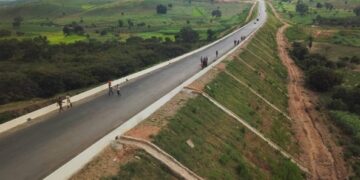
None of this proves, on its own, that any single flooded street was inundated because of a specific land deal. Correlation is not causation, and Abuja’s flooding problem, as the minister’s aides are quick to point out, did not begin with Wike. But the pattern critics describe is coherent and troubling: a city designed around green corridors and waterway buffers precisely to manage its heavy seasonal rainfall, being steadily stripped of that protection in the name of private development. Residents and social media users have accused Wike of selling off green areas, blocking waterways and disregarding the city’s master plan, and one widely shared observation captured the underlying physics of the argument: Abuja sits on elevated, undulating terrain, which under normal conditions should make serious flooding difficult rather than routine.
Confronted with a flooded city centre, the minister’s chosen response was demolition, of other people’s buildings. Wike ordered the immediate demolition of every structure built on waterways and flood channels across the FCT, insisting that no exception would be made for high-profile owners he specifically warned that the properties of senators and other influential figures who had built on designated water channels would not be spared. It is, on its face, the correct policy. Nobody should be permitted to build on a flood channel, however connected they are.
But there is something conspicuous about a minister who is himself accused of authorising the very allocations that made such encroachment possible, framing the clean-up as a matter of enforcing rules against wealthy scofflaws who defied him. His office has been characteristically combative about the criticism rather than reflective. A statement from his senior aide dismissed one prominent activist’s remarks in strikingly personal terms, insisting the flooding predated the minister’s tenure and that it was misleading to hold the current administration responsible. Separately, a federal environment ministry assessment attributed the worst of the flooding to blocked manholes and drainage channels choked with silt and solid waste, a technical finding that is true as far as it goes, but conveniently silent on why so many of Abuja’s natural waterways and green buffers, which once absorbed exactly this kind of stormwater, are no longer there to do so.
Even the FCT’s own senator has said her warnings went unheeded. Senator Ireti Kingibe, who represents the territory, has said that concerns she raised repeatedly about flooding and blocked drainage were ignored by Wike, adding that she had flagged the risk as far back as last December and before. When a sitting senator says she could not get the minister’s attention on flood risk, “nobody warned us” stops being a credible defence.
But a demolition drive aimed at flood-channel encroachers, however satisfying the bulldozer footage, answers only half the question. The other half is who signed the paperwork that let green areas and waterway corridors become buildable land in the first place, on whose authority, and to whose benefit. Nigeria’s anti-corruption and land administration institutions, not merely the minister’s own communications office, should be establishing whether the allocations alleged over the past year were lawful, and if they were not, whether they should be reversed.
Abuja was planned, at real cost, as a city that could absorb its own rain. What is drowning this month is not simply drainage capacity. It is the credibility of a government that spent years being warned this would happen, and is now asking to be trusted with cleaning up a mess it is accused of having sold, plot by plot, to itself.