






























The UN Children’s Fund says cholera is spreading rapidly across West and Central Africa, with active outbreaks now in six countries and millions of children at growing risk.
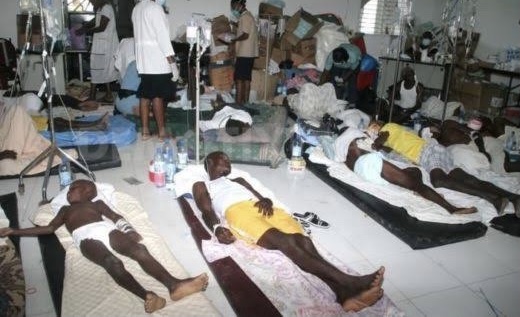
UNICEF said Nigeria had the largest outbreak in the region, with more than 50,000 cumulative cases and 338 deaths recorded since January 1. The UN children’s agency said the epidemic is driven largely by a major outbreak in Borno state.
Nigeria currently accounts for the largest reported cholera outbreak in the region, with more than 50,000 cumulative cholera cases and 338 deaths reported since January 1, 2026, in the country, with a major outbreak in Borno as of the end of July 2026.
UNICEF said active cholera outbreaks were rapidly accelerating in Nigeria, the Democratic Republic of the Congo, the Republic of Congo, Chad, Cameroon and the Central African Republic.
The UN agency said children were bearing a disproportionate share of the cholera burden and comprise a high percentage of those affected in these countries.
“This outbreak is no longer confined by borders. It is moving along shared rivers, trade routes and population movements, putting millions of children at risk. Every new infection is a reminder that millions of children are still being denied one of their most basic rights: safe water. We know how to stop cholera.
“What is needed now is urgency, the investment and the regional solidarity to act before more children lose their lives to a disease that is entirely preventable,” said UNICEF regional director for West and Central Africa, Gilles Fagninou.
The UN agency is calling for $15 million in additional funding to scale up its response over the next six months.
UNICEF said seasonal rains, flooding, population displacement and cross-border transmission are accelerating the spread of the sometimes-deadly waterborne disease, which is both preventable and treatable.
Mr Fagninou said flooding is contaminating water sources, damaging sanitation infrastructure and cutting off access to vulnerable communities.
He added that every new infection is a reminder that millions of children are still being denied access to safe water, and that stopping cholera required urgency, investment and regional solidarity.
UNICEF and partners, working with national and sub-national authorities, are expanding access to safe water and sanitation, strengthening disease surveillance, supplying essential health materials and supporting oral cholera vaccination campaigns.
The agency is also coordinating with the World Health Organisation and the Africa Centre for Disease Control along key transmission routes. NAN