
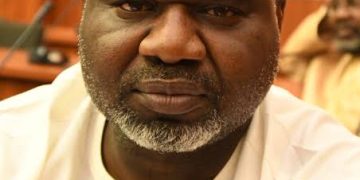














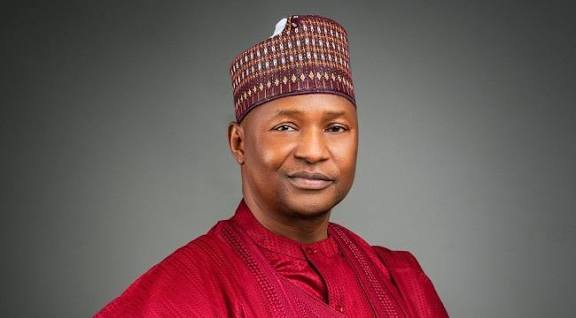
The Economic and Financial Crimes Commission has again quizzed former Nigeria’s Minister of Justice and Attorney General of the Federation, Abubakar Malami.
Malami was taken into custody on Monday for unrelated corruption allegations raised by the EFCC in his previous invitations.
It was further gathered that by Monday night, Malami was reportedly working to meet his bail conditions after hours of questioning.
“EFCC arrested Abubakar Malami again; he was looking for two Permanent Secretaries for bail conditions on Monday night,” a source privy to the probe said.
Recall that Malami had on Friday, November 28, in a statement announced that he has been invited be the anti-graft agency.
“I am informing my family and friends that EFCC has invited me to clarify on some issues, and as a citizen of law and order and patriot, I am willing to honor this invitation without any hesitation,” he stated.
Malami later released a statement, saying that he had further visits to the EFCC office.
In a post on his official X handle, he alleged that the allegations against him were fabricated.
“In line with my undertaking to keep Nigerians updated on my invitation by EFCC, I give glory to Allah for His divine intervention,” he wrote.
“The engagement was successful and I am eventually released while on an appointment for further engagement as the truth relating to the fabricated allegations against me continue to unfold,” he wrote in a post on Saturday.
According to the Cable, Malami’s name featured in a number of questionable deals under the Muhammadu Buhari administration.
The transactions bordered on the mysterious payment of $496 million to Global Steel Holdings Ltd (GSHL) as settlement for the termination of the Ajaokuta Steel concession nine years after the Indian company had waived all claims for compensation.
Another contentious matter is Malami’s handling of the sale of assets worth billions of naira forfeited to the EFCC by politically exposed persons.
The former minister’s role in the $419 million judgment debt awarded to consultants who claimed to have facilitated the Paris Club refunds to states is also up for scrutiny.
Others are the curious agreement to pay Sunrise Power $200 million compensation in its dispute with the federal government over the Mambilla power project, and the duplicated legal fees in the transfer of $321 million Abacha loot from Switzerland to Nigeria.