









The recent airstrike has bought Nigeria valuable time. What the government chooses to do with this window of opportunity will determine the nation’s future trajectory. It is beyond speculation that the United States’ intervention significantly altered the security landscape, allowing certain regions of Nigeria to experience a rare moment of peace during the festive season.
This reprieve must not be wasted. The Nigerian government should treat it as a golden opportunity to dismantle terrorist hideouts, reclaim sovereignty, and restore lasting stability. Swift and decisive action is required to sweep these elements out permanently.
Furthermore, the American government and Nigerian security agencies should consider sustaining the pressure. These groups may be regrouping, and hesitation could allow them to regain strength. Whether their temporary slowdown was a direct result of the airstrike or a tactical pause, this moment presents a critical chance to neutralize them once and for all, for the sake of peace, security, and the preservation of Nigeria’s future.
Those who deny that Christians are being killed, while readily acknowledging that Muslims are victims, are in effect claiming that only Muslims are dying. Those who reject that genocide is taking place, because it conflicts with their political interests, should be ashamed of themselves. Any politician willing to build a future administration on the blood of innocent Nigerians can never be a good leader.
Nigerians should take careful note of those who remained silent during this crisis. Many of these same politicians have already sent their families abroad for safety. If that is the case, who exactly are they fighting for? They are not fighting for Nigeria; they are fighting for their own future and for the wealth they intend to pass on to their children.
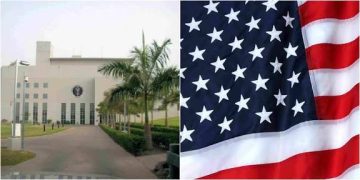
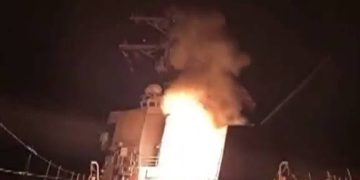
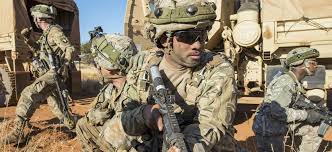
The United States’ Christmas Day airstrike on Islamic State-linked militants in northwest Nigeria did more than eliminate a dangerous terror cell. It reshaped Nigeria’s security conversation, exposed weaknesses in domestic counterterrorism, and reopened the debate about the government’s responsibility to protect both lives and livelihoods.
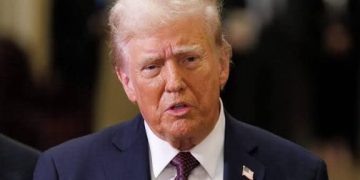
U.S. President Donald Trump warned that further military action could follow if terrorist violence, particularly against Christian communities, continues. Trump said the scale of attacks on Christians had reached a level that could justify repeated intervention.
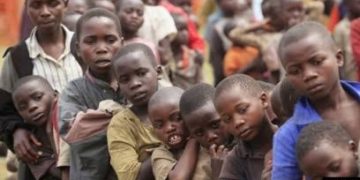
The Nigerian government, while welcoming the U.S. cooperation, rejected any framing that suggests the conflict is driven solely by religious persecution. The extremist groups, such as Boko Haram and the Islamic State West Africa Province (ISWAP), have killed thousands of Christians. Terrorism in Nigeria is a national security crisis, but to Christians who have lost loved ones, it understandably feels like a religious war. What cannot be disputed is the sheer scale of the violence.
According to U.S. military statements, the Christmas Day airstrike targeted locations in Sokoto State that intelligence identified as staging and assembly points for foreign Islamic State operatives who had infiltrated Nigeria. These facilities were believed to be central to planning attacks and coordinating cross-border militant movements.
Debris from the strike reportedly fell in parts of Jabo and even as far as Offa in Kwara State, though no civilian casualties were confirmed.
The strike came just weeks after Washington designated Nigeria a “country of particular concern,” citing persistent terrorist attacks and rising instability. It also followed months of escalating violence that had reached alarming levels ahead of Christmas 2025.
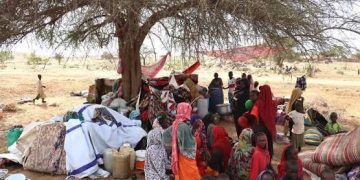
In the weeks before the strike, terrorist and bandit activity surged across large parts of Nigeria. Kidnappings of students, travelers, and residents became almost routine. Armed gangs operated with near impunity along major highways, forcing many Nigerians to abandon road travel altogether.
A shadowy group known locally as Lakurawa, believed by analysts and residents to have links to Islamic State affiliates, terrorized communities across the northwest. Even areas near the federal capital were no longer safe.
Fear dominated the festive season. Attacks reportedly tripled, and many Nigerians cancelled travel plans or resorted to flying, even when it meant draining their savings.
I love traveling by road, but as a journalist, it became nearly impossible due to the risk of kidnapping. Flying was the only option left, even though it came at great personal cost. Terrorists had made ordinary road travel unsafe.
The psychological impact was immediate. For many Nigerians, the strike offered a rare glimpse of what decisive action against terrorism could achieve.
But it also raised an uncomfortable question:
Why did it take foreign intervention for Nigerians to feel safe on their own roads?
Military strikes alone will not end terrorism in Nigeria. Extremist groups survive because they are funded, through ransom payments, smuggling, illicit trade, and shadow financial networks.
If Nigeria is serious about defeating terrorism, it must fight not only on the battlefield but also in the financial system. The government must identify and arrest sponsors of terror, freeze terrorist-linked accounts, disrupt fundraising pipelines, and work with global financial institutions to block extremist funding. Without cutting off the money, new fighters will always replace those who are killed.
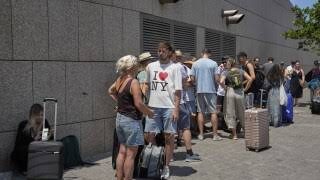
While security improved after the airstrike, another injustice remains unresolved: how Nigerian airlines treat passengers.
Because of terrorism, thousands of Nigerians were forced to fly rather than drive. Ticket prices skyrocketed. Flights were delayed or cancelled. Yet when disruptions occurred, passengers were left to cover hotel bills, food, and missed connections out of their own pockets.
In most countries, airlines are legally required to compensate passengers for delays and cancellations. In Nigeria, travelers are often abandoned.
If the government can accept foreign military help to protect its citizens, it can also compel airlines to protect consumers. Compensation must be mandatory, not optional.
The Sokoto airstrike may prove to be a turning point in Nigeria’s long war against terrorism. It weakened extremist networks and restored a measure of public confidence.
But lasting peace will require more than bombs. It will require financial warfare against terror sponsors, stronger intelligence, transparent security cooperation, and respect for the ordinary Nigerian who simply wants to travel safely and live in peace.
Nigeria must not outsource its sovereignty. But it must also not waste this moment.
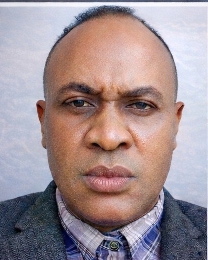
Daniel Nduka Okonkwo is a seasoned writer, human rights advocate, and public affairs analyst known for his incisive commentary on governance, justice, and social equity. Through Profiles International Human Rights Advocate, he champions accountability, transparency, and reform in Nigeria and beyond. With over 1,000 published articles indexed on Google, his work has appeared on Sahara Reporters and other leading media platforms. He is also an accomplished transcriptionist, petition writer, ghostwriter, and freelance journalist, recognized for his precision, persuasive communication, and unwavering commitment to human rights.
📧 Contact: dan.okonkwo.73@gmail.com