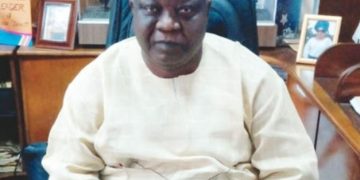








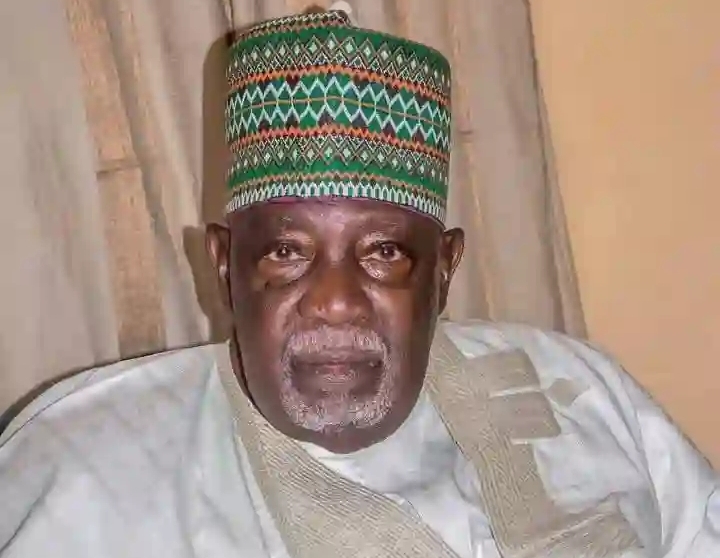
Yesterday at 9:23 pm (Friday, 6 March), I received a message from Baba Rabiu Bako’s phone. It read: “Good evening. This is to inform you that the person with this contact passed away last Sunday.” The message startled me and brought to mind the transient nature of human life. I quickly responded: “Allah Sarki, Baba Rabiu Bako. I am aware and was in the house on Tuesday. Allah ya jikan shi, Allah ya masa rahama.”
As I sent my reply, memories of how I first came into close contact with the deceased came flooding back. One day in 2008, while I was at the LEADERSHIP Newspaper Group working on an exclusive story, I received a call from one of my colleagues, Chimezie Enyiocha, now of Channels Television. He informed me that Alhaji Muhammadu Rabiu Bako, a veteran journalist with Radio Nigeria Kaduna and former Commissioner for Information in Kaduna State, wanted to see me and some other colleagues.
The request came as a surprise. I wondered why he was looking for us, especially me. To the best of my knowledge, I had not written any troublesome story that week. Still, curiosity made the invitation difficult to ignore.
When we arrived at the No. 4 Ahmadu Bello Way residence of the Bakos, which shares a fence with the historic First Baptist Church Kaduna, a church established in 1918 by a group of Yoruba traders, construction workers, and colonial officials following doctrinal differences and disagreements on baptism and conditions for burial between Anglican and Baptist Christians. While the Anglicans insisted on baptism by sprinkling, the Baptists favoured baptism by immersion. The Anglican position was perceived as an attempt to persuade the Baptists to become Anglicans, which led to the separation. At that period, Ahmadu Bello Way was known as Prince Edward Way.
It is an interesting history as captured by the duo of Professor Terhemba Wuam and Sunday Moses Adebayo Aloko, but I digress back to the initial story.
On entering the house, we found Baba Rabiu Bako already waiting for us.
The house itself carries its own history. Malam Yakubu Ibrahim Bako, the patriarch of the family, had served in the police before he was later appointed Sarkin Sabon Garin Kaduna by the Emir of Zazzau, Jaafaru Dan Isyaku. Among his children was the late Audu Bako, who rose through the ranks of the Nigeria Police to become a Commissioner of Police before he was appointed Military Governor of Kano State. Baba Rabiu Bako was one of his younger brothers.
Our intermediary, Alphonsus Okoroigwe, whom I have not seen for almost fifteen years now, introduced us. As journalists normally do, we switched on our recorders. Baba Rabiu Bako politely asked us to pause them. He explained that it would be an off-the-record interview, more of an interaction. I then asked myself what kind of interview is an off-the-record interview?
What followed was an engaging discussion. He spoke to us at length and shared his views on several sensitive matters surrounding the political climate in Kaduna at the time. His observations reflected both experience and caution. At the end of the conversation, he appealed to us to be thorough in handling some sensitive issues in the state at the time. We asked him several questions, which he answered patiently before bringing the meeting to a close. I then came to understand the meaning of an off-the-record interview, which involves providing journalists with privileged and reliable background information on an issue to help them understand its complexities and sensitivities for accurate reporting.
Before we left, he asked us to convince him that none of us had secretly recorded the conversation. We laughed. He smiled and said, “You know I understand the attitude of journalists very well. I am one of you, and I know what we can do.”
As we stepped out, he asked if I was the son of a retired soldier he knew in Magajin Gari, judging by the Aruwan in my name. He also asked if I was the boy he had been seeing at the residence of Alhaji Raji Adeyeye at No. L16 Ibadan Street. I confirmed that I was indeed the one and explained that Alhaji’s son, Dauda, was my close friend with whom I share a brotherly bond.
That brief exchange marked the beginning of a relationship that endured for many years.
As time went on, I was appointed into government, first as a spokesperson, later as Commissioner, and eventually as Administrator of the Kaduna Capital Territory Authority located in the same Magajin Gari that houses the Authority. Baba Rabiu Bako was among the elders who offered steady fatherly support and encouragement. Others included Alhaji Abubakar Mustapha, Ambassador Sule Buba, Auta Mamman Busa, and the late Justices Tanimu Zailani and Haruna Makeri, among many others.
When his wife, another veteran broadcaster, Hajiya Habiba Rabiu Bako, passed away in 2024, many of us gathered to condole him. As fate would have it, he also answered the call of death last Sunday in Kaduna. With his passing, the curtain quietly fell on the last surviving child of Malam Yakubu Ibrahim Bako.
I will not attempt to write extensively about the Bako family in this piece because, at the request of a biographer, I am currently writing a blurb for a carefully researched book published in memory of Governor Audu Bako, who was Baba Rabiu Bako’s elder brother. All of them were children of Malam Yakubu Ibrahim Bako, who died in Kaduna in 1967 after a long life of service that began in Argungu, continued in Zungeru, and later in Kaduna in the early years of the twentieth century.
Readers will read more about the Bakos, particularly their patriarch Yakubu Ibrahim Bako and Commissioner of Police Audu Bako, in the coming weeks.
Returning to the life of Alhaji Muhammadu Rabiu Bako himself, he served at various times as Chairman of Kaduna Local Government and Commissioner of Information many years after retiring from the Federal Radio Corporation of Nigeria.
Much of the detailed account of his professional journey was also reeled out in an interview he granted to my former editor at LEADERSHIP and Blueprint Newspapers, the cerebral Ibrahim Sheme, on 14 June 2021, which Sheme released this week on Facebook and YouTube. In that interview, Baba Rabiu Bako reflected extensively on his life, career, and family background.
He also spoke about the passing of his elder sister, Hajiya Maryam Kurundu, who had died earlier in 2021 at over ninety years of age, just two months before the interview. With her passing, he explained that he had become the only surviving child among the direct offspring of their father. He said in an emotional tone that he was now left only with the children and grandchildren of his elder siblings, as well as his own children and grandchildren.
He explained that he began his broadcasting career at the Nigerian Broadcasting Corporation in 1961 under the guidance of pioneers such as Shuaibu Makarfi, Ango Zaria, Mamman Daura, Sani Kontagora, Adamu Gumel, Abba Zoro, Mudi Oyeleke, Tunji Oyeleke, and Patrick Ityohegh.
From the Nigerian Broadcasting Corporation, he moved to Radio Television Kaduna in 1962 when the station began broadcasting from Independence Hall at Government College Kaduna. He started as an artist and later became a permanent staff member.
In the same interview, he described the late Yusuf Ladan as “a gentleman and a gentle broadcaster.”
His years as a correspondent were also revealing. He served in Sokoto when it was part of the North West State. He later worked in Kaduna and Jos covering Benue Plateau, then Kwara, and also served in Ibadan where he replaced Lawal Yusuf Saulawa.
His posting to Kano, however, lasted less than two weeks after his elder brother, Governor Audu Bako, objected to the posting on the grounds of conflict of interest. He insisted that it was inappropriate for his younger brother to serve as a Correspondent in a state where he was the military governor. He was therefore posted to Kaduna, from where he later moved to Jos to cover Benue-Plateau State.
He also told Sheme about some of the radio drama and programmes he participated in, such as ‘Gundumi Fasa Kwanya’, ‘Ta Gudu Ta Gudu’ and ‘Zabi Son Ka’ which he anchored among many others.
His recollection of the primary school he attended, popularly known as ‘Gaba da Anfani’ in Tudun Wada Kaduna in 1954, where he was in Class 1B, and the fact that the school is where the Fire Brigade now stands, as well as his transition to Maiduguri Road School between 1961 and 1965, confirms other accounts of Kaduna’s history, especially for those of us from Doka, Tudun Wada, and surrounding communities.
He explained his tertiary education at Kaduna Polytechnic, where he obtained both a Diploma and an Advanced Diploma in Public Administration and Management, which shaped his later career. In the same interview, he narrated the circumstances surrounding his application for voluntary resignation from the Federal Radio Corporation of Nigeria, how the request was initially rejected and later postponed, and how he eventually left the service ceremoniously in 1985 before moving into business and later politics.
Baba Rabiu Bako liked expressing his opinions and did so with a calm and thoughtful disposition. Another quality that stood out was his frankness. He believed strongly in standing by the truth regardless of the consequences.
With his passing, Kaduna has lost one of the witnesses to an important chapter in the history of broadcasting and public service in Northern Nigeria. For those of us who encountered him at different stages of our young lives, the memory that endures is that of a man who spoke his mind freely, carried himself with quiet confidence, and never forgot the profession that first shaped his public life.