





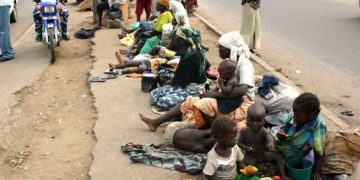















From spilled tomatoes to trucks carrying instant noodles, from tankers conveying petroleum products to vehicles transporting foodstuffs, whenever an accident occurs on Nigerian roads, it becomes an opportunity for survival for many citizens. When goods fall, some Nigerians rush to pick foodstuffs mixed with dirt and cook them for brief relief from hunger. Others gather the contaminated products and resell them cheaply to equally desperate buyers. This uncomfortable truth is perhaps the clearest description of the suffering facing over 98 percent of Nigerians today.
Fuel scooping, therefore, is not just a safety issue it is a mirror reflecting the state of the nation. It exposes a society where poverty has become so extreme that citizens are willing to gamble with fire for survival.
What makes the situation more tragic is that while citizens are pushed into these life-threatening choices, government policy continues to intensify their suffering through rising taxes and economic pressures. Instead of reducing the burden on the poor, policies often deepen it.
Government officials may deny it, but the scale of economic hardship in Nigeria increasingly appears systematic as though poverty itself has become a tool for controlling the population.
This desperation was again on display on Monday morning when a fuel tanker laden with petroleum products overturned at the Tin Can Liverpool Bridge in Apapa, Lagos. Nigerians were seen scooping fuel from beneath the bridge shortly after the accident. Eyewitnesses described crowds gathering immediately, collecting the leaking petroleum despite the obvious danger.
This is not an isolated incident. Fuel scooping has become a recurring national tragedy. Across the country, whenever tankers fall, crowds appear almost instantly, armed with jerrycans, bowls, and buckets, risking death for a few litres of fuel.
Ironically, the Federal Government itself has acknowledged that fuel tanker accidents are common, attributing them to bad roads, overloading, and poor vehicle maintenance. These same conditions, however, also create repeated “opportunities” for fuel scooping. In a society wracked by hunger, every spill becomes a marketplace.
Official explanations often point to high fuel demand and easy access to spilled products as reasons for the practice. Indeed, frequent tanker accidents caused by failing infrastructure make petroleum products physically accessible to the poor. But this is only the surface explanation. The deeper cause is economic hardship.
People do not risk death because they are ignorant. Nigerians are fully aware that tanker explosions are a recurring and deadly feature of national life. Fire services, road safety agencies, and the media repeatedly warn against the danger. Yet the practice continues not because people are reckless, but because they are desperate to feed their families and earn small cash to defeat hunger, even if only for a few hours. Hunger can make a person risk their life in a nation that should be competing with the West because of its vast natural resources and human capital, but is instead cursed with wicked leadership.
Many Nigerians no longer value their lives in the abstract because daily existence itself has become unbearable. Scooping fuel mixed with dirty water is not merely an act of opportunism; it is a survival strategy in a collapsing economy. Some scoop to sell at a profit, others to power generators, transport their families, or simply exchange it for food. In harsh economic times, danger becomes secondary to hunger.
Until Nigeria confronts the root cause of widespread economic despair, tragedies at accident scenes will continue. The problem is not merely bad roads or careless drivers. It is a system that has left millions with nothing to lose.
Daniel Nduka Okonkwo is a seasoned writer, human rights advocate, and public affairs analyst renowned for his incisive commentary on governance, justice, and social equity. Through Profiles International Human Rights Advocate, he champions accountability, transparency, and institutional reform in Nigeria and beyond. With over 1,000 published articles indexed on Google, his work has appeared on Sahara Reporters and other leading international media platforms.
He is also an accomplished transcriptionist, petition writer, ghostwriter, and freelance journalist, widely recognized for his precision, persuasive communication, and unwavering commitment to human rights.
📧 Contact: dan.okonkwo.73@gmail.com