





















In the wake of Nigeria’s most sweeping tax reforms in decades, human rights advocates are sounding the alarm that economic rights are inseparable from human rights, and workers must not be sacrificed at the altar of fiscal modernisation. With the Nigeria Tax Act 2025 now in force, civil society leaders warn that gaps in communication, uneven implementation, and overlooked worker protections risk transforming a landmark reform into a crisis of trust, eroding livelihoods, and undermining the very social contract the government has pledged to uphold.
Human rights advocates in Nigeria are raising concerns that the country’s sweeping tax reforms, introduced under the Nigeria Tax Act 2025, could unintentionally worsen economic hardship for millions of workers unless implementation gaps and public misinformation are urgently addressed.
Human rights advocate Daniel Nduka Okonkwo called on the Federal Government and the Federal Ministry of Finance to improve transparency, strengthen worker protections, and ensure that the new tax regime aligns with both domestic constitutional obligations and international human rights standards.
The statement comes months after President Bola Ahmed Tinubu signed four major tax reform bills into law on 26 June 2025, marking the most comprehensive overhaul of Nigeria’s fiscal system in decades. The reforms, which took effect on 1 January 2026, consolidated numerous fragmented tax statutes into a unified framework aimed at modernising revenue administration, broadening the tax base, and easing the burden on low-income earners.
While the advocates acknowledged the government’s stated objectives as ambitious and potentially transformative, they argued that implementation challenges and inconsistent public communication are undermining confidence in the reforms.
According to the statement, many Nigerians were led to believe that workers earning up to ₦100,000 per month would be exempt from Personal Income Tax under the new framework. However, the enacted law reportedly places the tax-free threshold at ₦800,000 annually approximately ₦66,667 per month.
The advocates described the discrepancy as more than a technical misunderstanding, warning that it has already generated frustration among low-income workers who expected relief but are now facing deductions from already strained earnings.
“For many minimum-wage earners, the difference between ₦66,667 and ₦100,000 monthly income is the difference between survival and hardship,” the statement said, adding that the confusion risks eroding public trust in government policy.
The group also criticised the abolition of the Consolidated Relief Allowance (CRA), previously regarded as an important buffer against inflation and rising living costs. Under the new law, the CRA has been replaced with a Rent Relief provision capped at the lower of ₦500,000 or 20 percent of annual rent paid.
Using a hypothetical example, the advocates noted that a civil servant earning ₦1.2 million annually could previously claim up to ₦240,000 in relief under the CRA system. Under the new Rent Relief structure, a worker paying ₦800,000 yearly in rent would receive a maximum deduction of ₦160,000 — a reduction they argue translates into further financial pressure on middle-income earners already struggling with rising food, transport, and housing costs.
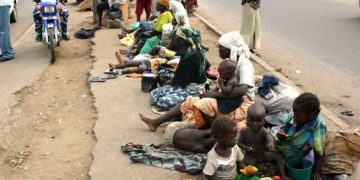
They warned that teachers, healthcare workers, artisans, civil servants, and small business operators are among those most vulnerable to the effects of marginal reductions in disposable income.
Framing the issue as both an economic and human rights concern, the advocates cited Nigeria’s obligations under the International Covenant on Economic, Social and Cultural Rights (ICESCR) and the African Charter on Human and Peoples’ Rights, both of which recognise the right to adequate living standards and equitable working conditions.
They also referenced Sections 16 and 17 of Nigeria’s 1999 Constitution, which direct the state to ensure citizens’ welfare and adequate means of livelihood, as well as provisions of the Labour Act protecting fair wages and dignified working conditions.
“The implementation of fiscal reforms must not erode the dignity of work or undermine the right to livelihood,” the statement argued.
The advocates further urged the newly established Nigeria Revenue Service (NRS), which replaced the Federal Inland Revenue Service (FIRS) under the reforms, to ensure that all administrative guidelines and public communications accurately reflect the provisions of the law.
They warned that lingering ambiguity surrounding tax exemptions, foreign dividend taxation, and cross-border income treatment could discourage investment at a time when Nigeria is seeking to strengthen economic recovery and attract international capital.
To address the concerns, the group recommended a nationwide public awareness campaign clarifying the actual tax-free threshold, expanded relief measures for urban workers facing high living costs, and continuous impact assessments focused on middle-income earners.
Additional recommendations included clearer investor guidance, activation of the Office of the Tax Ombudsman as an accessible dispute-resolution mechanism, and broader stakeholder consultations involving labour unions, tax professionals, civil society groups, and small business representatives.
The advocates concluded that the long-term success of the reforms will depend not only on legislation, but also on transparent implementation and sustained public trust.
“Economic reforms earn legitimacy not through legislation alone, but through fairness, clarity, and accountability,” the statement said. “Whether the Nigeria Tax Act 2025 succeeds will depend on the government’s willingness to protect workers while pursuing fiscal modernisation.”
Daniel Nduka Okonkwo is a Nigerian investigative journalist, publisher of Profiles International Human Rights Advocate, and policy analyst whose work focuses on governance, institutional accountability, and political power. He is also a human rights activist, human rights advocate, and human rights journalist. His reporting and analysis have appeared in Sahara Reporters, African Defence Forum, Daily Intel Newspapers, Opinion Nigeria, African Angle, and other international media platforms. He writes from Nigeria and can be reached at dan.okonkwo.73@gmail.com.