
















Experts from the West African Tax Administration Forum and Tax Justice Network Africa say African countries lose about $89 billion annually to illicit financial flows.
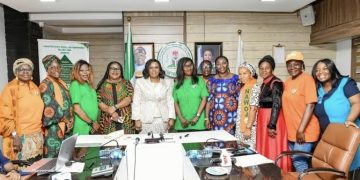
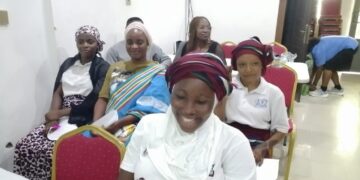
Speaking during an interactive session with ECOWAS parliamentarians at the ongoing 2026 First Ordinary Session in Abuja, they said the losses stemmed from harmful tax practices affecting their economies.
The session also featured presentations on ‘Operationalising ECOWAS Tax Directives for Domestic Resource Mobilisation and Regional Tax Harmonisation’, among others.
They said the harmful tax practices included tax evasion, tax avoidance, and tax misinvoicing, among others, adding that Africa’s persistent domestic resource mobilisation gap was about $194 billion annually.
“Africa has a prevalent problem of illicit financial flows, and at least 65 per cent of these could be categorised as commercially driven. The main practices that could lead to IFFs are tax evasion, tax avoidance, tax misinvoicing and other harmful tax practices.
“These harmful tax practices haemorrhage the available resources that can be used for development of the continent, and Africa loses up to eighty-nine billion dollars annually,” they said, citing a 2020 report.
According to them, advancing tax harmonisation within the ECOWAS sub-region presents a strategic opportunity for WATAF to strengthen regional integration, enhance domestic resource mobilisation, and support sustainable development.
“Tax harmonisation is the fiscal backbone of ECOWAS integration. Without it, the region will continue to lose revenue through loopholes, smuggling, opacity, and profit shifting,” they said.
However, they emphasised that the effectiveness of such efforts would depend on strong political commitment, effective national-level implementation, and active parliamentary oversight.
Nita Belemaobgo, research manager, WATAF, while highlighting the session’s expected outcomes, said the organisation’s objective was to support ECOWAS’ transition on tax directives aimed at harmonising fiscal policies across member states.
“Regional cooperation and evidence-based tools can significantly enhance accountability and reform outcomes,” she said.
Danicius Sengbeh, WATAF’s manager, communications and information technology, underscored the importance of setting regional tax harmonisation and domestic resource mobilisation.
He said the ECOWAS Parliament had an indispensable role to play in the oversight function of tax administration, adding that the engagement was about “sovereignty, fairness, accountability and West Africa’s future”.
Zandile Ndebele of TJNA, in her submission, urged regional MPs to enact laws to ensure that local citizens in African countries benefit from domestic resource mobilisation and management.
The experts appealed to MPs to address IFF issues holistically, stressing that doing so was central to improving both domestic and regional resource mobilisation.
Solomon Adoga of TJNA urged the parliamentarians to make enabling laws for the mining sector by “strengthening extractive legislation, scrutinising new mining agreements and monitoring tax incentives through cost-benefit analysis.”
The experts further urged ECOWAS to extend harmonisation across the broader region to reduce tax distortions, limit harmful tax competition, and strengthen regional economic integration.
According to them, the challenges of IFF can be tackled even without a single currency, noting that member states could still have different currencies and fight IFFs.
They therefore tasked MPs with prioritising global tax reforms, information sharing, and tax transparency, and urged member states to emulate Nigeria’s, Ghana’s, and the Ivory Coast’s vibrant advocacy for fair tax rights allocation.NAN