


































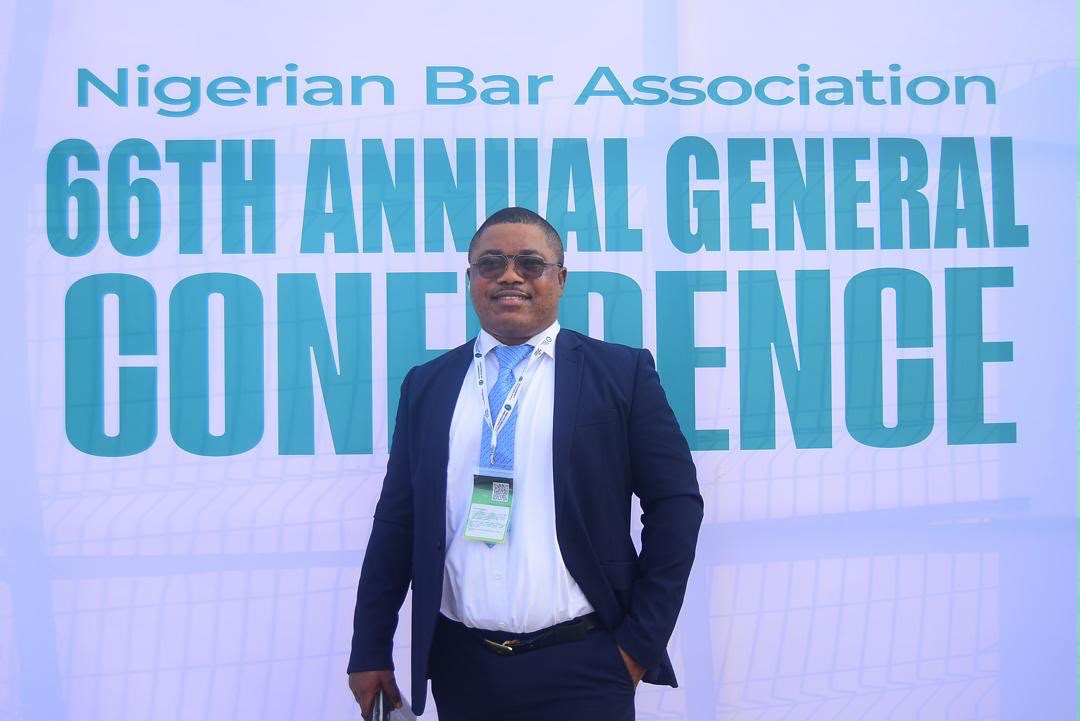
As the Nigeria Bar Association Annual General Conference currently underway in Port Harcourt, Rivers State, offers lawyers an array of intellectually stimulating breakout sessions, one particular session yesterday, in my respectful view, deserves far greater attention than it may have received.
The theme was “Rookie to Rainmaker.”
It was not merely a lecture on how to make money from legal practice. It was, more fundamentally, a lesson on how to build a lawyer-his competence, character, reputation, discipline and professional identity-from the ground up.
The session addressed the dos and don’ts of legal practice and, most importantly, reminded young lawyers that there is no credible shortcut to becoming a respected practitioner. A sustainable legal career is built painstakingly upon hard work, integrity, competence, knowledge, discipline, patience and an impeccable reputation.
The central message was simple but profound: before becoming a rainmaker, you must first become a lawyer worth trusting.
The new wigs were reminded that the legal profession is not an ATM machine into which one inserts a wig and immediately withdraws wealth. There is a period of apprenticeship, learning, sacrifice, tutelage and professional maturation. The kettle, indeed, will eventually boil-but only for the lawyer who has the patience to keep it on the fire.
Prof. Yusuf Ali, SAN, whom I have known in Abuja for over two decades as a hardworking, disciplined, dedicated and honest senior practitioner, delivered a brilliant and deeply instructive lecture, drawing substantially from his experience of over four decades at the Bar.
For those who know him and have observed his career, his message was hardly surprising. His own professional journey is a living testimony to the proposition he advanced: reputation is built over time, but can be destroyed in a moment.
What truly markets a lawyer is not merely brilliance. Brilliance may open the door; character, competence and integrity keep it open. Knowledge gives the lawyer substance; reputation gives him currency; character gives that reputation permanence.
And that brings me to the uncomfortable question: how many lawyers at this conference can honestly beat their chests and say that they have remained faithful to these foundational principles?
We are living in an era in which the appetite for instant gratification increasingly competes with the patience required for professional growth. Some young lawyers scarcely want to undergo tutelage before demanding the privileges of rainmaking. Some want the harvest without planting, the silk without the struggle, and the brief without first acquiring the competence to properly handle it.
Perhaps we should tell ourselves the truth: there is no elevator to professional excellence; one must still climb the stairs.
The NBA should therefore consider this teaching too important to be confined to a single breakout session. It should become part of a continuing conversation about the future of our profession. If we are genuinely concerned about restoring the lost glory, dignity and public confidence in the legal profession, then we must deliberately strengthen the values that once distinguished the Bar.
The NBA must go beyond resolutions and conference rhetoric. Professional ethics must be lived, enforced and consistently upheld. The safeguards already existing within our regulatory framework must be strengthened, and breaches must attract consequences sufficient to preserve the dignity of the profession.
I also sincerely hope that subsequent NBA Annual General Conferences will improve upon what we have witnessed here in Port Harcourt. Enugu set a remarkably high organisational standard, and many attendees understandably expected that standard to be sustained or surpassed. While this year’s conference has provided lawyers with a valuable opportunity for intellectual engagement, reunion, conviviality and professional networking, there have nevertheless been some noticeable organisational lapses.
Yet, beyond the logistics, the enduring value of a conference lies in what each lawyer takes home from it.
For me, “Rookie to Rainmaker” is one of those lessons.
The young lawyer should leave with patience.
The mid-career lawyer should leave with renewed discipline.
The senior practitioner should leave with a deeper sense of responsibility.
And the profession itself should leave with a renewed determination to restore its battered reputation.
At the end of the day, the greatest rainmakers are not those who merely attract the greatest number of briefs; they are those whose names inspire confidence before the brief even arrives.
That is the real journey from Rookie to Rainmaker—not the pursuit of quick money, but the patient accumulation of knowledge, competence, character, integrity and an unblemished reputation.
And if this conference succeeds in reminding even a handful of young lawyers that the fastest route to becoming a respected lawyer is to first become a good lawyer, then this particular teaching would have achieved far more than its modest breakout-session designation suggests.
The future of the Nigerian Bar will not be secured merely by producing more lawyers. It will be secured by producing better lawyers.
Sir Ifeanyi Ejiofor, Esq., KSC
Dunu-Ezeugosinachi