



























By Daniel Nduka Okonkwo
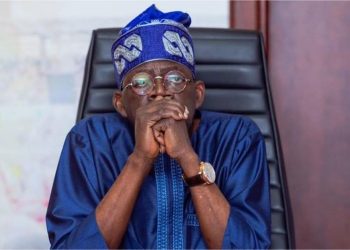
Oil-producing jurisdictions have adopted different approaches to ensuring that natural-resource wealth benefits their populations. Alaska distributes annual dividends to eligible residents from the earnings of its Alaska Permanent Fund, while Norway invests petroleum revenues through its Government Pension Fund Global to preserve national wealth and support public spending over time. Iran, meanwhile, introduced cash transfers alongside its 2010 energy-subsidy reforms to cushion households against higher energy prices. Although these models differ in structure and purpose, they raise an important question for Nigeria: what tangible benefits have ordinary citizens received from the resources released by petrol subsidy removal? Since President Bola Ahmed Tinubu announced the policy in May 2023, higher fuel costs have placed additional pressure on transport, food prices, and household purchasing power. The public-interest test is whether verifiable records demonstrate that the resulting fiscal gains have translated into meaningful improvements in citizens’ lives.
Nigeria’s subsidy debate is therefore about more than the justification for removing government support for petrol. It concerns the scale of the resources released, their subsequent allocation and expenditure, and the extent to which citizens have benefited. The government has defended the reform as necessary to reduce fiscal pressure and redirect public resources towards other priorities. Yet the success of such a policy cannot be established by the announcement of savings alone. It must be assessed against documented expenditure, actual disbursements, and measurable outcomes.
Subsidies operate across several sectors, but their financial structures and intended beneficiaries differ. Petrol subsidy removal changed the relationship between government expenditure, fuel pricing, and public revenue. Electricity subsidies cover part of the gap between regulated customer tariffs and the cost of supplying power. Food interventions seek to make selected staples more affordable, while agricultural support, tax concessions, and student loans pursue different economic and social objectives. These programmes cannot be treated as a single account. Each requires scrutiny of its funding, disbursement, beneficiaries, and measurable outcomes.
The cost of petrol remains one of the most visible indicators of the pressure on Nigerian households following subsidy removal. The scale of the former subsidy was substantial. The Nigerian National Petroleum Company Limited put its 2022 subsidy expenditure at ₦4.39 trillion, while a Finance Ministry study estimated ₦3.74 trillion for the same year. Before the policy change in May 2023, petrol was sold at approximately ₦189 per litre at many outlets, although prices varied by location and supply conditions. Prices subsequently rose sharply. By October 2026, reported pump prices at NNPC stations ranged from approximately ₦1,355 to ₦1,435 per litre, while the Dangote refinery’s reported Lagos depot price reached ₦1,348 per litre on 15 October. These figures represent more than seven times the pre-removal pump price in some comparisons. They are dated market observations, not a uniform national price, and exchange rates, crude oil prices, distribution costs, and other market conditions also influence retail prices. Nevertheless, the consequences for households and businesses dependent on road transport are clear: petrol consumes a substantially larger share of many budgets, with further effects on transport fares, food distribution, and operating costs.
In August 2026, the Federal Ministry of Finance published its economic reform scorecard, setting out the government’s account of the fiscal effects of reforms between June 2023 and December 2025. Finance Minister and Coordinating Minister of the Economy Taiwo Oyedele presented the figures on 19 August, estimating that subsidy savings across the Federation amounted to ₦15.8 trillion. Of this amount, the Federal Government’s share was ₦5.43 trillion, while states received ₦6.52 trillion and local governments ₦3.88 trillion. Oyedele explained that the savings did not arrive as a single credit labelled subsidy savings but were reflected in Federation Account revenue collections. The scorecard, therefore, does not support the claim that the entire ₦15.8 trillion accrued to the Federal Government or remained in a single federal account. The figures establish the government’s reported fiscal position, but the distribution of additional revenue across the three tiers of government does not, by itself, establish the benefits ultimately delivered to citizens.
The same scorecard presents a more complicated picture of the Federal Government’s finances. It records ₦20.4 trillion in incremental federal resources, comprising ₦5.43 trillion in the Federal Government’s share of estimated subsidy savings, ₦3.12 trillion in other incremental revenue, and ₦11.85 trillion in incremental borrowing. Borrowing, therefore, accounted for approximately 58 per cent of these additional resources, compared with about 27 per cent from subsidy savings. Over the same period, the government recorded ₦30.64 trillion in incremental expenditure pressures, of which ₦20.404 trillion was funded from the additional resources and the balance from the existing revenue base. The largest items included ₦9.39 trillion for wage adjustments, minimum-wage increases, and allowances; ₦9.37 trillion for the increased naira cost of external debt service following exchange-rate depreciation; ₦6.47 trillion for strategic infrastructure; and ₦3.14 trillion for electricity subsidy costs. Domestic debt service added another ₦1.24 trillion, bringing the reported increase in debt-service costs to ₦10.61 trillion, approximately ₦4.14 trillion more than the amount allocated to strategic infrastructure. Oyedele acknowledged that the higher federal wage bill alone exceeded the Federal Government’s entire share of the estimated savings. The scorecard also lists ₦423.8 billion for social welfare transfers, approximately 1.4 per cent of the incremental expenditure pressures. These figures show that the reform’s fiscal consequences cannot be assessed by quoting the headline savings alone.
The figures also raise questions about expenditure priorities, funding adequacy, and measurable public benefits. They do not, by themselves, establish whether every expenditure was efficiently executed or whether citizens received benefits proportionate to the economic costs they absorbed. The published scorecard provides the government’s explanation of its fiscal position; it is not a substitute for independently verifiable payment records, project audits, and beneficiary data. The infrastructure figures make this distinction particularly important. According to reports on the scorecard, the Lagos-Calabar Coastal Highway received ₦2.23 trillion, the Sokoto-Badagry Superhighway ₦1.11 trillion, and the Trans-Sahara Superhighway ₦489.3 billion. Together, these three projects accounted for nearly 60 per cent of the strategic infrastructure allocation. To assess the public value of this expenditure, citizens need verifiable information on contract sums, actual disbursements, project milestones, completion status, and independent assessments of what has been delivered. Similarly, the reported wage expenditure establishes the scale of the government’s personnel costs, but does not show whether workers’ income gains kept pace with increases in transport, food, and housing costs.
The Federal Government’s subsidised rice programme provides a more direct example of the distinction between an announced intervention and actual access to relief. In 2024, the government announced plans to sell 30,000 metric tonnes of milled rice at ₦40,000 for a 50-kilogramme bag in response to rising food prices. The sale was initially scheduled to begin on 1 August 2024 but was suspended before the programme was eventually flagged off in September. Access was organised through identification and eligibility requirements. Buyers were verified using their National Identification Numbers, public servants were checked through the Integrated Personnel and Payroll Information System, and purchases were limited to one bag per person. In Sokoto, beneficiaries were also required to present an ATM card loaded with the purchase price. Information Minister Mohammed Idris acknowledged at the time that supplies were insufficient. These arrangements established the intended price, quantity, and access conditions; they did not, on their own, establish how many eligible Nigerians eventually obtained rice at the announced price.
Records reported about Sokoto State further demonstrate why a local allocation must not be mistaken for a national distribution total. The Federal Ministry of Information and National Orientation reported that Sokoto was allocated 19,800 bags, equivalent to 990 metric tonnes, or 3.3 per cent of the announced national quantity. Of these bags, 12,870 were reserved for state civil servants, while the balance was intended for federal civil servants and private-sector workers. These figures describe the reported allocation to Sokoto, not the quantity distributed throughout Nigeria. A credible national assessment requires a reconciled distribution record showing the quantities delivered to each state, stock received and sold, prices charged, unsold balances and the number of beneficiaries served. Without these records, the programme’s actual reach cannot be established from the headline announcement. Nor does restricted distribution, without further evidence, prove corruption or deliberate exclusion. The central issue is whether the public record demonstrates that the intervention reached its intended beneficiaries at the announced price.
Electricity subsidy records provide a sharper illustration of the difference between a financial obligation and an actual payment. According to the Nigerian Electricity Regulatory Commission, the Federal Government’s electricity tariff subsidy obligation reached approximately ₦1.928 trillion in 2025. This comprised ₦536.4 billion in the first quarter, ₦514.35 billion in the second, ₦458.75 billion in the third, and ₦418.79 billion in the fourth. However, the media review of sector figures found that only ₦76.95 billion was recorded as paid towards the 2025 subsidy, leaving an estimated ₦1.85 trillion unfunded. The reported payment represented approximately four per cent of the annual obligation. These figures must be distinguished carefully: ₦1.928 trillion describes the reported obligation, while ₦76.95 billion represents the amount reported as paid. An assessed liability cannot be presented as though the same amount has already been disbursed. The obligation continued into 2026. NERC reported ₦358.32 billion for the first quarter and ₦321.26 billion for the second, bringing the first-half total to ₦679.58 billion, approximately 35 per cent below the corresponding period in 2025. NERC attributed the second-quarter decline mainly to a 3.40 per cent fall in electricity offtake by distribution companies, rather than a change in tariffs, which remained frozen at July 2024 levels.
The consequences extend beyond government accounts. When the tariff gap is not adequately funded, financial pressure can spread through the electricity market, affecting generation companies, gas suppliers, and other participants. It was reported that the Federal Government owed power generation companies more than ₦4 trillion. Unpaid subsidy obligations, however, do not explain every failure in the electricity sector. In the second quarter of 2026, distribution companies received electricity valued at ₦946.57 billion but billed customers ₦744.67 billion, while NERC estimated that ₦129.07 billion in revenue was lost to inefficiencies. Meanwhile, consumers continue to experience unreliable electricity and often incur additional costs for petrol or diesel generators, inverters, and batteries. These household and business expenses are not captured by the official subsidy obligation. Nor should unpaid obligations be described as money already spent. They represent an outstanding funding gap that must be reconciled against releases, verified invoices, and actual payments. The public-interest question is how much support was assessed, how much was funded, what liabilities remain, and whether electricity supply improved sufficiently to justify the costs borne by government and consumers.
Other interventions warrant similar scrutiny without being confused with direct household transfers. The Presidential Fertiliser Initiative and related agricultural support programmes are intended to strengthen agricultural production and supply. However, assistance to producers does not automatically establish that fertiliser is affordable or available to farmers when required. Likewise, the zero-rating of basic food items, fertilisers, seeds, and locally produced agricultural inputs under Section 187 of the Nigeria Tax Act 2025 may reduce tax costs within the supply chain, but the practical benefit depends on how those reductions affect production costs and final prices. NELFUND’s student-loan programme expands access to tertiary education finance, but its social impact must be assessed through verified disbursements, the number of eligible students served, and the terms of the support provided. Across these programmes, policy announcements are the starting point for scrutiny, not proof of successful implementation. Public records must establish what was funded, what was delivered, and who benefited.
Inflation provides further context for assessing household welfare, but its interpretation requires care. The National Bureau of Statistics reported headline inflation of 14.63 per cent in September 2026, down from 15.39 per cent in August and 20.98 per cent in September 2025. Annual food inflation stood at 19.59 per cent. The decline in headline inflation indicates that prices were rising more slowly on a year-on-year basis; it does not mean that prices have returned to their earlier levels or that households have recovered the purchasing power lost during the preceding period of rapid increases. A slower rate of price growth is not the same as a reversal of previous price increases. The distinction is critical in a country where fuel, transport, food, and other essential expenses consume substantial portions of household income. The effect of these pressures also varies according to income, location, household size, and spending patterns. Consequently, a national inflation figure cannot, by itself, establish whether the average Nigerian is better off.
The available records establish a more complex picture than either the assertion that the reforms produced no fiscal benefit or the claim that the resulting savings have fully translated into public welfare. The Finance Ministry’s scorecard records ₦15.8 trillion in estimated subsidy savings across the Federation, but also shows that borrowing supplied most of the Federal Government’s additional resources and that the increased wage bill alone exceeded its share of the savings. Electricity records reveal a substantial gap between the subsidy obligation reported for 2025 and the amount recorded as paid. The rice programme’s announced national quantity does not establish that the entire quantity reached eligible consumers. These distinctions are central to responsible public-finance reporting because an allocation, an obligation, a disbursement, and a measurable social benefit are four different things.
The central issue is not whether the government can identify expenditure categories or announce the amount of resources generated by its reforms. It is whether the available evidence demonstrates that public money has produced tangible, accessible, and fairly distributed benefits for ordinary Nigerians. The official scorecard sets out the government’s fiscal explanation, while the regulatory and industry figures reveal outstanding electricity-sector obligations. Food-intervention records establish what was announced and allocated, but do not yet provide a complete measure of national reach. Taken together, the figures expose the difference between creating fiscal space and delivering a social dividend. Increased government revenue is not synonymous with improved living standards, just as a budgeted intervention is not proof of relief received.
The question of a social dividend is one of public accountability. Nigerians have borne the immediate consequences of higher fuel prices and rising living costs, while the benefits expected from reform must be demonstrated through evidence rather than assumptions. This does not mean that every naira saved from petrol subsidy must be distributed directly to individuals. Governments must also finance infrastructure, public services, wages, debt obligations, and social protection. The issue is whether these competing demands have been managed transparently and whether the resulting expenditure has improved the conditions of the people expected to bear the costs of reform.
International experience offers different approaches to connecting resource wealth with public welfare. Alaska’s dividend model provides eligible residents with a direct financial benefit from investment earnings linked to oil wealth. Norway’s approach prioritises long-term savings and the use of petroleum wealth within a fiscal framework designed to preserve national assets. Iran’s cash-transfer programme, introduced alongside energy-subsidy reform, illustrates a different attempt to compensate households for higher energy costs. These arrangements are not interchangeable, and their outcomes depend on institutional capacity, fiscal rules, eligibility criteria, and economic conditions. Their relevance to Nigeria lies in the underlying principle: governments should be able to demonstrate, through transparent records, how resource revenues and policy reforms contribute to citizens’ welfare.
The evidence must distinguish between the amount announced, the amount allocated, the amount paid, and the value delivered to citizens. Reconciled payment data, complete distribution records, independently verifiable project milestones, and measurable service outcomes are necessary to establish that connection. Until the available records demonstrate it, the headline value of subsidy savings cannot be treated as proof that the social dividend has been delivered. Nigeria’s challenge is not only to account for the resources generated by reform, but also to show that they have translated into accessible support, reliable services, and improved living conditions. A reform that improves government finances while leaving its benefits to citizens inadequately demonstrated remains an incomplete social compact.
Daniel Nduka Okonkwo is an investigative journalist, human rights advocate, and policy analyst based in Nigeria. He is the founder and publisher of Profiles International Human Rights Advocate (PIHRA), a platform documenting the courage of human rights defenders and examining issues of governance, accountability, security, and fundamental rights.
His reporting on Nigerian governance, security-sector accountability, public finance, and human rights has appeared in Sahara Reporters, Vanguard, Daily Trust, African Defence Forum, Opinion Nigeria, and Daily Intel.
Read more of his work on the PIHRA website:
https://www.profilesinternationalhumanrightsadvocate.com.ng/
For tips, feedback, or collaboration, contact him at dan.okonkwo.73@gmail.com.