
























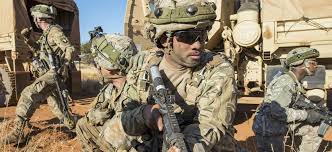



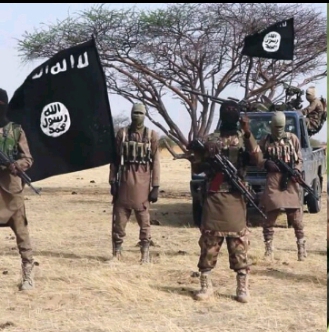
Just imagine if the Southeast, South-South, or even the Southwest region were to engage in negotiations with terrorists. Such an action would not only provoke unprecedented controversy and national outrage, but it would also be perceived as arming, empowering, and legitimizing an obvious enemy of Nigeria.
By opening the door to dialogue or ransom payments, the state risks undermining national security and weakening the collective fight against terrorism.
In essence, such a move would not merely be regarded as a tactical misstep; it would be seen as a grave betrayal of Nigeria’s sovereignty and a direct threat to the safety of its citizens.
While genuine patriotic Nigerians desire peace, they also acknowledge that peace built on rewarding terror is temporary and fragile. History shows that armed groups who are paid, freed, or appeased do not stop; they regroup. Nigeria maintains a strict “no negotiation with terrorists” policy. Defence Minister General Christopher Musa has repeatedly affirmed that there will be no dialogue, no ransom payments, and no concessions to terrorist groups.
He emphasized that engaging with such actors only fuels insecurity, while the government’s duty is to protect citizens through decisive military action, intelligence, and justice.
This firm stance demonstrates Nigeria’s commitment to sovereignty, security, and toughness against terrorism.
The recent revelation that the Katsina State Government is set to release 70 suspected bandits as part of a so-called peace agreement with armed groups has triggered a national debate that strikes at the heart of Nigeria’s sovereignty, justice system, and counter-terrorism doctrine.
At the centre of the controversy is a classified letter dated January 2, 2026, issued by the Katsina State Ministry of Justice and addressed to the Chief Judge of Katsina State, requesting judicial intervention to facilitate the release of suspects currently standing trial or awaiting trial for banditry-related offences. The letter, marked “SECRET,” was signed by the Director of Public Prosecutions, Abdur-Rahman Umar, and reportedly forwarded following a request from the Ministry of Internal Security and Home Affairs.
According to the document, 48 suspects currently on trial and 22 inmates in various high courts were proposed for release as a condition for sustaining peace deals between armed groups and communities in at least 15 local government areas across Katsina State.
The disclosure was first reported by Vanguard and has since generated public outrage and serious constitutional questions.
Katsina State Commissioner for Internal Security and Home Affairs, Nasir Muazu, defended the move, arguing that it was designed to consolidate peace agreements that had already led to the release of about 1,000 abducted persons across areas including Sabuwa, Safana, Kurfi, Faskari, Danmusa, Bakori, and Dutsinma.
Muazu compared the process to prisoner exchanges during wartime, referencing Nigeria’s civil war and negotiations with Boko Haram.
He further claimed that the action was lawful, citing Section 371(2) of the Katsina State Administration of Criminal Justice Law (2021), which empowers the Administration of Criminal Justice Monitoring Committee to intervene in certain judicial matters.
However, the deeper issue is not merely procedural legality; it is whether a state government has the authority to negotiate with terrorist groups at all.
Nowhere in Nigeria’s Constitution or security framework is any state government empowered to conduct negotiations with armed terrorist groups, particularly those engaged in mass kidnapping, extortion, and territorial control.
Security, terrorism, and armed conflict fall under exclusive federal jurisdiction.
Did the Federal Government authorize Katsina State to negotiate? Did the Office of the National Security Adviser approve these releases? Did the Nigerian Armed Forces consent?
By unilaterally engaging armed groups and offering prisoner releases as bargaining chips, Katsina State has effectively usurped federal security powers, setting a dangerous precedent that could fragment Nigeria’s counter-terrorism strategy.
Negotiating with violent groups is not a neutral act. It carries grave strategic and moral consequences.
When terrorists see that kidnapping and attacks lead to concessions, including the release of their operatives, violence becomes a successful strategy. This encourages repetition and escalation. Every ransom paid, every concession granted, strengthens terrorist networks by enabling them to recruit, arm, and expand. Releasing suspects who are already standing trial sends a devastating message to victims and their families. Formal negotiations amount to de facto recognition of violent groups as political stakeholders, something no democratic state should do. When governments respond to violence but ignore lawful political processes, it teaches citizens that guns work better than ballots or dialogue.
By openly admitting that it is negotiating with armed groups, Katsina State has sent two powerful messages to its citizens: that their safety depends on dealing with criminals, not on the strength of the Nigerian state; and that kidnapping works, violence pays, and more attacks will bring more concessions.
The responsibility of protecting lives and property lies with the Federal Government of Nigeria, not with fragmented state-level negotiations that embolden criminals.
Allowing states to conduct their own peace deals with armed groups risks turning Nigeria into a patchwork of terrorist-controlled negotiation zones, where violence determines political outcomes.
If the Federal Government does not urgently intervene, Katsina’s policy may become a template for other parts of the country, and Nigeria’s security crisis will deepen beyond control.
Katsina’s experiment risks sacrificing Nigeria’s sovereignty, justice, and long-term security for a short-lived lull in violence.
That is not peace.
That is a warning.
Daniel Nduka Okonkwo is a seasoned writer, human rights advocate, and public affairs analyst renowned for his incisive commentary on governance, justice, and social equity. Through Profiles International Human Rights Advocate, he champions accountability, transparency, and institutional reform in Nigeria and beyond. With over 1,000 published articles indexed on Google, his work has appeared on Sahara Reporters and other leading international media platforms.
He is also an accomplished transcriptionist, petition writer, ghostwriter, and freelance journalist, widely recognized for his precision, persuasive communication, and unwavering commitment to human rights.
📧 Contact: dan.okonkwo.73@gmail.com