


































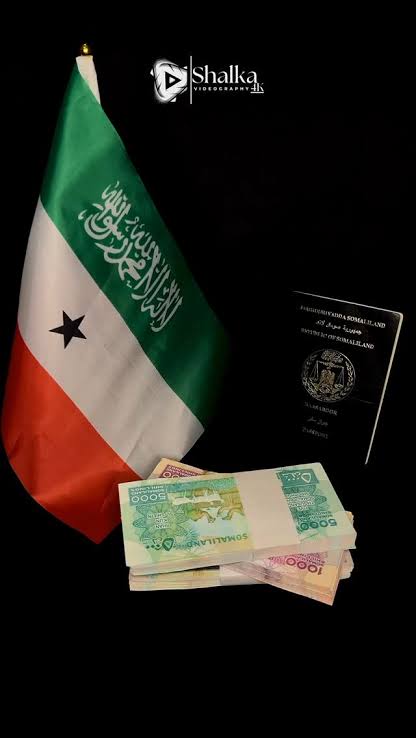
In late 2025, Israel officially announced its recognition of Somaliland, a self-declared independent region in northern Somalia that has asserted its sovereignty since 1991 but remains largely unrecognized by the international community. The decision marks a notable realignment in diplomatic relations across the Horn of Africa and the broader Middle East. In response, a coalition of 21 Arab, Islamic, and African states issued a joint statement condemning Israel’s move. They described it as a “grave violation of international law and the United Nations Charter,” reaffirmed their commitment to Somalia’s territorial integrity and sovereignty, and explicitly rejected any suggestion that the recognition could be linked to efforts to displace the Palestinian people.
The sustained and coordinated efforts of geopolitically influential powers—including Egypt, Turkey, Djibouti, and Somalia—alongside a broader alliance of Arab and Muslim states such as Jordan, Morocco, Qatar, Saudi Arabia, Kuwait, Oman, Pakistan, and the Maldives, to prevent Somaliland from obtaining international recognition, illustrate a highly complex and multidimensional geopolitical phenomenon. This opposition has intensified in parallel with Somaliland’s increasing external engagements, particularly pragmatic contacts with Israel and other non-Arab actors.
This article argues that the region’s overwhelming opposition to Somaliland’s recognition cannot credibly be interpreted as a principled or neutral position grounded in international law, Islamic solidarity, or genuine concern for Somalia’s unity. Rather, through systematic analytical deconstruction, it demonstrates that this opposition stems from a convergence of narrow national interests, deep-seated geopolitical anxieties, and defensive reactions to the potential restructuring of the existing regional order.
On the surface, this stance is articulated through legalistic rhetoric—invoking sovereignty, territorial integrity, and moral symbolism, especially in relation to the Palestinian cause. Yet in practice, a persistent and fundamental paradox emerges between states’ declared principles and their actual conduct. The gap between discourse and action reveals that strategic calculations, rather than normative commitments, drive much of the regional response to Somaliland’s bid for statehood.
Somaliland in Arab Politics: ‘File’ rather than ‘cause’
Complexity and agency, as well as the historical specificity of Somaliland, are being systematically denied within the political institutions, diplomatic circles, and strategic cultures of most Arab and Islamic capitals. It is hardly ever activated as an independent object of international politics or as an acceptable instance of self-determination based on a separate colonial and post-colonial experience. Rather, it is diminished to a bureaucratic abstraction, a file that needs to be handled but not a cause that needs to be comprehended.
It is a reduction that works in two paradigms that are overlapping and expedient politically. The former views Somaliland as a strictly sovereign entity, which is subordinated to Somalia. Somaliland, under this framing, falls under the category of internal administrative or constitutional issues of the internationally recognized state of Somalia. This division offers a pre-made rationale of the categorical denial of recognition or substantive international action, which is normally expressed in slogans like the preservation of the territorial integrity and the protection of the sovereignty of the central state. More importantly, this stance puts the symbolic sacredness of inherited boundaries above the material political facts. It consciously puts aside the institutional history, electioneering, and social contract of Somaliland for the sake of maintaining a formal cartographic wholeness, which, more often than not, exists on a piece of paper.
The second paradigm perceives Somaliland as an instrumentalized variable in a more comprehensive regional and world power policy. Within this framework, Somaliland emerges as a chess piece, as well as in the Israeli-Iranian game, the growing Turkish strategic presence in Africa, and the geostrategic struggle of the Bab el-Mandeb Strait and the maritime arteries of the Red Sea. In this logic, Somaliland does not possess a political actor or even a political interest of its own. Instead, it is diminished to a tactical area to be exploited, limited, or neutralized as per the strategic decisions of foreign powers.
The two paradigms are united in their deliberate ignorance of facts on the ground. Somaliland has a relatively long history of a stable and functional government, a period of over thirty years. It has also created effective electoral institutions, which have been able to handle competitive and peaceful transfers of power; internal security, which is starkly opposed to the chronic instability that plagues southern Somalia; economic and commercial infrastructure, including the development and operation of the Berbera port; and the ability to find responsible ways of dealing with external actors, including Ethiopia and Taiwan. This has been accompanied by a steady claim of disinterest and adherence to international standards.
Even with these facts that can be verified, Somaliland remains to be described as a state that is an exception—something that is inconvenient that poses a danger to the psychological and political underpinnings of the post-colonial Arab regional order. The order places a heavy burden on the sanctification of inherited borders, even though these boundaries may be supported by the use of coercion or without the truly popular consent. Another tactic employed by the capitals of Somaliland in the form of persistent political and media pressure, even when there is no hostile action or strategic provocation on the part of Hargeisa, highlights the existence of a deep-seated kind of hypocrisy.
The selective invocation of legal and religious rhetoric is not a kind of policy prescription but rather an act of performance of regional power management. It shows a crisis of credibility, where the interest in Somali unity is rhetorically magnified and the welfare, rights, and political will of the population of Somaliland are systematically discriminated against. Therefore, the Somaliland problem goes beyond the scope of a local conflict. It is a critical prism in which the incoherence and instability of regional strategic thought are revealed, as well as the way in which the emergent political realities are pushed into the background of the endless reproduction of established power accounts.
Somaliland faces rejection over precedent, not reality
The action taken by the various players to oppose the recognition of Somaliland is fueled by fears that go way beyond Somaliland itself. It is fundamentally fear, which is not about the existence of Somaliland but about the meaning of its success. The rejection is not aimed at the empirical reality on the ground as much as it is aimed at the political, legal, and ethical precedent on which recognition would be created.
This fear has been expressed in three factors that are interlinked. The former is internal political contagion. The international acceptance of Somaliland on the basis of sound governance, historical particularism, and popular consent over a long period would serve as an influential example for marginalized or peripheral states in other Arab and African states. Such areas of the Sahel as Southern Syria, Iraqi Kurdistan, Southern Yemen, and other ethnically or politically distinct regions might use the example of Somaliland to justify the claim to autonomy or independence. To other regimes that routinely repress such claims, this possibility is a massive legitimacy problem, which compels awkward inquiries about how selectively they exercise sovereignty and self-determination.
The second dimension is associated with the holiness of colonial boundaries. The case of Somaliland proves that the boundaries that were established by the European colonialists are not fixed and even natural. It demonstrates that political order, institutional effectiveness, and social cohesion can be developed without—and even against—those borders. This ideological and practical threat is a danger to centralized states that are based on inherited territorial structures as the basis of authority. The recognition of Somaliland might become a legal and political precedent to challenge disputed borders in other countries and create turmoil in regional and international politics.
The third dimension deals with the symbolic justification of the model of the centralized state, despite its obvious failure. The aggressive politics of Somali unity are not always protecting Somali citizens but instead the abstract entity of the central state. Any acceptance of Somaliland would shed an ugly light on the difference between an ineffective federal government that is unable to provide security and services to its citizens and a breakaway state that has achieved some degree of effectiveness. This contrast disputes the belief that centralized authority is inherently better or more stable and thus throws the stability of regimes that have based their legitimacy on similar arguments into doubt.
In this regard, the attack against Somaliland is essentially defensive. It is not motivated by the signs of destabilization in the region or legal inconsistency, but by the fact that the recognition of successful alternative models of governance might undermine established political systems and restructure the standards of legitimacy in the region.
Egypt: Nile, Suez, and Red Sea in geopolitics
Egypt is the most strategically articulate of the opponents of the recognition of Somaliland. Though the official discourse in Cairo is greatly centered around the issue of separatism and solidarity among the Arabs, its stand is deeply embedded in the national security issues that go far beyond Somalia.
At the core of the Egyptian position is the existential question of the Nile and the pending conflict with Ethiopia on the Grand Ethiopian Renaissance Dam (GERD). The Egyptian policymakers are worried that a stronger relationship between Somaliland and Ethiopia, especially with the involvement of a third party like Israel, would give Addis Ababa strategic depth and alternative maritime access through Berbera. This would decrease the dependence of Ethiopia on the avenues that can be influenced by Egypt, and this will undermine the bargaining power of Cairo in negotiations over the Nile.
Intimately connected is the issue of the Suez Canal and Red Sea maritime routes, which cause anxiety on the part of Egypt. The Bab el-Mandeb Strait is a strategic bottleneck of the world economy, and any independent actor that has relations with the opponents of Egypt in the region is viewed as a possible strategic complication. Although both nations have formal diplomatic ties and have wide-ranging security cooperation with Israel, Egypt is still conscious of new alliances that may upset its well-calculated regional equilibrium.
Here lies a very dramatic rhetorical contradiction as the Palestinian cause is invoked. On the one hand, Egypt is a state that positions its role as a supporter of Palestinian rights, but on the other hand, it has strong relationships with Israel. The Palestinian story is therefore a contagious tool of diplomatic mobilization and not a stable ethical guide. In Egypt, the opposition is also influenced by fears that the successful succession of the separate identity and self-rule of Somaliland will be heard by the marginalized regions in Egypt, and the centralized Nile Valley model of governance will be threatened.
Combined with the other positions of Egypt, it represents a strategic calculation of resource security, maritime dominance, and regional influence, which is disguised in terms of legal and moral principles.
Turkey: Safeguarding influence, not Somali unity
The Turkish attitude towards Somaliland can be seen in terms of a strategic investment, protection, and consolidation of regional influence, and not in terms of a normative language of sovereignty and unity that pervades official Turkish rhetoric. In the last ten years, Ankara has remodeled Somalia into one of the most noticeable arenas of its extra-regional foreign policy into a mix of humanitarian diplomacy, infrastructure development, military involvement, and political favor of power. In that context, the acknowledgement of Somaliland or even its increased internationalization is a structural dilemma to the vested leverage of Turkey.
There is a great material presence of Turkey in Somalia. It operates the international airport and port of Mogadishu, has its largest foreign military base in the latter, and controls security training courses of the Somali troops. These are supplemented by soft power programs on health, education, and development aid, which have created a lot of goodwill among the people. All these interactions make Turkey more than a collaborator of the Somali state but a key agent of power and entry. The preservation of the territorial integrity of Somalia, in its turn, is consonant with the interest of Ankara in the existence of a single political interlocutor with the help of which its influence can be wielded.
The contradiction of the current position of Turkey is well traced when judged by its relations with Israel. In spite of occasional rhetoric battles, Ankara still has complete diplomatic, trade, and security ties with Tel Aviv. However, it strongly resists any Somaliland-Israel interaction. Such a contradiction highlights the fact that the Turkish objection is not based on principle against Israel but on one that is against the development of other forms of diplomatic and economic routes that circumvent Turkish-dominated nodes of influence. Given a known or actively involved Somaliland, it would ease independent trade networks, security alliances, and diplomatic adoptions, which would reduce the strategic dominance of Turkey in the Horn of Africa.
The appeal to Somali unity, therefore, is rather a non-normative assertion or a legitimizing discourse of strategic entrenchment. The example of Somaliland controlling its own matters without relying on any outside help questions this story, showing how legal and humanitarian arguments are manipulatively harnessed to serve the interests of power instead of supporting the principles of self-determination or good governance in their overall formulation.
Djibouti: Berbera as economic threat disguised by false security claims
Djibouti’s opposition to Somaliland is perhaps the most transparently driven by direct material interests, even as it is publicly articulated in the language of regional security. Djibouti’s political economy is fundamentally anchored in its role as a maritime gateway for the Horn of Africa, particularly for landlocked Ethiopia. The emergence of Berbera as a modernized, competitive port directly threatens this economic model.
A fully operational Berbera port, supported by international investment and efficient management, has the potential to divert substantial trade flows away from Djibouti. This would undermine Djibouti’s monopoly over port services, reduce state revenues, and diminish its geopolitical leverage over Ethiopia. To obscure these economic motivations, Djibouti frames Berbera’s development as a security risk, warning of foreign military presence and regional destabilization. Such claims are difficult to sustain, given that Djibouti itself hosts multiple foreign military bases and has long positioned itself as a hub for international naval operations.
Beyond economics, there is a political contrast that Djibouti’s leadership finds deeply unsettling. Somaliland’s relative stability and participatory governance stand in sharp relief against Djibouti’s entrenched authoritarian system. The implicit demonstration that stability can coexist with decentralization and electoral competition undermines the narrative that centralized, personalized rule is a prerequisite for order. Djibouti’s opposition thus reflects not only economic self-preservation but also an anxiety about normative comparison. Ultimately, Djibouti’s resistance to Somaliland’s recognition is an effort to protect a fragile commercial and political monopoly. Security discourse serves as a strategic façade, lending legitimacy to what is fundamentally a defensive economic posture.
Federal Somalia: Political legitimacy over popular interest
The Federal Government of Somalia (FGS) occupies a unique position in this constellation of opposition, as its resistance to Somaliland’s recognition is existential. The FGS grounds its position in the inviolability of territorial unity, presenting secession as a threat to national survival. However, this stance is less about the welfare of Somali citizens and more about preserving the political legitimacy of federal institutions headquartered in Mogadishu.
The Somali leadership’s selective application of principle is evident in its external engagements. While adopting an uncompromising posture against any Somaliland-Israel interaction, Mogadishu has itself explored engagement with Israel when such engagement aligned with immediate diplomatic or security interests. This reveals that the core issue is not Israel, but authority—specifically, who possesses the right to represent Somali territory internationally.
Recognition of Somaliland would fundamentally undermine the FGS’s claim to sovereignty over the former Somali Republic, a claim that underpins its access to international aid, security assistance, and diplomatic recognition. Such recognition could also embolden other federal member states to renegotiate their relationship with the center, accelerating centrifugal pressures within Somalia itself. In this sense, opposition to Somaliland is a strategy of regime survival rather than a coherent vision for peace or reconciliation.
The resulting tension is stark: symbolic unity is prioritized over pragmatic solutions that could stabilize the region and respect the political will of Somaliland’s population. This disconnect illustrates how international legitimacy can become detached from domestic effectiveness, producing policies that preserve form while sacrificing substance.
Other Arab States: Media pressure, double standards
The behavior of other Arab and Muslim states—including Jordan, Morocco, Qatar, Saudi Arabia, Kuwait, Oman, Pakistan, and the Maldives—reveals a consistent pattern of selective principle and narrative management. These states maintain normalized and often expanding relations with Israel, encompassing trade, security cooperation, and diplomatic exchange. Yet they apply a markedly different standard to Somaliland.
Their primary mechanism is media-driven pressure. State-aligned outlets amplify narratives portraying Somaliland’s external engagements as threats to regional stability, Arab solidarity, and the Palestinian cause. This occurs despite the absence of any material interaction between Somaliland and these states, and despite Somaliland posing no conceivable threat to their national interests.
This double standard serves several functions. It reinforces established hierarchies within the regional order, affirms the authority of larger states to define permissible diplomatic behavior, and distracts domestic audiences from the contradictions inherent in their own governments’ foreign policies. Somaliland becomes a symbolic target through which conformity to an approved narrative is enforced. Such practices underscore the instrumentalization of ethical and legal discourse. Principles are not abandoned but selectively applied in ways that preserve power asymmetries and marginalize smaller political entities.
Marginalizing Reality: Palestine as rhetorical tool
The Palestinian cause occupies a central position in Arab political discourse, often functioning as a moral touchstone for regional legitimacy. In the case of Somaliland, however, it is frequently deployed as a rhetorical weapon divorced from contextual relevance. Somaliland, which has no historical involvement in the Arab-Israeli conflict, is nonetheless portrayed as a vector of normalization simply for pursuing diplomatic engagement.
This strategy has extended to the circulation of demonstrably false narratives, including allegations that Somaliland would facilitate the resettlement of Palestinians from Gaza. Such claims lack evidentiary basis and are contradicted by Somaliland’s own public positions. Their purpose is not informational accuracy but emotional mobilization, creating a moral pretext for opposition that obscures underlying strategic motives.
The instrumentalization of Palestine in this manner undermines the integrity of the cause itself. By transforming a legitimate struggle into a tool of political convenience, regional actors dilute its moral force and marginalize the lived realities of Palestinians. Somaliland becomes collateral in a symbolic conflict that serves external interests rather than advancing justice.
Red Sea, Houthi threat
The Red Sea and the Bab el-Mandeb strait constitute one of the world’s most critical geopolitical corridors, facilitating global energy flows and commercial shipping. Somaliland’s coastline and the port of Berbera place it at the center of this strategic geography. As a result, regional responses to Somaliland are shaped less by normative considerations than by zero-sum calculations of control and access.
Any enhancement of Somaliland’s maritime infrastructure or international partnerships is interpreted as a redistribution of influence. Established powers respond defensively, seeking to constrain Somaliland’s options rather than engage constructively. This reaction highlights a broader pattern in regional politics, where geography consistently outweighs humanitarian or legal considerations.
The double standard is again evident. States that actively cooperate with Israel in the Red Sea basin condemn Somaliland for pursuing similar engagements. The issue is not the nature of the partnership, but the challenge it poses to entrenched hierarchies of permission and control.
In the context of the Yemeni conflict, Somaliland has been rhetorically linked to the Houthi threat as a means of justifying its isolation. Claims that Somaliland-Israel relations would provoke Houthi attacks or destabilize shipping lanes lack empirical grounding. Somaliland has consistently affirmed its neutrality and has every incentive to promote maritime security.
The invocation of the Houthi threat functions as an externalized justification for policies rooted in control rather than security. It allows opposing states to frame Somaliland’s independent engagements as inherently dangerous while obscuring their own selective alliances and security arrangements.
Conclusion: The problem is not Somaliland, but what it represents
The regional opposition to Somaliland’s recognition reveals a consistent pattern of strategic contradiction. Legal principles, moral narratives, and religious symbolism are mobilized selectively to obscure narrow national interests and preserve entrenched power structures. The widespread normalization of relations with Israel by Somaliland’s critics exposes the hollowness of arguments framed around moral absolutism.
At its core, Somaliland represents an unsettling alternative: a small political entity that has achieved relative stability, participatory governance, and institutional functionality through internal consensus rather than external imposition. This reality challenges inherited assumptions about sovereignty, legitimacy, and the inevitability of centralized authority.
Somaliland thus functions as a living litmus test. It tests whether regional actors genuinely value principles such as self-determination, effective governance, and popular will, or whether they prioritize the preservation of familiar geostrategic arrangements. The intensity and coordination of opposition suggest a clear answer. The resistance is not to instability or illegality, but to the transformative implications of acknowledging a successful alternative model of political order. AS
Editor’s Note: Gulaid Yusuf Idaan is a senior lecturer and researcher specializing in diplomacy, politics, and international relations in the Horn of Africa. He can be contacted at Idaan54@gmail.com