







Nigeria does not need better storytelling in Washington.
It needs security, firepower, intelligence, and decisive leadership at home.
When sovereignty itself is under threat, military survival must come before diplomatic cosmetics.
The Nigerian state is spending an estimated ₦13–₦14 billion to polish its image abroad. At a time when Nigerians are living under gunfire, this feels like a betrayal. You do not fix a burning house by hiring a photographer to convince the world the fire is under control.
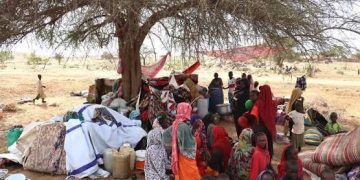
Across the country, the headlines tell a chilling story. In Sokoto State, entire communities are being emptied as residents flee in terror after fresh threats from the notorious bandit leader Bello Turji. In Adamawa, an explosion has rocked Mubang village just days after a Boko Haram raid. In Niger State, a 75-year-old woman, Amina Abu-Shaki, wife of the Sarkin Noma of Kabe community, was reportedly shot dead by bandits. In one Sokoto village alone, more than 20 residents were abducted in a single attack. These are only fragments of a much wider national catastrophe.
These are not isolated incidents. They are the daily reality of a nation steadily losing control of its own territory.
Yet at this moment of national emergency, the Federal Government of Nigeria has approved a $9 million lobbying contract in the United States, ostensibly to help “communicate its actions on protecting Christians in Nigeria” to the U.S. government. The contract, filed with the U.S. Department of Justice, shows that DCI Group was hired through Aster Legal on behalf of the National Security Adviser, Nuhu Ribadu.
The outrage that followed is not because lobbying is illegal or unusual, but because of timing, priorities, and moral optics.
Across northern Nigeria, especially in Sokoto, Zamfara, Katsina, Niger, and Borno states, armed groups are no longer just committing crimes; they are exercising de facto control over territory.
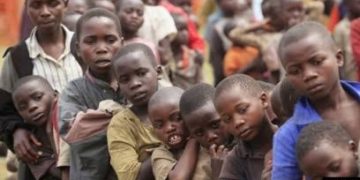
Bello Turji is no longer just a bandit; he is operating like a warlord. His fighters issue threats. Villages empty in fear. Local governments collapse. Farmers abandon their land. Children flee their schools. Communities such as Tidibale in Isa Local Government Area of Sokoto State are being erased by terror.
When citizens must flee their ancestral homes to survive, when elderly women are shot in their villages, and when bombs explode days after terrorist raids, a government’s first responsibility is clear:
Protect lives. Defend territory. Restore order.
The $9 million question is the optics, ethics, and priorities. The African Democratic Congress (ADC) and the Peoples Democratic Party (PDP) have both condemned the U.S. lobbying deal as “misplaced priorities” and “shameful.” They are not wrong.
Communities are under siege. Terrorists are expanding their reach. Military bases are being attacked. Citizens are being abducted, displaced, and killed.
Lobbying, in itself, is not wrong. Countries like
Saudi Arabia
China
Japan
The United Arab Emirates
Each spends over $100 million lobbying the United States and Europe to shape trade, defense, and geopolitical influence. Canada has more than 5,000 registered lobbyists. Australia employs over 10,000 people in lobbying, that is how global power works.
But there is one critical difference, those countries are not losing towns to terrorists.
The forces destabilizing Nigeria today are not ordinary criminals. They are hardened, transnational militants. Thousands of fighters have migrated from Middle Eastern war zones into Nigeria, bringing with them combat experience from Syria, Iraq, Libya, and beyond, including drone warfare, advanced ambush tactics, and psychological operations.
These are men who have fought in global jihadist networks for decades.
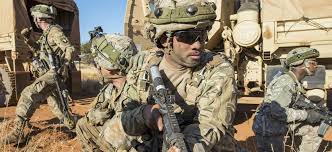
Nigeria’s military, brave as it is, was not designed for this level of asymmetric, high-tech, transnational warfare. This is why Nigeria does not need sympathy. It needs a serious military partnership with the United States, which knows how to fight this kind of war.
The U.S. dismantled ISIS and crippled al-Qaeda through a whole-of-government counter-terrorism model that combines:
Intelligence (CIA, NSA)
Law enforcement (FBI)
Military operations
Financial sanctions
Drone surveillance
Special forces
Partner-nation support
If Nigeria truly wants American support, the pathway is not through public relations contracts. It is through security cooperation, intelligence sharing, and joint counter-terrorism operations.
America responds to strategic necessity, not advertising.
No lobbying firm can stop, Bello Turji from overrunning Sokoto villages
Boko Haram from bombing Adamawa
Bandits from killing elderly women in Niger State
Only boots, drones, intelligence, and force can.
The tragedy is not that Nigeria hired lobbyists.
The tragedy is that it did so while its people are running for their lives.
A government exists for one purpose above all others to protect its citizens. When that duty is not fulfilled, no international reputation can compensate for lost human lives.
Until Nigerians can sleep safely in Benue State, Enugu State, Edo State, Delta State, Plateau State, Mubang, Kabe, Tidibale, and hundreds of other threatened communities, every naira spent on image management is morally indefensible.
The world will not judge Nigeria by how well it lobbies, but by whether it can defend its own people.
Daniel Nduka Okonkwo is a seasoned writer, human rights advocate, and public affairs analyst renowned for his incisive commentary on governance, justice, and social equity. Through Profiles International Human Rights Advocate, he champions accountability, transparency, and institutional reform in Nigeria and beyond. With over 1,000 published articles indexed on Google, his work has appeared on Sahara Reporters and other leading international media platforms.
He is also an accomplished transcriptionist, petition writer, ghostwriter, and freelance journalist, widely recognized for his precision, persuasive communication, and unwavering commitment to human rights.
📧 Contact: dan.okonkwo.73@gmail.com