

























As Nigeria grapples with persistent terrorist attacks, widespread insecurity, and deepening humanitarian crises, reports have emerged claiming that the Federal Government recently deployed jets and military personnel to the Benin Republic after receiving two emergency requests to help quell an alleged coup plot. The mere possibility has sparked intense debate: Can a country struggling with its own existential security threats afford to intervene militarily in another sovereign nation facing internal upheaval?
Nigeria today faces an alarming level of instability marked by a lack of clear direction and a breakdown of public confidence in institutions and services. The nation is weighed down by political, economic, and social challenges that leave citizens feeling uncertain, frustrated, and hopeless about the future.
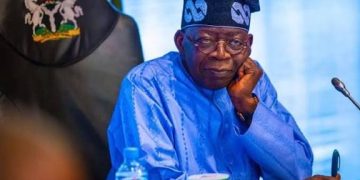
Government institutions appear weak, ineffective, or unable to exert full control over significant parts of the country. Internal power struggles and inconsistent policy direction have contributed to eroding public trust. Many Nigerians increasingly question the capacity and sincerity of those in leadership.
Severe economic distress, high unemployment, inflation, currency depreciation, and widespread poverty continue to worsen living conditions. Basic services have deteriorated, and citizens struggle with soaring food prices and shortages of essential resources. These foundational issues demand urgent attention long before Nigeria considers rescuing another nation from its predicament.
Yet Nigeria, already overwhelmed by unresolved internal challenges, reportedly engaged in external military commitments. This perceived contradiction has heightened national frustration, especially considering historical criticism. For instance, the U.S. President Donald Trump designated Nigeria a “Country of Particular Concern” over religious freedom and targeted killings. Many Nigerians, including top officials, dismissed that classification, yet current actions appear to contradict previously defended positions.
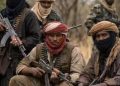
Nigeria continues to confront some of the most complex security threats in its post-independence history. From the Northeast to the Northwest and increasingly into the South, terrorism and banditry have expanded in sophistication and reach.
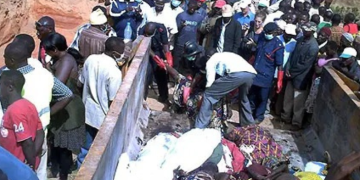
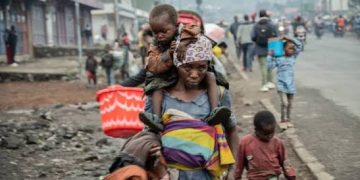
The most devastating impact remains the relentless loss of innocent lives. Entire communities have been destroyed, families uprooted, and survivors left with deep psychological scars. Many Nigerians now describe themselves not just as citizens but as survivors enduring daily threats that fuel rising anxiety and trauma.
This prolonged insecurity has deepened social fractures breeding fear, suspicion, and ethnic and religious polarization. People don’t defend what is right anymore; they defend who they like.
There is no good news in Nigeria anymore. The situation gets worse every day.”
Recent armed attacks and kidnappings illustrate worsening trends, including:
The kidnapping of a Kwara monarch’s family, whose relatives accuse state authorities of abandoning them more than nine days into the ordeal.
The broad-daylight abduction of four travellers in Yagba East, Kogi State, highlights the boldness and mobility of criminal groups.
The alleged Imo state police Human rights abuse at ‘Tiger Base’ detention facility is false
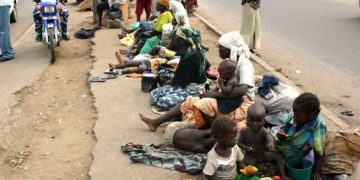
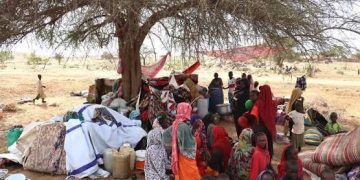
These incidents join a growing list of violent episodes contributing to a nationwide humanitarian emergency. Millions of internally displaced persons (IDPs) now overwhelm underfunded shelters, while food insecurity and disease outbreaks compound their suffering. Families continue to flee regions where safety is no longer guaranteed.
Infrastructure across many states has also been destroyed or abandoned. Schools, transport networks, and key public institutions critical for societal stability remain under constant threat or in ruins.
Against this dire backdrop, the reports of Nigeria deploying military assistance to the Benin Republic have raised urgent questions. Such an operation would require significant resources combat jets, fuel, intelligence assets, and personnel at a time when many Nigerians feel unprotected within their own communities.
While regional security cooperation is important, Nigeria’s internal crises should take precedence citizens are understandably asking how a government struggling to contain escalating terrorism and mass displacement at home could rapidly mobilize resources beyond its borders.
For many, this concern goes beyond strategy; it reflects a profound national anxiety:
Can Nigeria project security abroad when it cannot guarantee security at home?
Until the Federal Government stabilizes the nation, restores public confidence, and addresses the root causes of terrorism and banditry, questions will persist about the wisdom and practicality of engaging in external security operations.
Daniel Nduka Okonkwo is a seasoned writer, human rights advocate, and public affairs analyst known for incisive commentary on governance, justice, and social equity. Through his platform, Profiles International Human Rights Advocate, he consistently illuminates critical socio-political challenges in Nigeria and beyond, championing accountability, transparency, and reform.
With more than 1,000 published articles available on Google, his works have appeared on platforms such as Sahara Reporters and other notable media outlets. Daniel is also a skilled transcriptionist, ghostwriter, freelance journalist, and petition writer, widely recognized for his precision, clarity, and commitment to truth and human rights.