

















By Daniel Nduka Okonkwo
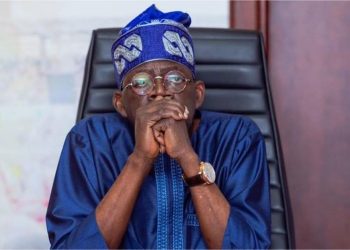
Before anyone rushes to condemn this, an uncomfortable but necessary question must be confronted why should ordinary Nigerians, who played no part in the abuses of the fuel subsidy system, bear the economic consequences of a policy that has seen petrol prices rise by 430 percent, with far-reaching increases in transportation, food, and virtually every essential commodity? The old arrangement was plagued by abuses, including fuel smuggling, round-tripping, and other forms of reported exploitation that imposed enormous costs on public finances. Those who profited from these practices were not the ordinary Nigerians travelling to work, feeding their families, educating their children, or struggling to keep their businesses afloat. Yet the burden of correcting a system compromised by such abuses was transferred to the entire population, including millions who had neither the power to manipulate it nor any role in sustaining its failures. The fundamental question, therefore, is not simply whether subsidy removal was economically necessary, but whether its implementation was fair, proportionate, and sufficiently protective of the people least able to absorb its consequences. Was it justifiable to expose ordinary Nigerians to such an abrupt economic shock without adequate safeguards from the outset? And if President Bola Tinubu were given another opportunity to turn back the hands of time to 29 May 2023, would he make the same policy choice, in the same manner and with the same degree of abruptness? These are legitimate questions of presidential responsibility, economic justice, and public accountability. Nigerians deserve answers grounded in evidence, not political defensiveness.
Nigeria’s fuel subsidy removal was presented as an economic necessity, but its consequences extended far beyond the petrol stations. It changed the cost of almost everything ordinary Nigerians need to survive, including getting to work, transporting food, running small businesses, powering homes, paying school fees, and buying medicines. For millions of households, the policy did not simply make petrol more expensive. It raised the cost of living in an economy where electricity supply, public transportation, healthcare, and social protection were already inadequate.
The central question is therefore not merely whether the Federal Government was right to remove the subsidy. It is whether the administration adequately considered the consequences of removing it so abruptly, whether less disruptive alternatives were available, and whether the savings have translated into measurable improvements in the lives of the citizens who absorbed the cost. The economic argument cannot be separated from the human consequences.
The expression “500 percent increase” has become part of the public debate, but responsible journalism must separate the rise in petrol prices from the rise in particular household expenses and from the cumulative effect of inflation. According to the National Bureau of Statistics, the national average retail price of petrol rose from ₦238.11 per litre in May 2023 to ₦769.62 in May 2024, a 223.21 percent year-on-year increase, and reached about ₦1,261.65 per litre by March 2025. That does not mean every transport fare, school fee, or food item rose by 500 percent. It does establish a nationwide cost shock, because petrol is an essential input into transportation, food distribution, small business power, and household energy.
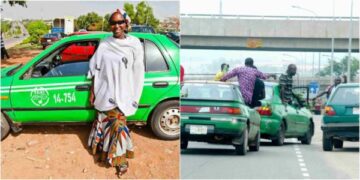
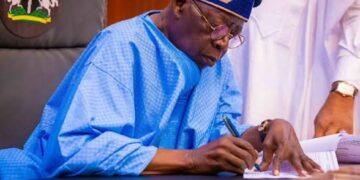
Transportation was the first and most visible casualty. President Bola Tinubu announced the removal of the subsidy at his inauguration on 29 May 2023, and the NBS Transport Fare Watch for June 2023 recorded that the average intra-city bus fare jumped from ₦649.59 in May to ₦1,285.41 in June, an increase of 97.88 percent in one month. Intercity bus fares rose by 42.09 percent and motorcycle fares by 33.14 percent in the same period. These are measurements by Nigeria’s national statistical agency, not political estimates. Workers earning fixed salaries saw a larger share of their income consumed before they could meet other obligations, and because transport is embedded in the price of almost everything sold in the markets, the fuel shock quickly became a food price shock.
Food is where the burden fell hardest. Farmers need fuel for machinery, water pumps, and moving produce, distributors need trucks, and processors depend on generators and small petrol or diesel machines for grinding cassava, maize, and tomatoes. When fuel costs rise, those costs are passed down the chain to the consumer. This cannot honestly be blamed on subsidy removal alone, because insecurity in farming communities, currency depreciation, and poor infrastructure were already weakening production, and the IMF flagged insecurity affecting agriculture as a significant challenge in its February 2024 assessment. But the policy intensified an existing problem, and low-income families, who spend most of their earnings on food, responded by eating fewer meals, buying cheaper food, borrowing, or giving up other essentials.
Electricity is perhaps the most neglected dimension. Barbershops, tailors, welders, cold rooms, small restaurants, pharmacies, and neighbourhood shops run on petrol generators because public supply is unreliable. When fuel became dearer, these businesses could only raise prices, cut operating hours, or shut down, and each choice hurt either customers or livelihoods. In effect, citizens now pay for power twice, once through the formal system and again through privately bought fuel. Some individual operating costs have certainly risen by several hundred percent, but the national statistics do not establish a uniform 500 percent increase, and the absence of a single figure makes proper household and sector-level measurement all the more necessary.
Education and healthcare were pulled into the same squeeze. Schools face higher generator, transport, and maintenance costs and may pass them on to parents, while students living away from home pay more for housing, food, and travel. Hospitals and pharmacies face higher energy costs and more expensive imported medicines and equipment. A patient who cannot afford treatment for malaria, hypertension, or diabetes may delay care or abandon it, turning manageable conditions into emergencies. It would be inaccurate to say subsidy removal alone caused every rise in school fees, rent, or drug prices, since exchange rates, housing shortages, and financing failures also played a part. But higher energy and transport costs made education, healthcare, and housing harder for ordinary families to afford.
The second shock came from the currency. In June 2023, the administration unified the foreign exchange windows and allowed the naira to depreciate sharply, raising the cost of imported raw materials, machinery, medicines, and consumer goods. The World Bank’s June 2024 assessment acknowledged that foreign exchange reforms and petrol price adjustments contributed to high cost-of-living pressure and reported inflation of 33.7 percent in April 2024, and the African Development Bank also pointed to the combined effect of subsidy removal, depreciation, and supply constraints. It would be misleading to present subsidy removal as the sole cause of inflation, and equally misleading to dismiss its contribution. The two reforms arrived within weeks of each other, before households and businesses had time to adjust.
Nigeria was also structurally vulnerable. Insecurity had undermined agriculture, successive governments had relied on deficit financing, including Central Bank Ways and Means advances, and unreliable power, poor roads, and weak logistics had pushed up the cost of doing business. Even though these are not problems created by this administration alone. Yet inherited weaknesses do not remove the duty of a new government to weigh the consequences of its decisions, and the manner, timing, and preparation of a reform remain legitimate subjects of public accountability.
These alternatives are worth examining. The government could have adopted a publicly defined phased reduction, strengthened domestic refining before full market exposure, designed targeted support for transport, agriculture, and vulnerable households, or built compressed natural gas infrastructure and converted commercial buses before withdrawing support. It could also have redirected part of the money to fertiliser, storage, food processing, and electricity, and fought crude theft, smuggling, and subsidy fraud with digital tracking and independent audits. The World Bank documented that the old system cost more than ₦8.6 trillion between 2019 and 2022 and fuelled smuggling and black market activity, which is a strong case for reform. It does not prove that abrupt removal with little protection was the only option, and the government’s own plan to give ₦75,000 to each of 15 million households over three months showed that compensation was needed.
The most important accountability question is what happened to the savings. Nigerians are entitled to an independently verifiable account of the actual fiscal savings, how they were shared among federal, state, and local governments, which roads, hospitals, schools, and power projects they financed, how many verified beneficiaries received social protection, and how agricultural and transport interventions have performed. Announcements, budget provisions, and project inaugurations are not evidence of completed work. Public money must be accounted for, and citizens must be able to establish whether the sacrifice demanded of them has produced a corresponding benefit.
By September 2026, the NBS reported that headline inflation had eased to 14.63 percent from 15.39 percent in August, while food inflation remained at 19.59 percent year on year. This means prices are rising more slowly, not that they have returned to pre-2023 levels. If the price of a bag of rice doubles and inflation then falls, the rice does not become cheap again. That is disinflation, not deflation, and a family whose income has not kept pace gets little relief from a better headline figure. Reform cannot be judged by fiscal savings or macroeconomic indicators alone. It must be judged by whether people can afford food, healthcare, educate their children, run businesses, and live with dignity, because Nigeria’s economic future cannot be built on the financial exhaustion of its citizens.
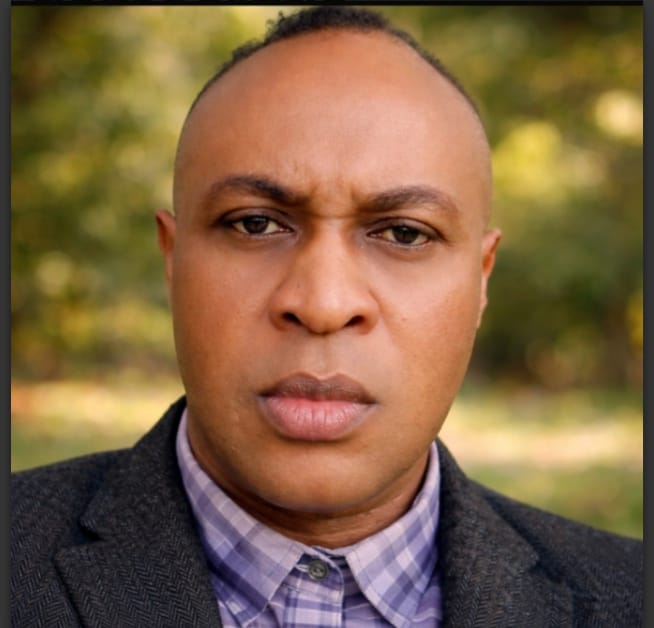
Daniel Nduka Okonkwo is an investigative journalist, human rights advocate, and policy analyst based in Nigeria. He is the founder and publisher of Profiles International Human Rights Advocate (PIHRA), a platform documenting the courage of human rights defenders and examining issues of governance, accountability, security, and fundamental rights.
His reporting on Nigerian governance, security-sector accountability, public finance, and human rights has appeared in Sahara Reporters, Vanguard, Daily Trust, African Defence Forum, Opinion Nigeria, and Daily Intel.
Read more of his work on the PIHRA website:
https://www.profilesinternationalhumanrightsadvocate.com.ng/
For tips, feedback, or collaboration, contact him at dan.okonkwo.73@gmail.com.