












By Daniel Nduka Okonkwo
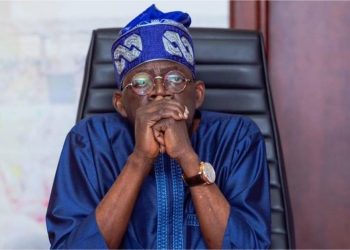
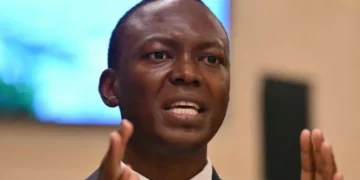
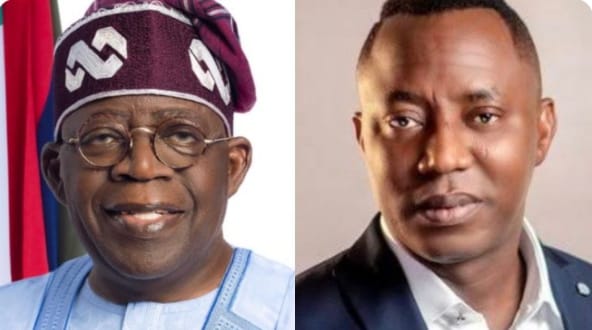
Not every threat to press freedom begins with a prison cell. Sometimes it begins in a courtroom, where a government asks the law to punish words while democracy asks citizens to speak them. On one side stood Omoyele Sowore, a journalist and human rights activist whose career has been defined by challenging those in power. On the other stood the Nigerian state, seeking to prosecute him under the Cybercrimes Act. Then came the moment that transformed the proceedings. President Bola Ahmed Tinubu’s own recorded words echoed through the courtroom, declaring that he did not want anyone arrested for insulting or criticising him. In that instant, the trial ceased to be only about one defendant. It became a global question about whether a democracy can credibly criminalise criticism when its own Head of State publicly says such criticism should not lead to arrest.
For one unforgettable moment inside a Federal High Court courtroom in Abuja, the prosecution was confronted with the President’s own words. As video recordings of President Bola Ahmed Tinubu were played in open court, the government prosecuting Omoyele Sowore for alleged cybercrime was faced with a statement that appeared difficult to reconcile with its case. President Tinubu, speaking in his own voice, declared that he does not want anyone arrested for insulting him or calling him names. That moment raises a profound legal and constitutional question. If the very person whose dignity the prosecution claims to be protecting has publicly stated that he does not wish to see critics arrested, what compelling public interest does this prosecution now serve?
Monday’s proceedings at the Federal High Court in Abuja may prove to be one of the most significant moments in the cybercrime trial of Omoyele Sowore. After weeks of delay caused by the absence of television screens in the courtroom, video recordings of President Tinubu were finally played before the court. The contents of those recordings went to the heart of the defence.
In the videos, President Tinubu stated plainly that he does not support the arrest of any Nigerian for criticising him or calling him names. He also remarked that he personally does not mind being criticised. In one clip, he joked that he avoids social media because it raises his blood pressure. Whatever one’s political views, those remarks project an image of a leader who publicly accepts criticism as part of democratic life rather than something that should attract criminal sanctions.
This is significant because Sowore, a journalist, publisher, and human rights activist, is standing trial in a case that many observers have viewed as raising important questions about freedom of expression and the use of cybercrime laws. If the President has repeatedly stated that he does not want anyone arrested for insulting or criticising him, those statements naturally become relevant in assessing the broader context of the prosecution.
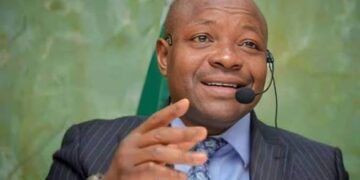
Human rights lawyer Deji Adeyanju relied on those video recordings while testifying for the defence. During cross-examination by prosecution counsel A. T. Kehinde, he maintained that the President’s statements were unequivocal. The prosecution sought to suggest that the remarks should be understood as metaphorical rather than literal. Whether that interpretation is ultimately accepted is a matter for the court to determine. However, where a public official speaks in direct and unambiguous language, any attempt to assign a different meaning inevitably invites careful judicial scrutiny.
The proceedings also continued to raise questions about fairness and due process. Sowore previously informed the court that he lost confidence in his former legal team after one of his lawyers was directed to kneel before the court, an incident that has attracted public attention. His subsequent application requesting Justice Musa Umar to recuse himself was refused. On Monday, despite the significance of the day’s testimony, defence counsel Ralph Adakole’s request for the matter to continue during the court’s vacation was also declined, and the case was adjourned until Thursday, July 16.
It is important to state what this article does not suggest. The determination of guilt or innocence rests exclusively with the court, and no opinion outside the courtroom should attempt to prejudge that outcome. The evidence will ultimately be assessed according to the law and the facts presented during the trial.
However, it is equally legitimate to observe that one of the most compelling aspects of the defence so far comes from President Tinubu’s own recorded statements. If the President has publicly declared that he does not wish to see Nigerians arrested for insulting or criticising him, those words deserve serious consideration within the broader constitutional principles of freedom of expression and democratic accountability.
Ultimately, this case has grown beyond the fate of one individual. It has become a test of Nigeria’s commitment to free speech, constitutional democracy, and the proper limits of criminal law in regulating political expression. Whatever the court’s final decision, President Tinubu’s own words have become an important part of the public record. They now stand as a significant reference point in any discussion about whether criticism of those in power should ever become the subject of criminal prosecution.
Daniel Nduka Okonkwo is an investigative journalist, human rights advocate, and policy analyst based in Abuja, Nigeria. He is the publisher of Profiles International Human Rights Advocate, a platform focused on accountability journalism, governance reporting, and the documentation of human rights issues across Africa. His work examines the intersection of political power, institutional accountability, systemic failure, and the human impact of corruption, with particular focus on Nigeria and the wider African continent.
Okonkwo’s reporting and analysis have been published in Sahara Reporters, African Defence Forum, Daily Trust, Vanguard, Daily Intel, Opinion Nigeria, African Angle, Local Newsbreak, and other international media outlets. His work is driven by a commitment to transparency, democratic governance, and justice. He also collaborates with Daniels Entertainment on human rights initiatives, extending his advocacy beyond traditional journalism into broader public engagement.
He is based in Abuja, Nigeria, and can be reached at dan.okonkwo.73@gmail.com.