

























By Daniel Nduka Okonkwo
A federal judge in Washington has just done something no Nigerian court, no Nigerian investigative committee, and no Nigerian election tribunal has been able to do in three decades. She has ordered the Federal Bureau of Investigation and the Drug Enforcement Administration to actually search their files, process what they find, and hand over whatever cannot lawfully be withheld, on a matter touching the sitting president of Africa’s most populous nation.
That order is not new in principle. What is new is the deadline attached to it, the government lawyer now fighting it, and the political money now circling it in Washington.
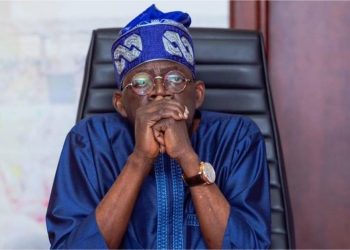
On August 19, 2026, United States District Judge Beryl A. Howell rejected a request by government lawyers for a full ten-day extension to comply with her earlier disclosure order in Greenspan v. Executive Office for U.S. Attorneys et al., Civil Action No. 1:23-cv-01816. She granted four days instead, setting a new deadline of August 21, and noted pointedly that the case had already been pending for more than three years. The request for more time came from the office of Jeanine Pirro, the newly installed United States Attorney overseeing the matter under the Trump administration, with lawyers for President Bola Ahmed Tinubu joining that motion.
This is the same litigation that has quietly run through the federal courts since June 2023, when American transparency activist Aaron Greenspan filed suit after the FBI, DEA, CIA, Internal Revenue Service, the Executive Office for U.S. Attorneys, and the State Department either denied his Freedom of Information Act requests or refused to confirm whether responsive records existed at all, a legal posture known as a Glomar response. Greenspan’s requests reached back to a federal investigation from the late 1980s and early 1990s into a Nigeria-based heroin trafficking network that prosecutors, in a 1993 civil forfeiture case in the Northern District of Illinois, alleged had moved proceeds into United States bank accounts allegedly connected to Tinubu, along with several other named individuals, one of whom has since died.
Judge Howell’s April 2025 ruling found that the FBI and DEA had not properly invoked Glomar in light of information already acknowledged elsewhere in the public record, though the CIA largely prevailed on its national security grounds. That ruling did not order blanket disclosure. It ordered the FBI and DEA to search for and process records and determine, document by document, what could be lawfully released and what remained protected. Tinubu’s lawyers were subsequently granted permission to appear in the case and filed a motion asking the court to shield records identifying him under FOIA’s privacy exemptions. Greenspan opposed it. In October 2025, Howell denied both Greenspan’s motion to force immediate production and Tinubu’s motion over exemptions, telling both sides their filings misread her own earlier order.
Fifteen months after that first ruling, according to Greenspan’s own status filings with the court, the government has still not produced a single processed page bearing Tinubu’s name. His May 2026 filing described the pattern of repeated extensions as deliberately protracting a case whose slow pace, he argued, served the political interests of a foreign head of state rather than the purpose Congress intended when it wrote the Freedom of Information Act. Whether that characterization is fair is a matter for the court, not for this reporter to settle in print. What is not in dispute is the calendar: four years of litigation, one substantive ruling on the merits, and as of this week, still no released records.
None of this proves that Tinubu committed a crime. He has never been indicted, charged, or convicted in the United States, and he has consistently denied wrongdoing. A civil forfeiture proceeding, even one alleging that specific funds derived from narcotics proceeds, is a case against property, not a criminal conviction against a person, and it does not by itself establish that any individual named in the surrounding paperwork engaged in the underlying conduct. Investigative files, as this publication has noted before, routinely contain unproven leads, hearsay, material about people never charged, and information collected but never used. The existence of a file is not the same thing as the truth of its contents.
But there is a second story inside this one, and it belongs squarely in the realm of verified fact rather than speculation. Since March 2026, a Washington-based lobbying firm, Von Batten Montague York, has been operating under a twelve-month contract worth a reported 1.2 million dollars, paid by former Vice President Atiku Abubakar, now the African Democratic Congress presidential candidate, positioning himself against Tinubu in Nigeria’s next election cycle. The firm’s own public disclosures state its mandate includes strengthening Atiku’s standing with American officials and countering what the contract itself describes as the Nigerian government’s lobbying narratives in Washington.
In July 2026, that firm began circulating more than sixty pages of Department of Justice records, court filings, and an affidavit tied to the 1993 forfeiture case and the ongoing FOIA litigation to members of the Trump administration, congressional offices, and senior Hill staff. The firm has said the material was shared following direct discussions with White House officials and congressional staff, and that its purpose was to ensure policymakers were not unaware of the historical allegations, particularly given reports that Tinubu was seeking a meeting with President Trump around the United Nations General Assembly. A chronology document the firm released frames the entire history, from the original 1988 to 1991 investigation through the present FOIA fight, as a single continuous narrative for American audiences unfamiliar with it.
That is a materially different fact pattern from a private citizen quietly pursuing a transparency lawsuit. It means that a paid, politically financed Washington influence operation, funded by Tinubu’s most prominent domestic electoral rival, is now actively feeding decades old federal investigative material into the same city, the same congressional committees, and reportedly the same administration currently deciding what the FBI and DEA must disclose under Judge Howell’s order. Readers can draw their own conclusions about what that timing means for Nigeria’s approaching political season. What responsible journalism cannot do is pretend that timing is irrelevant, or treat the lobbying campaign’s existence as proof that the underlying allegations are true. A political rival paying to publicize a court record does not make the record’s contents accurate, and it does not make them false either. It simply means the record has become, unmistakably, a campaign instrument.
For Tinubu’s side, the response so far has been legal rather than public relations-driven, pursued through privacy exemption motions and extension requests rather than press conferences. Some reporting has suggested his lawyers, in joining the government’s request for more time, argued the additional days were needed partly to engage American officials on the diplomatic implications of disclosure for the US-Nigeria security relationship, and separately raised concern about outside interference with the FOIA process itself. Those characterizations come from filings and secondary reporting that this publication has not independently verified against the primary court docket, and they should be read with that caveat attached rather than treated as settled fact.
What is verified, and what matters most as of this week, is narrower and more concrete. A federal judge has told the United States government, under a Trump appointed US Attorney, that it has run out of room to delay. Four days, not ten. A firm hired by the sitting president’s leading domestic political challenger is simultaneously distributing the underlying allegations to the very government now weighing what to release. And a president who has always maintained his innocence is, for the first time since this litigation began, facing a hard deadline inside a political calendar that includes both a possible White House meeting and a home election he cannot avoid.
What happens after August 21 will determine whether any of this moves from procedure into substance. The agencies could produce redacted records. They could assert specific exemptions document by document. They could report that further searches turned up nothing new. Greenspan could challenge whatever comes back as inadequate. Tinubu could press further privacy claims. Every one of those outcomes is possible, and none of them has happened yet as this report goes to publication.
This publication has previously made, and reiterates, a fundamental distinction that should not be lost amid the political contest surrounding these records: a FOIA lawsuit is not a criminal conviction; a court order requiring disclosure is not a finding of guilt; and the withholding of records is not evidence of innocence.
That distinction is particularly important now, as material from the case is being circulated for political purposes on both sides of the Atlantic. The provenance of a document does not, by itself, determine its truth. A record brought to Washington with the support of a political rival is not automatically credible merely because it exists, just as a record withheld by a government seeking to protect its own interests cannot automatically be dismissed, or accepted, as evidence of wrongdoing.
The evidentiary question is therefore narrower and more consequential: What do the underlying records actually contain, what will the FBI and DEA produce, what does the federal court determine may lawfully be disclosed, and what can independent examination of those records ultimately establish?
Until those questions are answered through verifiable records and proper scrutiny, political claims on either side should be treated for what they are: claims requiring evidence, not conclusions established by evidence. The responsibility of journalism is not to choose a side in that contest, but to follow the documentary trail, test competing assertions against the available facts, and clearly distinguish what is established from what remains alleged, disputed, or unknown.
The documents, whatever they contain, must still be allowed to speak for themselves.
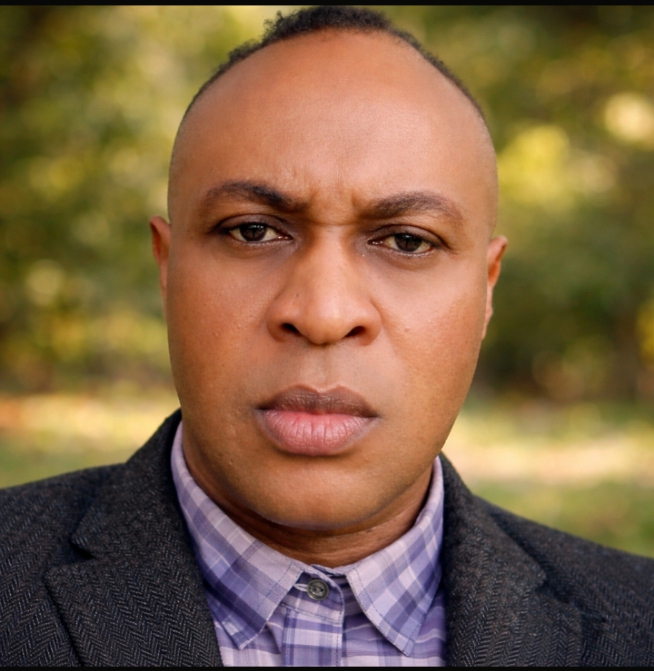
Daniel Nduka Okonkwo is an investigative journalist, human rights advocate, and policy analyst based in Abuja, Nigeria. He is the publisher of Profiles International Human Rights Advocate, a platform focused on accountability journalism, governance reporting, and the documentation of human rights issues across Africa. His work examines the intersection of political power, institutional accountability, systemic failure, and the human impact of corruption, with particular focus on Nigeria and the wider African continent.
Okonkwo’s reporting and analysis have been published in Sahara Reporters, African Defence Forum, Daily Trust, Vanguard, Daily Intel, Opinion Nigeria, African Angle, Local Newsbreak, and other international media outlets. His work is driven by a commitment to transparency, democratic governance, and justice. He also collaborates with Daniels Entertainment on human rights initiatives, extending his advocacy beyond traditional journalism into broader public engagement.
He is based in Abuja, Nigeria, and can be reached at dan.okonkwo.73@gmail.com.