
















Fellow Nigerians!
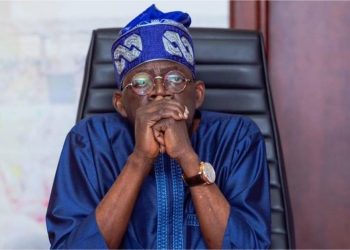
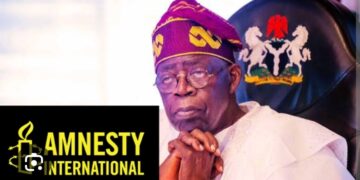
Does President Bola Ahmed Tinubu honestly think Nigerians are fools? Did we hear his regime suddenly announce a laughable 30-day fuel subsidy? Sorry, “DISCOUNT”….Who, exactly, is zooming who?
Recall how Bola Tinubu as then opposition leader vigorously shamed President Goodluck Jonathan when the latter attempted to remove the fuel subsidy. Combine that with the fact that, for a decade, scholars and people of good conscience—including this writer—had consistently warned that subsidy removal would collapse our economy. I never failed to emphasize the need to simply eliminate the corruption within the subsidy regime rather than waging an apparent economic warfare against the masses. I never failed to hammer that any attempt to remove the fuel subsidy was a lame excuse. Needless to mention that subsidies are a common phenomenon in both developing and developed economies.
Yet, upon assuming power on May 29, 2023, Tinubu shocked the nation by declaring, “fuel subsidy is gone.” Expectedly, this single decision quickly forced millions of Nigerians into unprecedented hardship under the guise of “necessary economic reform.” Instead of acknowledging that the policy was a devastating failure, as good leaders do, his administration rigidly defended this brutal stance for over three years.
Now, with the opposition winning the subsidy debate, the Tinubu people found themselves in full panic mode. In the process, they hastily executed a shameless, staggering reversal—just three months before the January 2027 general elections—by introducing a 30-day discounted fuel intervention. Yes, a “discounted ”, whatever that means! This frantic policy shift is not only desperate and shameless, it is also deceitful and meaningless. It profoundly exposes a ruling party terrified of voter vengeance at the ballot box. Nothing more! Yes, nothing more!!
The move is the peak of political desperation, contradiction, and pure intellectual bankruptcy. For over three years, Nigerians were told that subsidies were an unsustainable evil destroying the national economy. The regime preached patience, telling citizens to bear the agonizing brunt of soaring prices for the greater good. Yet, with a crucial election looming and their political survival on the line, those deeply entrenched economic principles evaporated overnight. This extreme contradiction proves what common sense has always dictated: the government’s economic decisions are dictated entirely by fear of losing power, rather than a genuine vision for the nation.
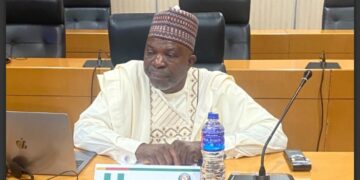
The sheer shamelessness of this move treats the collective intelligence of the Nigerian electorate with utter contempt. After inflicting years of unmitigated financial trauma, doubling food costs, and destroying the purchasing power of ordinary families, the presidency expects voters to forget their suffering in exchange for a single month of artificial relief. A pint in the ocean? Not unexpectedly, Finance Minister Taiwo Oyedele has scrambled to wrap the policy in complex technical semantics. He attempts to insist that the apparent u-turn is a “market stabilization mechanism” to sell fuel at cost rather than a formal reintroduction of the old subsidy. This semantic gymnastics fools no one. It is what it is. It is clearly a transparent, eleventh-hour bribe designed to manipulate voters as they prepare to head to the polls. But Nigerians are not fools and must not play fools.
Beyond the political deception, the discount itself is fundamentally meaningless to the economic reality of everyday Nigerians. A 30-day window provides absolutely no long-term stability for businesses, transportation networks, or household budgets. Temporary relief does not reverse years of hyperinflation or repair a battered economy. Instead, it serves as a glaring insult—a brief, superficial band-aid designed to test the sensibilities of Nigerians.
The objective fact is that Tinubu’s sudden pre-election fuel subsidy U-turn is definitive proof that political survival overrides all policy convictions. While the regime attempts to paint this temporary discount as a compassionate intervention, the timeline screams political terror. This strategy represents a high-stakes insult to the intelligence of Nigerian voters. Come election day, the ruling party will find out whether the people can be easily pacified with 30 days of cheap petrol, or if they will use their votes to reject what many view as an opportunistic attempt to buy their compliance at the ballot box.
SKC Ogbonnia, a former APC Presidential Aspirant, writes from Ugbo, Awgu LGA, Enugu State.