






























By Georgina George
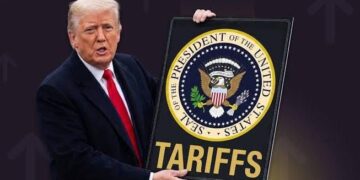
The United States is preparing another round of tariffs targeting imports from 16 major trading partners after an investigation into what the Donald Trump administration describes as excessive industrial production in those economies.
The proposed trade penalties could cover a broad range of products and add to existing duties on foreign goods entering the American market, with China expected to face particular scrutiny.
Sources familiar with the matter say, the US Trade Representative’s office was preparing to publish the findings of the investigation as early as Tuesday, November 24, 2026. The report is expected to recommend additional import duties on products from countries accused of producing more goods than their domestic markets can absorb.
The investigation was launched in March under Section 301 of the Trade Act of 1974, a provision of US trade law that empowers Washington to investigate and respond to foreign trade practices it considers unfair.
The 16 trading partners covered by the exercise are China, India, Japan, South Korea, Mexico, Vietnam, Taiwan, Thailand, Malaysia, Indonesia, Switzerland, Norway, Singapore, Bangladesh, Cambodia and the European Union.
The proposed duties will not necessarily be uniform across the affected economies. Other sources say, the administration was considering country-specific rates, while imports from Mexico and Norway were unlikely to attract immediate additional levies.
Washington is also expected to preserve tariff limits negotiated under existing trade agreements. The arrangements include a 15 per cent cap for goods from the European Union, Japan and South Korea, while Malaysia has a 19 per cent ceiling.
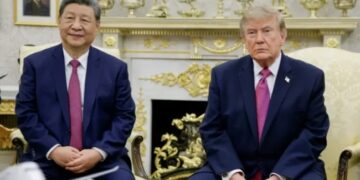
For China, the administration is expected to maintain the 20 per cent limit on tariffs introduced during Trump’s second term, provided the trade truce between both countries is extended. The agreement is scheduled to expire on January 10, 2027, and its collapse could expose Chinese imports to higher duties.
The planned measures are also part of Washington’s efforts to rebuild its tariff regime after the US Supreme Court struck down some of Trump’s earlier import duties in February 2026. Those tariffs had been introduced under the president’s global ‘Liberation Day’ trade policy.
Ryan Majerus, a former senior official at the US Commerce Department, said the findings could run into hundreds of pages and recommend different tariff responses for the countries under investigation.
Majerus, who is now a partner at law firm King and Spalding, said the administration could consider rates of between 15 and 25 per cent on imports from countries found to have excess production capacity in particular industries.
He also suggested that the government could begin with lower duties and introduce provisions for increasing them if the affected countries failed to address the production concerns raised by Washington.
The additional duties could come on top of existing tariffs of 10 or 12.5 per cent imposed under a separate investigation into the enforcement of laws against forced labour in international supply chains.
China remains the central focus of the industrial capacity investigation. The Trump administration has accused Beijing of manufacturing far more goods than its domestic market requires and exporting the surplus at prices that threaten producers in other countries.
The sectors identified by Washington include steel, aluminium, electric vehicles, household appliances and solar products. China has rejected the allegations, arguing that the strength of its exports comes from its competitive industrial capabilities.
The investigation also extends to Chinese investments in Southeast Asia, particularly Vietnam, Indonesia and Cambodia. US officials suspect that some Chinese companies are setting up production facilities in these countries to manufacture goods for the American market and avoid existing tariffs on products shipped directly from China.
The latest tariff plans come as Washington and Beijing attempt to preserve their trade agreement and negotiate lower duties on approximately $30 billion worth of non-strategic imports from each country.