





































By Daniel Nduka Okonkwo
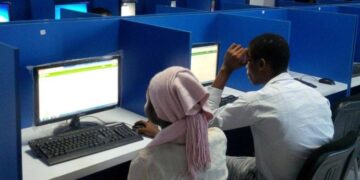
Nigeria’s classrooms have been thrust into a digital storm, and the fallout is impossible to ignore. In just two years, the West African Examinations Council’s hurried shift from pen-and-paper towards Computer-Based Testing has turned the nation’s most important school-leaving examination into a high-stakes experiment, one where students are not only battling algebra and literature, but also keyboards, unfamiliar screens, inadequate digital infrastructure, and the pressures that come with adapting to a radically different examination environment. The result is a dramatic slide in pass rates, mounting frustration among parents, and a growing chorus of voices warning that WAEC’s gamble with technology may be failing the very generation it was meant to empower.
For millions of Nigerian secondary school leavers, the West African Senior School Certificate Examination has always been a defining rite of passage. In recent years, however, that rite has been overtaken by a different kind of anxiety, not only about the subject matter, but about the machine sitting in front of the candidate. As the West African Examinations Council pushes to migrate the paper-based examination towards Computer-Based Testing, parents, teachers and education stakeholders across Nigeria are raising a consistent and urgent argument: the rush to digitise a system built on decades of pen-and-paper culture may be imposing additional burdens on students whose schools have vastly different levels of technological preparedness.
The evidence for that argument is not merely anecdotal, though it deserves to be stated carefully. When WAEC first announced the 2025 WASSCE results on August 4, it reported that only 754,545 out of 1,969,313 candidates, representing 38.32 percent, had obtained credits and above in a minimum of five subjects including English Language and Mathematics, a figure the council’s Head of Nigeria’s Office, Amos Dangut, described at the time as a steep collapse from the 72.12 percent recorded in 2024. Four days later, WAEC admitted that the figure was wrong. The council disclosed that a technical fault involving the serialisation of objective examination papers had resulted in some scripts being marked against the wrong answer keys. Once the results were reviewed and corrected, the number rose to 1,239,884 candidates, or 62.96 percent. WAEC also confirmed that candidates who sat the Computer-Based version were not affected by that particular error because the fault concerned the paper-based examination process. The corrected 2025 result, therefore, represented a 9.16 percentage-point decline from the 72.12 percent recorded in 2024, rather than the initially reported collapse.
That correction is important because the initial 38.32 percent figure cannot legitimately be presented as evidence that Computer-Based Testing caused a dramatic collapse in performance. The verified comparison is between the corrected 62.96 percent in 2025 and the 72.12 percent recorded in 2024. Even on that corrected basis, however, the decline remains significant, and it occurred during the same period in which WAEC was expanding its use of computer-based assessment. That narrower, verified decline is therefore central to the question this investigation raises.
It helps to understand exactly what the new format asks of a candidate. WAEC’s digital transition has not simply meant that every examination paper was suddenly replaced by a computer screen. The council has been moving through stages, with computer-based examinations introduced and expanded while arrangements have also been made for schools and candidates according to their level of preparedness.
Under the computer-based model, objective questions are answered on screen, allowing responses to be captured digitally and reducing some of the logistical demands associated with paper scripts. Other components of the examination have not necessarily followed an identical transition path in every category of candidate or examination. Practical subjects and computer-related papers can also require candidates to interact directly with computer systems and software.
That means a candidate’s familiarity with a keyboard, mouse, and digital interface can become part of the examination experience. WAEC has encouraged schools to familiarise candidates with the computer-based environment before examination day. For a student in a village school who has spent most of secondary school answering questions with a biro, however, that instruction is easier said than followed.
Parents and teachers who lived through that transition raise a question that deserves to be asked plainly: whether the schools being asked to adopt this new system even have the computers to run it.
WAEC’s own requirements make the scale of the challenge clear. Requirements released ahead of the 2026 transition included a minimum of 250 functional computers for specified CBT centres, with an additional 10 percent in backup systems, alongside a robust server, Local Area Network facilities, adequate lighting and air-conditioning, CCTV cameras, uninterrupted power arrangements, and a backup generator of at least 40kVA. Schools or centres unable to meet the applicable requirements could have their candidates accommodated elsewhere.
Industry stakeholders have, in turn, urged school proprietors to seek financing and government support to meet the technological demands of the transition. That appeal is itself an indication that the financial burden of digital examination infrastructure is substantial.
Across much of the country, and especially in villages and remote communities, functioning computer laboratories, stable electricity, and reliable internet connectivity remain unevenly distributed. A student who has spent an entire secondary-school career answering questions with a biro is suddenly expected to navigate a digital interface under examination pressure, in a format that may be unfamiliar to both the candidate and, in some cases, the school’s teaching personnel. Parents are therefore left with a legitimate concern that the cost of meeting WAEC’s infrastructure demands could eventually be passed down to them through higher school fees or other charges.
The concern is not confined to hardware. Nigeria’s power sector continues to struggle with reliability, and frequent outages disrupt everyday life in towns as well as villages. Asking candidates to sit high-stakes examinations that depend on functioning digital infrastructure, in a country where reliable electricity cannot always be guaranteed, requires a level of contingency planning that cannot be taken for granted.
The experience of the 2025 examination also demonstrated the consequences of wider administrative and logistical failures. Reports emerged of candidates in some centres being made to sit important papers later than scheduled, including into the evening, after delays affected examination arrangements. Such incidents cannot simply be attributed to CBT because the 2025 examination still involved substantial paper-based administration, but they demonstrated how vulnerable a national examination can become when logistics, infrastructure, and administration fail simultaneously.
WAEC has sought to address concerns about accessibility by promising that candidates would not be required to travel more than two kilometres to their examination centres. Amos Dangut reiterated the commitment at a press briefing. The pledge is important, but it also raises a practical question for genuinely remote communities: what happens when there is no compliant examination centre within that radius?
These conditions do not merely inconvenience candidates; they can work against them. Mental exhaustion, anxiety about an unfamiliar testing format, and the physical strain associated with prolonged examination sessions are not neutral factors in an examination that determines university admission for hundreds of thousands of young Nigerians.
Beyond the examination hall itself, families now worry about a second layer of technical risk: that a system glitch, an administrative failure, or a processing error could misreport or delay a child’s score. The 2025 serialisation problem provided a sobering example of how an examination-security measure can itself produce serious consequences when implemented incorrectly. WAEC subsequently corrected the affected results, but the episode inevitably raised questions about quality control and accountability.
Frustrated parents and civil-society voices have consequently demanded greater accountability from WAEC and stronger examination administration, arguing that a government serious about educational outcomes should invest in the necessary facilities and systems before imposing major technological changes on students.
The pressure eventually reached the National Assembly.
On November 13, the House of Representatives called on the Federal Ministry of Education and WAEC to suspend the planned introduction of Computer-Based Testing for the 2026 school examination. Lawmakers cited concerns about inadequate ICT infrastructure, unreliable electricity, shortages of trained personnel, and the difficulties facing schools, particularly in rural communities.
The House further urged the Federal Government and state governments to make provisions in the 2026–2029 budget cycles for the recruitment of computer teachers, construction of ICT-compliant examination facilities with internet access, standby power infrastructure, and assessment of schools’ readiness, with full implementation of CBT proposed for 2030.
WAEC’s response was notable for its firmness rather than its flexibility. The council’s Head of National Office, Dr Amos Dangut, said WAEC had received no formal communication from the National Assembly directing it to suspend its 2026 CBT plans, maintaining that the council would act on official directives rather than media reports or public pressure.
The council, therefore, continued with preparations for the 2026 examination despite the lawmakers’ intervention.
That anti-malpractice push carried its own cost.
Alongside the pass rate, WAEC disclosed that it had withheld the results of 167,486 candidates, representing 8.59 percent of the 1,950,726 candidates who sat the 2026 WASSCE for school candidates, over alleged examination malpractice. The council cited the persistent use of mobile phones in examination halls despite an existing ban and organised cheating in some schools. It also reported that some supervisors and invigilators had been arrested or were facing sanctions.
The figure is, on its own terms, a point of progress, down from the 9.7 percent of results withheld in 2025. WAEC cited its strengthened examination-integrity measures, including the Digital Examiner Marking System and serialisation of question papers, as part of its efforts to combat malpractice.
But the figure sits uneasily beside the falling credit pass rate, and it complicates any simple story about Computer-Based Testing.
The technology appears to be doing at least part of what it was designed to do: strengthening examination security and making certain forms of cheating more difficult. Yet the broader examination results have remained below the 2024 benchmark. For a family whose child’s result is among the withheld results, pending an investigation, the distinction between a system that is catching wrongdoing and one that may be creating additional anxiety offers little immediate comfort.
The 2026 results provide another important piece of the puzzle.
WAEC reported that 1,950,726 candidates sat the 2026 WASSCE for school candidates. Of that number, 1,200,514 candidates, representing 61.54 percent, obtained credits and above in at least five subjects, including English Language and Mathematics. The figure was lower than the corrected 62.96 percent recorded in 2025.
Taken together, the pattern lends real, if more measured, support to the core argument that Nigerian parents and teachers have been making since the transition began.
Two consecutive years of results below the 2024 benchmark, 62.96 percent in 2025 and 61.54 percent in 2026, compared with 72.12 percent in 2024, are significant. They occurred as WAEC was expanding computer-based assessment and introducing new digital systems for examination administration and integrity.
But the statistics do not, by themselves, prove that CBT caused the decline.
That distinction is important. The 2025 results were affected by a technical error involving the serialisation of paper-based objective examination scripts, not by the computer-based examination system. The 2025 and 2026 examinations also involved a transition process rather than a simple overnight replacement of every paper examination with a computer.
Nevertheless, the coincidence raises a legitimate policy question: if digital assessment is intended to improve the examination system, why have overall results remained substantially below the pre-transition benchmark?
Technology in examinations is not inherently the enemy of learning. Properly implemented, digital assessment can improve examination security, reduce some forms of malpractice, speed up processing, and modernise an examination system that has relied heavily on paper for decades.
But technology deployed ahead of the infrastructure needed to support it can create a different kind of inequality.
A candidate who has access to computers, electricity, trained teachers and regular digital practice enters a computer-based examination with a level of familiarity that may be unavailable to another candidate whose school has struggled even to maintain a functional computer laboratory.
That is the central issue.
The question is not whether Nigerian examinations should eventually become digital. They almost certainly will.
The question is whether Nigeria is building the educational infrastructure first—or asking its students to pay the price for learning the lesson during the examination itself.
WAEC has taken an important step towards modernising assessment. But modernisation should not be measured simply by how quickly examination papers move from desks to screens. It should be measured by whether every Nigerian child, regardless of where he or she attends school, has an equal opportunity to demonstrate what they actually know.
Until that standard is met, the argument that Nigeria’s urgent transition towards Computer-Based Testing may be hurting rather than helping some Nigerian students remains one that WAEC has not yet fully answered.
About the Author
Daniel Nduka Okonkwo is an investigative journalist, human rights advocate, and policy analyst based in Abuja, Nigeria. He is the publisher of Profiles International Human Rights Advocate, a platform focused on accountability journalism, governance reporting, and the documentation of human rights issues across Africa.
His work examines the intersection of political power, institutional accountability, systemic failure, and the human impact of corruption, with particular focus on Nigeria and the wider African continent.
Okonkwo’s reporting and analysis have been published in Sahara Reporters, African Defence Forum, Daily Trust, Vanguard, Daily Intel, Opinion Nigeria, African Angle, Local Newsbreak, and other international media outlets. His work is driven by a commitment to transparency, democratic governance, and justice. He also collaborates with Daniels Entertainment on human-rights initiatives, extending his advocacy beyond traditional journalism into broader public engagement.
He is based in Abuja, Nigeria, and can be reached at dan.okonkwo.73@gmail.com.