

























By Daniel Nduka Okonkwo
In Nigeria’s northeast, the battlefield is not a distant front; it is the very ground where generals themselves have fallen. Unlike their Western counterparts who command from secure positions, Nigerian officers have faced direct overruns by insurgents wielding heavy artillery and gun trucks, their bases besieged and at times temporarily overrun. The execution of Brigadier General Musa Uba, after being tracked, captured, and interrogated, emphasizes the chilling reality that Boko Haram and ISWAP are not ragtag militias but highly organized non-state actors capable of dismantling fortified military installations and eroding the command structure of the Nigerian Army itself. This is a war without clear front lines, a conflict where mobility and brutality have redefined what vulnerability means, even at the highest ranks
On Saturday, 13 June 2026, the Katsina State Government confirmed what many had feared since a red Peugeot 504 was ambushed on the Matazu road two weeks earlier. Retired Major General Rabe Abubakar, a former Director of Defence Information at the Defence Headquarters, had died in the custody of the bandits who abducted him and his wife on 30 May. The state’s Commissioner for Internal Security and Home Affairs said the retired officer died from complications arising from diabetes and hypertension while in captivity. Days earlier, a video had circulated online showing the General and his wife pleading with the state government to meet the kidnappers’ demands.
For ordinary Nigerians, the death of a man who once stood at a podium in Abuja and briefed the nation on the war against terror should land as more than another item in an unending scroll of bad news. It is a marker. If a retired two-star general, a man whose entire career was built around the architecture of national security, can be abducted on a public highway and die in the hands of criminals before the state can act, then the protective umbrella Nigerians have been told exists is thinner than advertised.
Abubakar’s death is the latest in a string of senior officer casualties that, taken together, describe an alarming trajectory rather than an isolated tragedy.
In November 2021, Brigadier General Dzarma Zirkusu was killed in Borno State when ISWAP rammed a bomb-laden vehicle into his convoy during an ambush near Askira Uba. Eight months earlier, in July 2021, Major General Hassan Ahmed, a former Army Provost Marshal serving as a director at Army Headquarters, was shot dead when gunmen attacked his vehicle along the Lokoja-Abuja road, an attack Reuters described at the time as the first fatal gun assault on a serving senior officer of that rank. His sister, travelling with him, was kidnapped in the same attack.
In November 2025, Brigadier General Musa Uba, commander of the 25 Task Force Brigade in Damboa, was ambushed near Wajiroko village while leading a patrol with troops and Civilian Joint Task Force members. He survived the initial ambush but became separated from his men and was later captured and executed by ISWAP, a sequence that one academic analysis warned would deal irreparable damage to army morale while emboldening the insurgents.
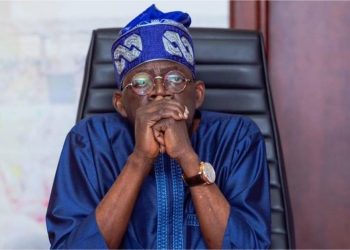
Five months after that, on 9 April 2026, Brigadier General Oseni Braimah, commander of the 29 Task Force Brigade, was killed alongside several soldiers when terrorists attacked the brigade headquarters at Benisheikh in Borno State’s Kaga local government area. President Bola Tinubu, in a statement confirming the death, described the assault as a sign of insurgent desperation. The Defence Headquarters called it an attack that troops repelled even as they paid the supreme price.
Four senior officers were killed in combat or captivity in under five years, and now a fifth, a retired general, is dead in the hands of bandits on a road many Nigerians travel daily. This is the texture of insecurity that statistics alone cannot fully convey.
It is true, and worth stating plainly for context, that the killing or capture of senior military officers is not a uniquely Nigerian phenomenon. Asymmetric conflicts elsewhere have produced similar shocks: Ukrainian strikes have killed Russian generals near the front in the war with Russia; the United States lost Major General Harold Greene to an insider attack in Afghanistan; commanders of the Congolese, Somali, and former Afghan national armies have been killed by rebel and jihadist forces in their respective theatres.
But context is not comfort. What distinguishes Nigeria’s pattern is the diversity of threat actors involved, ISWAP in the northeast and armed bandit networks in the northwest and north-central zones, and the fact that several of these killings did not occur on a designated battlefield but on ordinary roads used by civilians every day. When a two-star general cannot safely drive from Okene to Abuja, or from Katsina town toward Matazu, the implicit message to the average traveller, trader, student or farmer is unambiguous.
Each of these tragedies has reignited a debate that the federal government has tried to keep at arm’s length. In February 2026, AFP reported that Nigerian authorities paid a substantial ransom to Boko Haram and released two of the group’s senior commanders to help secure the freedom of more than 300 pupils abducted from St. Mary’s Catholic School in Papiri, Niger State, the previous November. The Minister of Information and National Orientation, Mohammed Idris, rejected the report outright, calling the claims fictitious and insisting no ransom was paid and no militants released.
The Papiri episode is not isolated. The opposition Peoples Democratic Party has formally accused the Tinubu administration of negotiating and paying ransoms in separate kidnapping cases across Niger, Kebbi, and Kwara states, citing the National Bureau of Statistics’ Crime Experience and Security Perception Survey, which put total ransom payments by Nigerians at over two trillion naira in a single year. The party argued that this directly contradicts the Terrorism (Prevention and Prohibition) Act 2022, which criminalises such payments. Separately, a February 2026 policy report by Nextier’s Security, Peace and Development programme concluded that negotiated payments to armed groups have become embedded in how parts of the country are governed, describing a self-sustaining “ransom economy.” In the National Assembly, Deputy Speaker Benjamin Kalu has proposed criminal penalties for officials who negotiate ransoms or broker informal amnesty deals with bandits, a proposal that implicitly acknowledges the practice exists at some level even as the executive denies it.
This is not an abstract policy quarrel. If even a fraction of these allegations holds up, it means resources are flowing, however indirectly, into the same networks that killed Brigadier Generals Zirkusu, Uba, and Braimah, and that held Major General Abubakar until illness ended his life in captivity. If the allegations are false, the government has both the standing and the obligation to provide the kind of transparent accounting that would put the matter to rest, particularly for the families of officers whose rescues failed.
The killing of a brigade commander in an active conflict zone is a grim cost of war. But the abduction and death of a retired general on a state highway, alongside the killing of a serving director of army headquarters on the road from the capital, signals something broader: that rank, uniform, and decades of service no longer guarantee a measure of protection that ordinary citizens have long known they do not possess.
If the architecture built to protect Nigeria’s most senior military men is this porous, the implications for the millions of Nigerians without escorts, without rank, and without the resources these officers had, are sobering. The roads these generals died on are the same roads market women, students, and commuters travel daily. The territories these brigades were defending are the same communities where families sleep at night without the firepower of a task force brigade nearby.
Nigeria’s security crisis has, for years, been narrated in casualty figures from the northeast and banditry statistics from the northwest, often distant abstractions to readers in Lagos, Abuja, or the diaspora. The deaths of Zirkusu, Ahmed, Uba, Braimah, and now Abubakar collapse that distance. They are a reminder that the threat has matured, diversified, and moved closer to the centres of power than the official narrative often allows. For a nation already grappling with economic hardship and institutional fatigue, that should be cause not for panic, but for sober, sustained attention, and for the kind of accountability that has so far been in short supply.
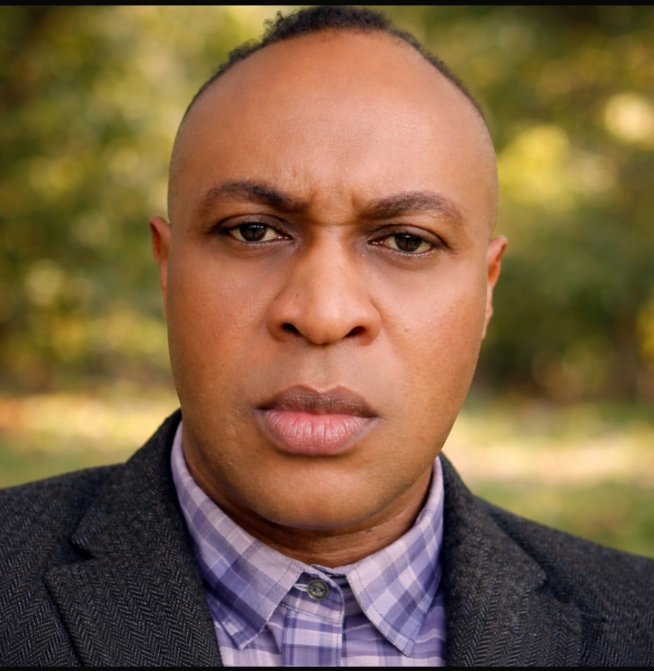
Daniel Nduka Okonkwo is an investigative journalist, human rights advocate, and policy analyst based in Abuja, Nigeria. He is the publisher of Profiles International Human Rights Advocate, a platform focused on accountability journalism, governance reporting, and the documentation of human rights issues across Africa. His work examines the intersection of political power, institutional accountability, systemic failure, and the human impact of corruption, with particular focus on Nigeria and the wider African continent.
Okonkwo’s reporting and analysis have been published in Sahara Reporters, African Defence Forum, Daily Trust, Vanguard, Daily Intel, Opinion Nigeria, African Angle, Local Newsbreak, and other international media outlets. His work is driven by a commitment to transparency, democratic governance, and justice. He also collaborates with Daniels Entertainment on human rights initiatives, extending his advocacy beyond traditional journalism into broader public engagement.
He is based in Abuja, Nigeria, and can be reached at dan.okonkwo.73@gmail.com.