


















By Dr. Jumai Ahmadu
Abuja is growing—and growing rapidly. With that growth comes an uncomfortable but unavoidable reality: infrastructure planned and provided for a much smaller population is today under enormous pressure. Roads, drainage systems, transportation networks, waste-management facilities and other essential services must now respond to demands far beyond what was envisaged decades ago.
The recent flooding along the Airport Road axis, Lugbe and Lokogoma has once again brought this reality into sharp focus. While increasingly intense rainfall cannot be ignored, the challenge goes beyond the weather. Rapid population growth, uncontrolled development, obstruction of natural waterways and violations of the Abuja Master Plan have combined over time to create vulnerabilities that require decisive and sustainable intervention.
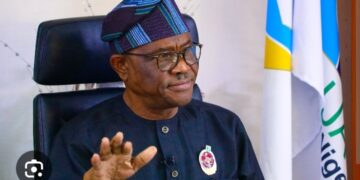
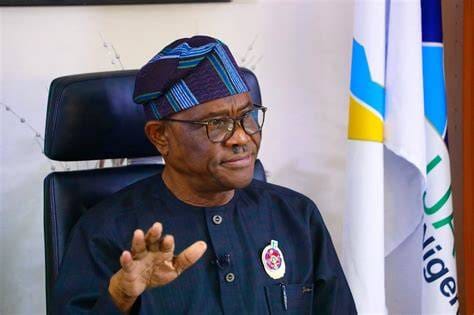
It is against this background that the Federal Capital Territory Administration (FCTA), under the leadership of the FCT Minister, Nyesom Wike, has commenced a comprehensive investigation into the affected areas.
A high-level technical team led by the Executive Secretary of the Federal Capital Development Authority (FCDA), alongside the Director of Development Control and other relevant officials, has been deployed to undertake on-the-ground assessments. The objective is clear: establish what happened, distinguish natural causes from human-induced factors and implement corrective measures that can prevent a recurrence.
The Reality of a Rapidly Expanding Capital
Abuja today is vastly different from the city originally envisaged by its planners. Its attraction as the nation’s capital, coupled with economic opportunities and continuous migration, has produced significant population growth and the rapid expansion of satellite settlements.
This population explosion has inevitably overstretched existing infrastructure. Roads carry significantly more traffic, drainage infrastructure serves increasingly built-up communities, while demand for housing, transportation, sanitation and other public services continues to rise.
Government must therefore continue to expand infrastructure to meet these changing realities—and this is precisely what the current FCTA is doing.
However, population growth cannot explain every challenge confronting the city.
Illegal development has compounded the pressure. Structures erected on waterways, obstruction of drainage channels, encroachment on road corridors and development of designated green areas undermine the capacity of existing infrastructure to function effectively.
A drainage system cannot perform optimally when its natural discharge channels are obstructed. Neither can a carefully designed city remain sustainable when development takes place without regard to approved land-use plans.
This is why restoring the integrity of the Abuja Master Plan has become an important component of the Administration’s reform efforts.
The Minister has made it clear that structures found to be obstructing waterways or occupying prohibited corridors will be subjected to appropriate action in accordance with relevant laws and regulations.
Significantly, accountability is not being restricted to developers. The Administration is equally addressing the conduct of officials who facilitate illegal developments or issue unauthorised approvals. Appropriate disciplinary measures against erring officials demonstrate that correcting Abuja’s development abnormalities requires both physical enforcement and institutional accountability.
Infrastructure Expansion Must Match Population Growth
Enforcement, however, is only one side of the equation. Abuja’s growing population requires sustained investment in infrastructure.
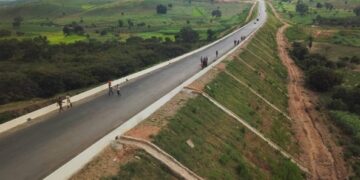
The scale of ongoing infrastructure development across the FCT reflects this recognition. According to the Minister, 76 of the 107 road projects awarded under the administration of President Bola Ahmed Tinubu have been completed, with additional projects progressing towards completion.
The Administration has also prioritised inherited projects. Twenty-three of 25 projects inherited from the Buhari administration and six of eight inherited from the Jonathan administration have reportedly been completed, alongside interventions on projects that had remained unresolved for considerably longer periods.
The revival of the Abuja Rail Mass Transit system and extensive expansion and rehabilitation of the road network are equally significant. These interventions are not simply physical projects; they are necessary responses to the changing demographic realities of the nation’s capital.
A Shared Responsibility for Abuja
The lesson from recent events is that Abuja’s future cannot be secured through infrastructure investment alone.
Government can construct roads and drainage systems, but residents and developers must respect waterways and approved development corridors. Government can strengthen Development Control, but officials entrusted with implementing planning regulations must also uphold the rules without fear, favour or improper influence.
Protecting Abuja must therefore become a shared responsibility.
The ongoing investigation into the Airport Road, Lugbe and Lokogoma flooding should be seen as an opportunity not only to address immediate concerns but also to strengthen the city’s resilience against future challenges.
Corrective measures must include opening obstructed waterways where necessary, strengthening drainage infrastructure, enforcing development regulations, expanding critical public infrastructure and ensuring accountability for violations.
Abuja will continue to grow. The responsibility of government is to anticipate that growth and provide infrastructure accordingly. The responsibility of residents, developers and institutions is to ensure that development does not undermine the very infrastructure upon which the city depends.
Ultimately, the path forward is clear: expand infrastructure to meet population growth, correct existing development abnormalities, protect the Abuja Master Plan and strengthen institutional accountability.
The objective should not merely be to solve today’s flooding or traffic challenges, but to build an Abuja capable of meeting the demands of tomorrow.
Dr. Jumai Ahmadu is the Director, Reform Coordination and Service Improvement Department, Federal Capital Territory Administration (FCTA).