

















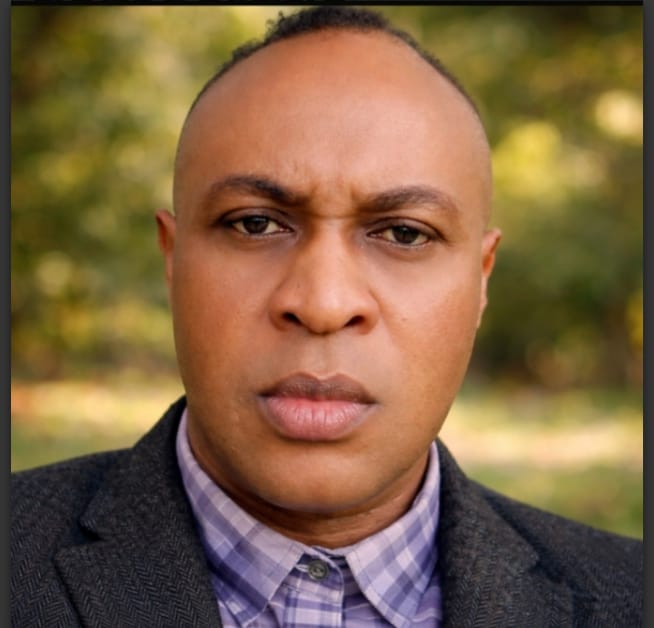
By Daniel Nduka Okonkwo
Every election cycle, Nigerians begin failing themselves long before they reach the polling booth. We allow politicians to divide us by tribe, religion, and region. We surrender our convictions to ethnic champions and religious sentiment. We celebrate politicians for distributing money rather than demanding a record of performance. We trade our votes for cash, food, and promises. We turn social media into a battlefield of propaganda and manufactured outrage. We defend corruption when it benefits our own, treat competence as secondary to where a candidate comes from, and allow political godfathers, clerics, and ethnic leaders to tell us who deserves our loyalty. By election day, the damage is already done. We have reduced citizenship to identity, politics to survival, and democracy to a contest over which group gets access to power next. Then we vote along the same fault lines, complain about the consequences, and spend the next four years blaming everyone except ourselves. Nigerians have never consistently converted their frustration into votes based on performance alone. Their votes are still heavily influenced by religion, tribe, culture, and region, factors that speak to belonging and perceived survival far more than they speak to good governance.
There is a comforting theory that resurfaces every election cycle. It holds that hardship is finally teaching Nigerians to vote differently, that hunger has no tribe, that an empty stomach does not ask whether a candidate is Igbo, Hausa, or Yoruba, Christian or Muslim, and that suffering is quietly building a new, issue-driven electorate that will one day vote governments in and out on performance alone.
It is a beautiful theory. The evidence tells a more complicated story.
From 1999 to 2023, through subsidy removal, currency instability, mass unemployment, insurgency, banditry, and inflation, the voting map of Nigeria has remained remarkably influenced by older political and identity lines. In 2015, amid falling oil prices, economic uncertainty, and pressure on the naira, Nigerians still voted in patterns that reflected a powerful north-south and, in many areas, ethno-religious divide. In 2019, despite economic difficulties and widespread dissatisfaction with government performance, many of the same regional and identity-based blocs remained politically significant.
The 2023 election, held during a severe cost-of-living crisis, is the clearest recent test case, and the certified results from the Independent National Electoral Commission tell a story of fragmentation within established political and regional blocs rather than a complete break from them. Bola Tinubu won with 36.61 per cent of the vote, the lowest winning share of any president in the Fourth Republic, on a turnout of 26.71 per cent, itself the lowest recorded turnout for a Nigerian presidential election. Atiku Abubakar took 29.07 per cent. Peter Obi’s Labour Party took 25.40 per cent nationally, drawing particularly strong support from the Southeast and parts of the South-South, while also attracting significant support among young and urban voters outside those areas. Rabiu Kwankwaso’s New Nigeria Peoples Party took 6.40 per cent, with its strongest support concentrated in Kano and parts of the northwest. The geographical distribution of the vote demonstrated that ethno-religious and regional identity remained significant forces in Nigerian politics, even as new generational and urban political currents emerged. If economic suffering were truly rewriting the Nigerian voter’s calculation, a record cost-of-living crisis was the moment that transformation should have appeared most clearly in the numbers. Instead, the four leading candidates drew heavily from different regional, religious, demographic, and political constituencies, while no candidate secured anything close to a national majority.
The reason is not that Nigerian voters are irrational. It is that identity performs a function economic argument cannot easily displace. Tribe, religion and region are the lens through which many Nigerians interpret whether a government will treat them as insiders or outsiders, a question that feels more urgent than any debate over subsidy regimes, because a community that believes it has been shut out of power may expect to be shut out of everything that flows from power: appointments, security attention, infrastructure spending and protection from state institutions.
Economic hardship arrives as a shared national experience in theory. In practice, Nigerians can interpret their hardship through an ethnic, religious, or regional frame rather than a national one. A trader in Kano and a trader in Onitsha may both be struggling to survive, but ask each why, and the answers can diverge along old fault lines. One may point to national economic mismanagement. Another may point to his community’s exclusion from power as a deeper cause of its poverty. Suffering does not automatically produce a shared political conclusion. It is filtered through identity before it reaches the ballot box.
This is why vote buying, so often blamed for distorting Nigerian elections, can work within identity blocs rather than across them. Money may influence voters at the margins, but it does not necessarily persuade a community to abandon a candidate associated with its own tribe, religion, or region for a wealthier rival from another political constituency. Cash can change the intensity of turnout more than the fundamental direction of political loyalty. It is also why the enthusiasm around Obi in 2023, genuine as it was among young and urban Nigerians, should not automatically be mistaken for a complete national realignment. His support was particularly concentrated in the Southeast and parts of the South-South, even though his campaign also attracted significant support outside those areas. A movement can contain a genuine national reform impulse and still operate within an electoral architecture heavily shaped by regional and identity politics.
None of this means economic frustration is meaningless. It shaped the record collapse in turnout, which fell from 34.75 per cent in 2019 to 26.71 per cent in 2023, a decline that Afrobarometer’s surveys help put into context: fewer than one in three Nigerians surveyed ahead of the election said they trusted INEC, while trust in the commission had fallen substantially compared with earlier years. But there is a difference between frustration and redirection. A collapsing turnout is a story of withdrawal, not necessarily conversion. Nigerians can be furious about fuel prices, insecurity, and the naira, and still vote for the candidate they believe best represents their tribe, faith, region, or community, because that vote answers a different question from the one economic hardship raises. It answers the question of belonging and survival within a system that many communities have learned, through decades of experience, not to trust if power sits elsewhere.
Nigeria’s political architecture was built on regional blocs before it was built on economic ideology, and that inheritance runs deeper than any single cycle of hardship can erase. Zoning arrangements, running-mate selections calibrated for religious and regional balance, and campaign strategies built around consolidating a home base before chasing swing votes are not accidents. They are rational responses by political actors who understand, better than most commentators, that identity remains one of the most powerful influences on how many Nigerians vote.
None of this is a defence of identity politics. It has produced governance that too often rewards loyalty over competence and shields failed leaders from accountability simply because they share a voter’s tribe or faith. It deserves the criticism it receives. But diagnosing a problem honestly requires resisting the temptation to declare it solved before the evidence supports that conclusion.
As Nigeria approaches 2027, the more realistic expectation is not that economic pain will finally break the hold of tribe, religion, and region on the Nigerian vote. The 2023 election, held in the midst of severe economic hardship, still produced a result marked by strong regional, religious, and demographic concentrations, with the major new variable being how many Nigerians simply stayed home. These forces may once again absorb the pain, reinterpret it through familiar loyalties, and produce an outcome that retains many of the broad regional and religious contours of previous elections, while turnout tells the real story of how many Nigerians have lost faith in the process altogether. Hope for a different outcome is not misplaced. But hope should not be confused with the trend the evidence actually shows. Nigeria may enter 2027 angry about the economy, furious about insecurity, and frustrated by the political establishment, yet still vote according to the identities that have shaped its politics for decades. That is the paradox Nigerians must confront if they genuinely want different governments and a different future.
Daniel Nduka Okonkwo is an investigative journalist, human rights advocate, and publisher, and the founder of Profiles International Human Rights Advocate, PIHRA. His work focuses on governance, accountability, and the protection of fundamental rights across Nigeria and Africa. His reporting has appeared in Vanguard, Daily Trust, Sahara Reporters, African Defence Forum, Opinion Nigeria, and Daily Intel, among others.
Read more of his work on the PIHRA blog: https://profilesinternationalhumanrightsadv.blogspot.com
For tips, feedback, or collaboration, reach him at dan.okonkwo.73@gmail.com