





















By Daniel Nduka Okonkwo
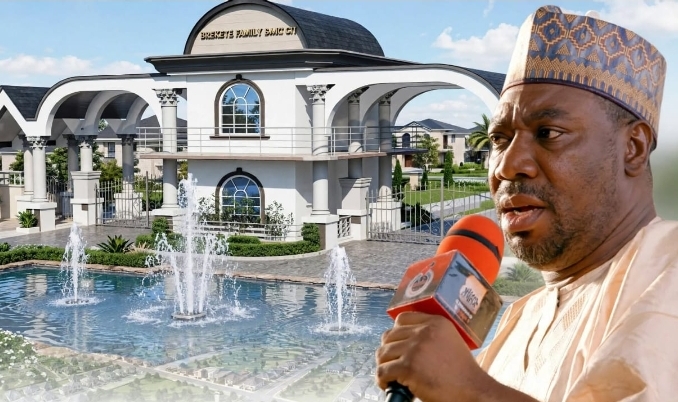
Abuja accounts for approximately 10 per cent of Nigeria’s national housing deficit, according to data attributed to the Housing Development Advocacy Network (HDAN). Yet the central contradiction in the capital’s housing crisis is not simply the shortage of residential structures, but the affordability gap that prevents ordinary workers from accessing available accommodation. While millions of Nigerians face housing difficulties, expensive properties and luxury estates in highbrow neighbourhoods remain beyond the financial reach of many low- and middle-income earners, with some reportedly vacant or under-occupied. It was against this wider housing challenge that Ahmed Isah, popularly known as the Ordinary President and founder of Brekete Family and Human Rights Radio 101.1 FM, introduced Brekete Family Smart City as an affordable homeownership initiative. In August 2014, he announced on air that prospective subscribers could visit his office at Sheriff Plaza, Wuse 2, Abuja, to register their interest in the proposed estate in Gurku, Karu Local Government Area of Nasarawa State. People reportedly travelled from different parts of Nigeria to subscribe, and the gathering was likened to a football field filled with prospective homeowners.
The initiative was presented as an opportunity for ordinary Nigerians to participate in an affordable housing development. Isah reportedly directed that no individual should purchase more than one plot to prevent monopolisation of the opportunity. There would be no agents, finder’s fees, or middlemen. During one promotional broadcast, he also expressed the hope that, God willing, subscribers might move into the estate before December 2014. That announcement created expectations of relatively immediate development, but the anticipated occupation did not materialise.
Between 2018 and 2019, those expectations were renewed when earthworks reportedly began and heavy equipment appeared on the site. However, during my visit to the estate in August 2026, I observed no active construction or visible development suggesting substantial progress towards the residential community originally promoted. Subscribers are therefore entitled to ask why the project has remained outstanding for so long and when the original expectations will be fulfilled.
This investigation examines the project’s history, reported government participation, successive road budget provisions, Federal Mortgage Bank of Nigeria (FMBN) financing approval, and the proposed ₦1.8 billion road investment. It also examines the respective responsibilities of the Nasarawa State Government, the promoter, and subscribers. The central question is whether the financial, institutional, and public commitments associated with the development have translated into tangible benefits for the people who invested their resources and expectations in it.
The Brekete Family Smart City initiative was presented as an affordable housing development intended to address the difficulties ordinary Nigerians faced in accessing homeownership, particularly the financial barriers associated with housing finance and mortgage deposits. The proposed estate was designed as an integrated residential and commercial community incorporating housing, business activities, and supporting infrastructure. The scale of public interest became clearer in October 2019, when Africa Housing News reported that Ahmed Isah had disclosed that the project attracted up to 3,600 subscribers within its first three weeks of announcement. This provides an indication of the enthusiasm the initiative generated. More than 12 years after subscriptions began, fundamental questions remain: How many subscribers have received plots? What infrastructure has actually been delivered, and what verifiable timetable exists for completing the development?
The Nasarawa State Government’s involvement became more prominent following a meeting of the Nasarawa State Enabling Business Environment Council (NEBEC) in Lafia on 10 September 2026, under Governor Abdullahi Sule. Infrastructure proposals under the World Bank-backed State Action on Business Enabling Reforms (SABER) programme were discussed. In a report published on 13 September 2026, The Sun stated that one proposal involved a 30 percent equity contribution of approximately ₦1.8 billion towards an access road serving Brekete Family Smart City in Gurku. The newspaper also reported the Governor’s insistence that proposed projects should have clearly defined financial figures and demonstrate how they would improve the state’s business environment.
The Ministry quoted the Governor as saying the latest $17 million remained untouched because the state was still implementing projects funded from the previous tranche. That statement does not establish that the money is available for Brekete Family Smart City or earmarked for its road. Indeed, the Ministry’s publication did not mention the estate. It stated that project costs and locations were still being worked out, that proposals requiring further consideration would be submitted to the State Executive Council, and identified other interventions, including the equipping of Dalhatu Araf Specialist Hospital and a road in Lafia. Consequently, the reported ₦1.8 billion should not be presented as an approved appropriation, executed contract, disbursement, or expenditure. If approved, funded, and implemented, the proposed road could improve connectivity and enhance the practical value of the estate. For subscribers, however, the important question is when it will be constructed and how it will contribute to delivering the promised housing.
A related issue concerns the state’s reported 30 percent interest in the development. In February 2026, Arise News reported that Governor Sule had directed the Nasarawa State Investment and Development Agency (NASIDA) to work with the Attorney-General to ensure that the state’s 30 percent equity stake in the Brekete Family housing estate was legally secured. He was quoted as saying that the state must not be shortchanged and that the arrangement should be feasible, realistic, just, and fair. This establishes a reported government directive and position.
The Nasarawa Broadcasting Service (NBS) account of the September 2026 meeting introduced another description, reporting a proposal for a two-kilometre road within Barekete Family Estate, under which the state was expected to receive 30 percent of the houses upon completion. The Sun, meanwhile, described the proposal as a 30 percent equity contribution of approximately ₦1.8 billion towards an access road. These reports raise questions that require documentary clarification. Are the reported 30 percent equity stake, the entitlement to 30 percent of completed houses, and the ₦1.8 billion road contribution components of one arrangement or separate commitments? What is the total development value? How was the state’s interest calculated? What legal instrument governs the arrangement, and has it been executed?
The published reports examined do not provide sufficient contractual detail to answer these questions. The state should therefore make the relevant agreement, valuation, ownership structure, and allocation terms available for public scrutiny, subject to legitimate protection of commercially sensitive information. If the ₦1.8 billion represents a contribution to road construction, the government should disclose the total project cost, the basis for its 30 percent share, and the remaining funding responsibility. Public investment in a private or cooperative housing development must operate on transparent terms that protect public resources without creating uncertainty over the interests of existing subscribers.
The road budget trail reinforces the need for accountability. Nasarawa State’s 2023 Approved Budget listed the construction of the IDP-Berekete Smart City Road, described as a 7.48-kilometre asphalt road. The document recorded ₦200 million in the 2022 revised budget, no performance amount for January to September 2022, and ₦100 million in the 2023 approved budget. The absence of a performance figure relates to the stated 2022 reporting period; the entry does not establish the actual performance of the 2023 allocation.
The 2025 Approved Budget subsequently recorded a 2024 final budget figure of ₦1,686,756,667.75 for the same road, performance of ₦500 million between January and October 2024, and a further ₦1 billion in the 2025 approved budget. These entries show that the road remained in the state’s financial planning. They do not, by themselves, establish that the entire budgeted amounts were released or spent. The ₦500 million performance figure covers January to October 2024, not necessarily the full year, while the ₦1 billion represents an approved allocation rather than proof of payment. Nor does a reported financial performance figure establish the value of physical work completed. The state should publish release records, expenditure returns, contract awards, payment certificates, and engineers’ progress reports. The essential question is what was delivered against the successive commitments and how that delivery was independently verified.
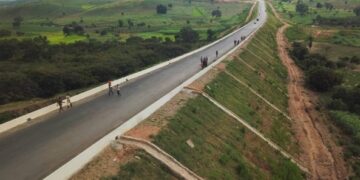
Other road projects have also appeared in public records, making it necessary to establish whether they are separate or related interventions. The Nasarawa State House of Assembly Committee on Works, chaired by Hon. Suleiman Azara, was reported to have inspected a five-kilometre road linking Gurku to Brekete Smart City. The committee chairman commended the contractor for constructing a bridge connecting Gurku with the estate, while urging the contractors to improve their pace and complete the work to specification. Wada Suleiman, Project Manager of Ceezali Limited, reportedly assured the committee that the company would deliver according to specification. However, during my visit to the area in August 2026, I observed that road construction appeared to have stopped at Gurku Raifin Ado, with no visible evidence of the road continuing to the Brekete estate. This field observation raises questions about the extent of work completed after the reported legislative inspection and the status of the contractor’s commitment. The available report does not, by itself, establish the road’s completion, final cost, payment history, or present condition.
It was reported that Ceezali Limited was handling the Gitata-Panda-Gurku road, but did not identify that project as the Gurku-Brekete road. The two should therefore not be treated as interchangeable without supporting contract documents. Similarly, in September 2026, NBS reported that Governor Sule visited Panda ahead of the proposed commencement of the Panda-Gitata road, acknowledged that earlier efforts had stalled, and said negotiations with contractors were ongoing.
Public records identify several road interventions within the Gurku-Brekete and wider Panda-Gitata corridor, including the five-kilometre Gurku Rotary Facility to Brekete Smart City Estate Road, the 7.48-kilometre IDP-Berekete Smart City Road listed in Nasarawa State’s 2023 approved budget, and the wider Gitata-Panda-Gurku road project. In September 2023, the State Government identified the Gitata-Panda-Gurku route as a phased project being handled by Ceezali Construction, with the first five kilometres under construction. In September 2024, the House of Assembly’s Committee on Works separately identified the five-kilometre Gurku Rotary Facility to Brekete Smart City Estate Road among the projects whose contractors were asked to account for their progress. The State Government subsequently announced preparations for the commencement of the Panda-Gitata road, while the September 2026 report of the Nasarawa Enabling Business Environment Council identified a proposed two-kilometre internal road within the estate and a proposed ₦1.8 billion state equity contribution towards an access road. These records establish that the interventions have been publicly presented under different project descriptions, lengths, and implementation arrangements. They must therefore be reconciled against their approved project documents, engineering drawings, chainages, contract awards, and payment records. The government should publish a clear project-by-project account identifying the precise routes covered, the contractors responsible, the original and revised contract sums, funding sources, amounts released and spent, work certified, and outstanding obligations. This is necessary to establish whether the projects are geographically distinct, form separate sections of a wider road network, or contain overlapping scopes of work. Without that documentary reconciliation, the public cannot reliably assess the total public investment committed to road access for the estate, determine what infrastructure has actually been delivered, or establish whether the proposed ₦1.8 billion equity contribution represents an additional intervention or funding for a road already covered by an existing contract or budgetary provision.
The Federal Mortgage Bank of Nigeria adds another significant dimension to the investigation. On 7 December 2020, The Guardian reported that FMBN had approved ₦491.3 million to finance the Brekete Family Smart City Housing Project in Gurku. The approval was announced at the project’s foundation-laying ceremony, attended by Governor Sule. The facility was intended to support 70 housing units under the bank’s Cooperative Housing Development Loan window, with Watershed Credit and Thrift Cooperative Society Limited serving as the cooperative platform. The report described a development covering approximately 600 hectares, incorporating residential properties, commercial outlets, business parks, and light industries.
The approval of a ₦491.3 million financing facility does not, in itself, establish that the full amount was disbursed, that construction of the proposed 70 housing units was completed, or that the properties were inspected, certified, and handed over to eligible beneficiaries. Those are separate stages of project implementation, each requiring documentary evidence. The relevant questions, therefore, concern the actual amount disbursed, the dates and recipients of each disbursement, the number of units constructed and independently certified, the beneficiaries to whom the completed properties were allocated, and the present status of the financing arrangement. FMBN, Watershed Credit and Thrift Cooperative Society Limited, and the project promoter should provide the relevant financing agreements, disbursement records, construction progress reports, inspection certificates, and handover documentation. Until these records are made available, the extent to which the approved facility translated into completed and delivered housing units cannot be independently established from the public information examined.
The mortgage arrangements also require accurate interpretation. In October 2019, Isah and representatives of the proposed estate met FMBN, where the bank’s Managing Director, Ahmed Musa Dangiwa, advised that members must register and participate in the National Housing Fund to benefit from the bank’s housing packages. At the 2020 ceremony, he explained that once the houses were constructed, FMBN would provide mortgage loans through selected primary mortgage banks at six percent interest to eligible National Housing Fund contributors, repayable over a maximum of 30 years. This was a statement about a mortgage product and its conditions, not evidence that every subscriber obtained a six percent mortgage or that the 70 units were delivered under those terms. Construction finance for the cooperative platform and individual mortgages serve different purposes and have separate eligibility requirements.
A balanced investigation must also acknowledge subscribers’ responsibilities. I am aware that some subscribers have not paid the estate’s infrastructure levy. Internal infrastructure requires funding, and unpaid obligations may affect the project’s capacity and development timetable. It would therefore be unfair to attribute every delay exclusively to the promoter. However, unpaid levies do not explain the entire history of the project or establish how previously collected funds were managed and applied. The promoter should disclose the applicable charges, their contractual basis, the number of subscribers who have paid, outstanding obligations, and how collected funds have been utilised. Subscribers, in turn, should meet their documented obligations while retaining the right to demand transparent accounting.
Land administration and the project’s legal structure are equally important. The Nasarawa Geographic Information Service (NAGIS) is the state institution responsible for geographic information and land administration. The NBS account of the September meeting also identified systematic land tenure registration as one of the state’s reform priorities. Any government equity interest, entitlement to completed houses or other property rights arising from the Brekete arrangement should be properly documented and reflected in the relevant land and property records.
The respective responsibilities of government and brekete smart city estate must remain distinct. The government is responsible for providing public infrastructure, facilitating investment, and managing public resources transparently. The brekete smart city estate promoter is responsible for effective project management, transparent subscriber relations, and credible delivery of internal infrastructure. External access roads and internal estate roads may involve different institutions, funding arrangements, and contractual obligations. Neither party’s responsibilities should be used to excuse the other’s failures.
Isah’s position is particularly important because the project was built on a public promise of affordable homeownership. Subscribers were not responding to an anonymous property advertisement; they were responding to an initiative promoted through a public platform whose founder had established considerable trust among ordinary Nigerians. This does not mean Isah is personally responsible for every delay or every infrastructure obligation. It means that the founder and public face of the initiative has a responsibility to provide clear, verifiable information about the project he encouraged people to support. Where delays, changes in scope, or financial difficulties have occurred, subscribers deserve explanations, together with a credible development timetable and clear information about the status of their individual interests. A project that attracted thousands of subscribers through a public campaign cannot reasonably expect them to remain indefinitely dependent on promotional announcements.
A functioning smart city requires more than land allocation and proposed housing units. It requires access roads, internal roads, drainage, water, electricity, sanitation, security, and a workable development layout. Even where the government provides external connectivity, the developers must ensure that the internal infrastructure plan is realistic, properly phased, and consistent with the commitments made to subscribers.
The Nasarawa State Government should publish the status of the proposed ₦1.8 billion investment, including its funding source, approval process, implementing institution, scope of work, and completion timetable. It should clarify whether the proposal is connected to the reported 30 percent equity interest, the reported entitlement to 30 percent of completed houses, or a separate infrastructure arrangement. If houses or other property interests form part of the consideration, their valuation and allocation should be transparent. If the arrangement is an equity contribution, the state’s financial and ownership interests should be defined through appropriate legal instruments. The government should also account for earlier road commitments by showing the amounts approved, released, and spent, the contracts awarded, the work certified, and the outstanding obligations.
The brekete smart city estate developers, on their part, should publish a comprehensive development update covering the number of registered subscribers, their payment status, plots allocated, and the legal status of individual land interests. This should include the approved master plan for the approximately 600-hectare development, infrastructure levies collected and how they were applied, the construction status of the original housing programme and the FMBN-supported 70 units, completed and outstanding infrastructure, the institutions or parties responsible for each component, and a realistic phased development timetable with identifiable milestones. Such disclosure would provide subscribers with a clearer understanding of the project and help restore confidence.
In February 2026, Arise News reported that Governor Sule had directed the State Executive Council to prioritise completing ongoing projects rather than commencing new ones that might be abandoned before the next administration. The same report stated that he had directed NASIDA and the Attorney-General to work towards legally securing the state’s reported 30 percent equity interest in Brekete Family Smart City. These positions make it particularly important for the government to demonstrate that its involvement is producing measurable results. Subscribers who have waited more than a decade deserve a defined infrastructure and housing timetable supported by proper approvals, funding, and visible implementation.
The FMBN financing approval, successive budget entries for the 7.48-kilometre road, the reported five-kilometre Ceezali road project, the state’s reported equity interest, the NBS account of a proposed two-kilometre road inside the estate and the latest NEBEC proposal collectively demonstrate the institutional and public-sector attention the development has attracted. But institutional attention is not complete housing. Budget allocations are not completed roads. Financing approvals are not handed over to homes, and government meetings are not physical development. The outstanding task is to establish how these commitments relate to one another and how much has been translated into completed infrastructure and houses.
Behind these figures are people who responded to an appeal in August 2014 because they believed they were investing in a route to property ownership. Some committed savings accumulated over the years, while others planned their futures around the expectation of eventually moving into the estate. The prolonged delay, therefore, concerns more than infrastructure statistics. It affects the financial expectations, personal plans, and confidence of ordinary Nigerians who believed in a publicly promoted housing initiative.
Ahmed Isah has built his public identity around defending ordinary people and demanding accountability from those in positions of responsibility. That commitment should also be reflected in the management and communication of Brekete Family Smart City. The strongest way to protect the confidence subscribers placed in him is through transparent answers, verifiable financial records, and measurable progress. Nasarawa State must account for its reported equity arrangements, infrastructure commitments, and expenditure associated with the development, while any proposed ₦1.8 billion contribution must pass through the appropriate approval, procurement, financial, and implementation processes. Subscribers who have failed to meet their documented levy obligations must also be addressed through transparent accounting and fair enforcement. Their outstanding obligations, however, cannot erase the responsibility to explain the project’s history or account for commitments already reported.
After more than 12 years, subscribers deserve more than another announcement. They deserve verifiable financial records, clearly defined responsibilities, accessible infrastructure, and a credible timetable for the homes and community they were encouraged to invest in. The proposed ₦1.8 billion road investment presents an opportunity to move the development forward, but whether it becomes a tangible achievement will depend on transparent approvals, proper implementation, and measurable results. Brekete Family Smart City must ultimately be judged by what is delivered, not by the scale of its original promise, the number of government meetings it attracts, or the value of commitments announced in its name.
For Ahmed Isah, the responsibility now goes beyond championing the original vision. It is to champion the expectations of the subscribers who believed in it. For the Nasarawa State Government, the responsibility is to demonstrate that public-sector participation produces accountable and measurable development. The people who travelled to Sheriff Plaza in August 2014 to subscribe are entitled to know what has become of the future they were promised. The time for clear answers, transparent accounting, and demonstrable delivery is long overdue.
Daniel Nduka Okonkwo is an investigative journalist, human rights advocate, and policy analyst based in Nigeria. He is the founder and publisher of Profiles International Human Rights Advocate (PIHRA), a platform documenting the courage of human rights defenders and examining issues of governance, accountability, security, and fundamental rights.
His reporting on Nigerian governance, security-sector accountability, public finance, and human rights has appeared in Sahara Reporters, Vanguard, Daily Trust, African Defence Forum, Opinion Nigeria, and Daily Intel.
Read more of his work on the PIHRA website:
https://www.profilesinternationalhumanrightsadvocate.com.ng/
For tips, feedback, or collaboration, contact him at dan.okonkwo.73@gmail.com.