




























By Daniel Nduka Okonkwo
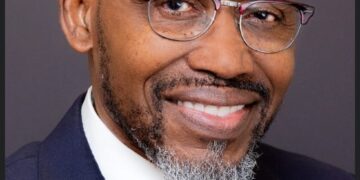
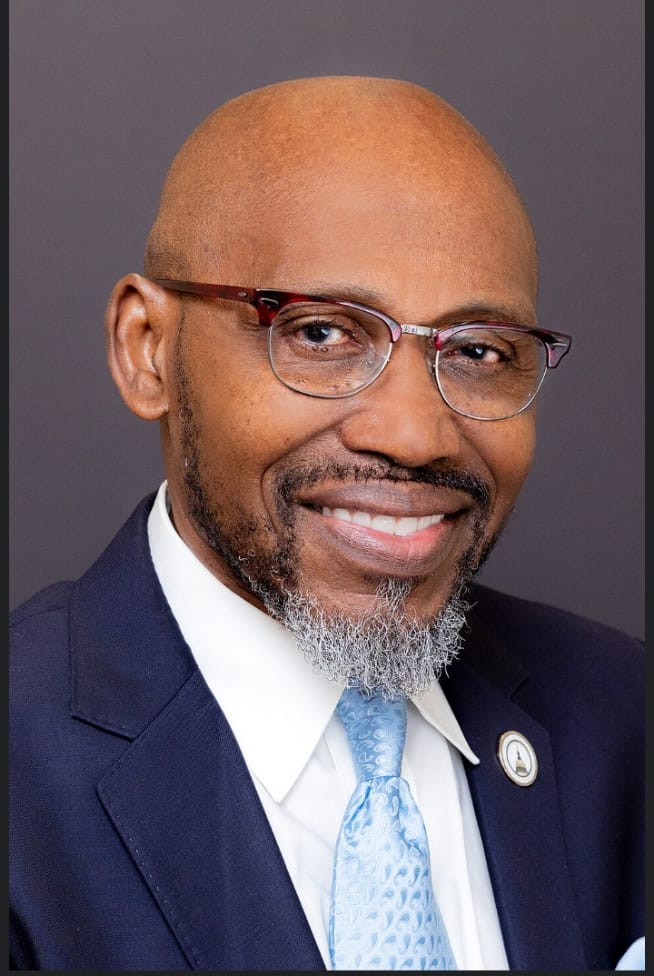
Every remarkable journey begins with a decision that only one person may fully understand: the decision to leave the familiar, confront uncertainty, and stake one’s future on a possibility that exists, at first, only in the imagination. For Gabe Onuora Okoye, that decision meant leaving Enugwu-Agidi, Anambra State, Nigeria, for the United States in pursuit of a future he would have to create through determination, hard work, and perseverance. America did not hand him success; he entered its demanding social and economic landscape, put himself through the struggle, and began building a life through his own efforts. While America provided the environment and opportunities within which he could advance, he was simultaneously building himself, acquiring professional qualifications, establishing a business, and finding his place in the civic and political life of his adopted country.
Today, that decision has grown into a story whose significance reaches beyond one man and his family. It offers hope to millions of immigrants who dare to venture beyond familiar boundaries in search of a better future, believing that determination can turn possibility into achievement. As the Igbo proverb reminds us, the rain that beats the eagle only washes its body clean. Okoye’s journey is a testament to the resilience required to withstand uncertainty, the courage to pursue an imagined future, and the capacity of an individual to transform personal ambition into a legacy of public significance. From Enugwu-Agidi to the Georgia State Capitol, his story is no longer merely about an immigrant who made it in America; it is about the making of a Nigerian-American political figure and the possibilities that emerge when personal determination meets opportunity, perseverance, and participation in public life.
For Nigeria, Okoye’s story raises a broader question about the value of its diaspora beyond remittances, investments, business ownership, and professional accomplishments. Nigerians abroad also acquire experience within the political and administrative institutions of their adopted countries. That experience can translate into participation in legislation, public policy, and decisions affecting the communities in which they live. Okoye’s own journey began with the difficult work of establishing himself in America. He worked as a security guard to finance his education, qualified as a civil engineer, and subsequently established Essex Geoscience, Inc., an engineering company that became the foundation of his professional career. Despite his geographical relocation, his connection to Enugwu-Agidi remained part of his public identity, reflected in his traditional title, Ozo Ezenwaogalanya, and his continuing relationship with his Nigerian heritage.
One of the most consequential stages of Okoye’s political development began in 2016, when he became Chairman of the Gwinnett County Democratic Party. The position placed him in a challenging political environment where Republicans maintained a strong presence in elected offices. His responsibilities involved party organisation, voter mobilisation, and building support for Democratic candidates across the county. A 2020 report based on an interview with Okoye reported that Democrats captured 13 elected offices in Gwinnett County during the 2018 midterm elections under his party’s leadership. The gains included positions in the Georgia legislature, county commission, school board, and the county Solicitor General’s office. These developments provide important context for his emergence as a political figure, although electoral outcomes also depend on candidates, voters, party structures, resources, and wider political conditions.
His political and community leadership received recognition from the Georgia House of Representatives. The 2019 House Journal index records House Resolution 218, recognising November 6, 2019, as Gabe Okoye Leadership Day in Gwinnett County. The resolution acknowledged his leadership and efforts to mobilise and educate communities about voting and inclusive representation. His involvement in local government also extended to the Gwinnett County Planning Commission, where he brought his engineering background into public administration. In 2020, he was described as the first Black man to serve as a planning commissioner in the county’s 202-year history. That historical distinction merits confirmation through county records. His service on the commission also illustrates how professional expertise can contribute to public decisions concerning planning, infrastructure, land use, and development.
In November 2022, Okoye was elected to represent Georgia House District 102 and assumed office on January 9, 2023. His election followed years of involvement in party politics and local civic institutions, marking his transition from political organisation to legislative responsibility. During the 2023–2024 legislative period, his assignments included the House Committee on State Planning and Community Affairs. Subsequent Georgia House directory records list him on committees dealing with Energy, Utilities and Telecommunications; Human Relations and Aging; and Small Business Development. These assignments place him within legislative discussions affecting public utilities, community development, social policy, and business interests. His engineering and business experience offer relevant professional perspectives in some of these areas, although committee membership alone does not establish legislative effectiveness.
In an interview published by Pulse Nigeria, Okoye urged Nigerians in the United States to become more actively involved in mainstream American civic and political life rather than concentrating their activities exclusively within ethnic associations. He expressed concern that Nigerians remained insufficiently represented in the political and civic institutions of their host communities despite their professional and economic contributions. He also emphasised the importance of preparing younger Nigerians to participate in American politics. His position raises an important issue for immigrant organisations: cultural associations serve valuable purposes by preserving heritage, supporting newcomers, and maintaining relationships with Nigeria, but their activities can also extend to civic education, political participation, and the development of future public leaders.
Okoye’s previous service as Continental Chairman of the Nigerians in Diaspora Organisation Americas (NIDOA) adds another dimension to his public career. He also represented Nigerians in the diaspora at Nigeria’s 2014 National Conference, participating in a national process that examined constitutional development and the country’s political future. These experiences connected him to two political environments with different institutional structures and responsibilities. In Nigeria, diaspora organisations have traditionally provided platforms for cultural association, professional networking, community development, and engagement with national affairs. In the United States, immigrant communities must also understand how local councils, state legislatures, political parties, and electoral institutions influence their interests. Participation in diaspora organisations does not automatically produce political representation, just as professional success does not necessarily translate into electoral influence. That transition requires sustained civic participation, an understanding of the American political system, and relationships extending beyond familiar cultural and professional networks.
Nigerian associations in the United States, therefore, have an opportunity to broaden their activities beyond cultural celebrations, fundraising, and projects in Nigeria. They can encourage voter registration, explain the structure of the American government, mentor prospective candidates, and prepare younger members for public administration. Political literacy should become an important part of diaspora community development. The growth and diversification of Gwinnett County and metropolitan Atlanta have transformed the political environment in which immigrant communities participate. However, population growth alone does not guarantee representation. Communities must organise, register to vote, participate in elections, build alliances, and develop candidates capable of engaging the wider electorate. Political influence is established through sustained participation, not simply demographic presence.
Okoye is not the only Nigerian-born politician serving in the Georgia legislature. State Representative Segun Adeyina, who represents House District 110, is another Nigerian-born lawmaker. Their careers offer examples of Nigerian participation in state-level American politics and raise the possibility of a stronger tradition of political mentorship, civic participation, and institutional leadership among successive generations. For younger Nigerian Americans, the opportunities extend beyond traditional professional and commercial careers. Their Nigerian heritage and American civic experience can provide a foundation for contributing to both societies through professional expertise, public service, and political leadership. Achieving this requires deliberate preparation, including a practical understanding of electoral processes, public administration, and the responsibilities attached to elected office.
The November 3, 2026, general election marked another milestone in Okoye’s political career. He retained his seat in Georgia House District 102 after appearing unopposed in the general-election contest. Election-night figures published by Decision Desk HQ recorded 16,645 votes for him, representing all the votes reported in the contest. He had also advanced unopposed in the May 2026 Democratic primary. His return to the legislature provides continuity in his public service, but re-election also renews the responsibilities attached to public office.
Okoye’s legislative performance should be assessed through his voting record, sponsored legislation, committee contributions, constituency engagement, and transparency in the discharge of his responsibilities. His engineering background and experience in local planning make his contribution to infrastructure and development policy legitimate subjects of examination. His committee assignments also provide grounds for assessing his positions on utilities, small businesses, human relations, and ageing. The significance of his political career will ultimately depend not only on the milestones that brought him to the Georgia State Capitol but also on the quality of his contribution to the institution and the people he represents.
Nigeria’s relationship with its diaspora must extend beyond the conventional emphasis on remittances, investment, and charitable contributions. Nigerians living abroad possess professional knowledge, technical expertise, and experience of different administrative and democratic systems. Their participation in the political institutions of their host countries is another dimension of the contribution they can make to society. The ambition should extend beyond producing successful doctors, engineers, academics, and entrepreneurs abroad. It should also include preparing legislators, policymakers, public administrators, and responsible political leaders who can contribute to public life while remaining connected to their Nigerian heritage.
Gabe Okoye’s journey from Enugwu-Agidi to the Georgia State Capitol is more than a personal account of perseverance or an immigrant’s rise to elected office. It demonstrates how professional advancement can develop into civic responsibility and political representation, while challenging Nigerian immigrant communities to reconsider the extent to which they participate in the institutions governing their adopted countries. For Nigeria, the lesson is equally important: citizens abroad should not be viewed exclusively as sources of foreign exchange or potential investors. Their institutional experience, professional knowledge, and participation in democratic governance represent valuable human capital. The future of the Nigerian diaspora story should therefore be measured not only by professional success and economic prosperity, but also by the ability to produce responsible public leaders, influence policy, and contribute meaningfully to democratic institutions. Okoye’s journey offers an important example of that possibility. The lasting value of his political career, however, will be determined by the quality of his service and the accountability he demonstrates to the people he represents.
Daniel Nduka Okonkwo is an investigative journalist, human rights advocate, and policy analyst based in Nigeria. He is the founder and publisher of Profiles International Human Rights Advocate (PIHRA), a platform documenting the courage of human rights defenders and examining issues of governance, accountability, security, and fundamental rights.
His reporting on Nigerian governance, security-sector accountability, public finance, and human rights has appeared in Sahara Reporters, Vanguard, Daily Trust, African Defence Forum, Opinion Nigeria, and Daily Intel.
Read more of his work on the PIHRA website:
https://www.profilesinternationalhumanrightsadvocate.com.ng
For tips, feedback, or collaboration, contact him at dan.okonkwo.73@gmail.com.