






































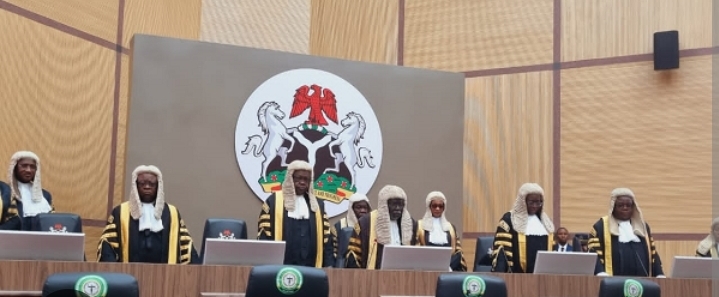
The National Judicial Council (NJC) has suspended Justice Hannatu Mohammed Kabir of the Nasarawa State High Court for one year for ordering the arrest and detention of a litigant for 58 days without following the required legal procedures for contempt proceedings.
The Council also barred the judge from being nominated for elevation to a higher court for three years, while her suspension will run without pay.
In a statement issued on Wednesday, the Council said the decisions were taken at the NJC’s 112th meeting held on November 3, 2026, under the chairmanship of the Chief Justice of Nigeria, Justice Kudirat Kekere-Ekun.
The statement signed by the Council’s Deputy Director of Information, Kemi Babalola-Ogedengbe, added that it considered nine investigation reports concerning petitions against judicial officers over their handling of cases.
According to the NJC, its Investigation Committee found that Justice Kabir ordered the arrest and detention of the litigant over alleged disobedience of court orders without issuing and serving the mandatory Forms 48 and 49 or instituting proper contempt proceedings.
The committee also established that the alleged contempt occurred outside the judge’s presence and, therefore, could not lawfully be dealt with through summary trial and punishment.
It further found that the judge’s action violated the litigant’s right to fair hearing.
“The Investigation Committee found that she ordered the litigant’s arrest and detention for alleged disobedience of court orders without the issuance and service of the mandatory Forms 48 and 49 or the institution of proper contempt proceedings.
“It held that the alleged contempt occurred outside the court’s presence and could not lawfully be summarily tried and punished. The Committee also found that the action violated the litigant’s right to fair hearing,” the statement said.
The NJC consequently approved the committee’s recommendation that Justice Kabir be suspended for one year without pay and barred from nomination for elevation for three years.
Forms 48 and 49 are prescribed legal notices used in contempt proceedings to notify a person of alleged disobedience of a court order and warn of the consequences of continued non-compliance.
The NJC’s decision underscores the requirement that allegations of contempt committed outside a court’s presence must be handled through the prescribed legal process rather than summary punishment.
The Council’s disciplinary decisions formed part of a wider review of complaints and petitions against judicial officers across the country at the meeting