





















By Daniel Nduka Okonkwo
The price of speaking truth to power is paid in courtrooms, correctional centres, and midnight raids. Thousands of journalists, human rights defenders, and civil society advocates have learned this lesson the hard way, not through legislation or policy, but through arrest warrants, trumped-up charges, prolonged detention, and the slow, deliberate weaponisation of the very institutions that were built to protect them. They are dragged before courts for publishing inconvenient facts. They are remanded in prisons for organising peaceful protests. They are prosecuted under cybercrime laws for the content of a tweet, a headline, or a public statement. Their lawyers withdraw under pressure. Their bail is revoked on technicalities. Their recusal requests are dismissed as delay tactics, this pattern is consistent and the message is unambiguous: in this democracy, accountability is not protected, it is punished. The courtroom is not a sanctuary for those who challenge power. It is another weapon in the arsenal of those who hold it.
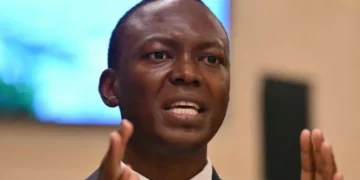
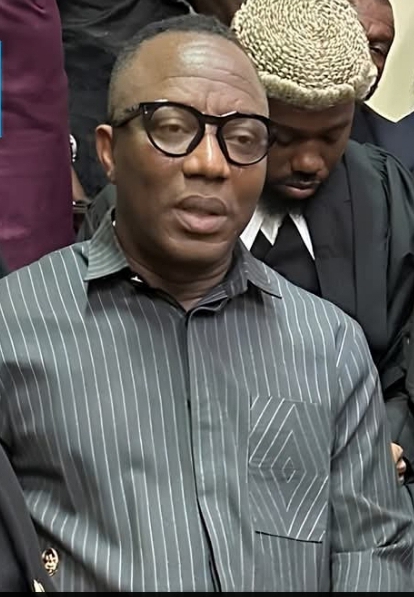
The armed men moved swiftly inside the courtroom. Their target was not a fleeing criminal or a dangerous fugitive. It was Omoyele Sowore, publisher, activist, and one of Nigeria’s most recognisable voices of opposition, standing in the very hall where justice was supposed to be dispensed. Department of State Services operatives attempted to seize physical custody of him within the courtroom itself, a dramatic scene that briefly overwhelmed the sanctity of judicial proceedings before prison officials eventually took lawful charge of him.
That moment on June 22, 2026, crystallised everything that Sowore’s long legal ordeal represents, and everything that is deeply wrong about how Nigeria treats those who dare to speak truth to power.
Justice Mohammed Umar of the Federal High Court in Abuja revoked Sowore’s bail on June 16, 2026, but when Sowore appeared before the court on June 22, his new lawyer, Adeyinka Patrick Olumide-Fusika, SAN, one of Nigeria’s most distinguished senior advocates, took full and unambiguous responsibility for his client’s absence. He explained that he had personally instructed Sowore to travel to Lagos for legal consultations. The explanation was direct, professional, and uncontested.
The court was unmoved. Sowore was ordered remanded at the Kuje Correctional Centre pending the hearing of an application to set aside both the bail revocation and the accompanying arrest warrant. The next hearing was adjourned to June 24, 2026.
Before he could be transferred lawfully to prison custody, DSS operatives made their unauthorised move inside the courtroom, a breach of judicial protocol that shocked observers and drew immediate condemnation from civil society.
To understand the gravity of what is happening, one must examine what Sowore is actually being prosecuted for.
In August 2025, Sowore made social media posts in which he referred to President Bola Tinubu as a “criminal,” explicitly linking the statement to the President’s trip to Brazil. The Department of State Services, Nigeria’s domestic intelligence agency, chose to treat those posts not as political commentary or protected speech, but as cyberstalking and criminal defamation under the Cybercrimes Act.
This is the charge for which a Senior Advocate of Nigeria now stands before a Federal High Court. This is the charge for which a man was remanded to a correctional centre. A word. Posted online. About a public official.
Legal analyst Abdulkareem Musa draws a distinction that should anchor the entire debate: when a citizen can back a statement with evidence or justification, that statement moves from the realm of a crime to a factual statement. The question of whether Tinubu is or is not a criminal is precisely the kind of contested political claim that democratic societies resolve through public debate, civil litigation, and the ballot box, not through arrest warrants and correctional centres.
Sowore has not been passive in the face of this prosecution. He has fought procedurally at every turn.
During his June 22 court appearance, at which point several of his lawyers had already withdrawn from the case leaving him to represent himself, Sowore filed a motion requesting that Justice Umar recuse himself on grounds of bias. The judge dismissed the application, ruling that it lacked merit and characterised it as a delay tactic.
It was not the first such rejection. An earlier application for the judge to step down had been similarly dismissed. Whether or not the recusal requests were legally sound, their pattern tells a story: a defendant who no longer believes the forum in which he is being tried can deliver impartial justice. That is a crisis not merely for Sowore, but for the credibility of the court itself.
For those encountering his name through this prosecution alone, Sowore’s history demands context.
He is the founder of Sahara Reporters, one of Africa’s most consequential online investigative platforms, built precisely on the kind of accountability journalism that powerful governments find inconvenient. He ran for president of Nigeria. He organised the #RevolutionNow movement in 2019, a call for peaceful civic protest, for which he was arrested, detained, and ultimately designated a Prisoner of Conscience by Amnesty International.
That designation was not rhetorical. It carries a specific legal and moral meaning: a person imprisoned solely for the peaceful expression of their beliefs, identity, or political views. The United Nations Working Group on Arbitrary Detention went further, reviewing his 2019 detention and concluding formally that it was arbitrary, a finding that binds Nigeria under international human rights law.
He has now been prosecuted repeatedly. He has faced charges under the Cybercrimes Act multiple times. He has been detained, released, re-prosecuted, and is now remanded again. The pattern is the point.
Nigeria is not alone in confronting this challenge. Across the world, governments have discovered that cybercrime and defamation statutes, designed originally for genuine digital predators, can be repurposed as instruments against journalists, activists, and opposition figures. The mechanics are elegant in their brutality: no need for overt censorship, no need to ban publications or storm newsrooms. Simply prosecute the person. The case does not even need to succeed. The process itself is the punishment.
Criminalising statements that a government finds offensive or inconvenient produces what legal scholars call a chilling effect, a pervasive, self-imposed silence that descends on citizens who calculate that speaking freely is simply too dangerous. The activist silences himself. The journalist softens the headline. The citizen swallows the criticism. The government never has to say a word.
Civil society coalitions including the Gani Fawehinmi Group, named for Nigeria’s legendary human rights lawyer, have argued forcefully that the Cybercrimes Act is being actively weaponised against dissenters. Amnesty International Nigeria has gone further, formally denouncing Sowore’s trials as sham trials and describing them as systematic repression of peaceful protest and freedom of expression. These are not the words of fringe agitators. They are the considered conclusions of organisations with decades of documented evidence on how states suppress legitimate voices.
There is a persistent and damaging misconception that must be confronted directly in any honest accounting of cases like Sowore’s: the idea that human rights advocates are inherently anti-government.
The International Service for Human Rights defines human rights defenders as people who seek to ensure shared commitments to freedom, respect, equality, and dignity. Their work is not subversion. It is insistence, insistence that the state honour the obligations it voluntarily assumed when it signed international human rights instruments, enacted a constitution, and asked its citizens to trust it with power.
The United Nations places the burden of protecting human rights directly on governments. When an advocate pushes for those protections, they are not undermining the state. They are, in the most precise sense, helping the state fulfil its legal and ethical responsibilities. An advocate’s loyalty is to the human rights of individuals. That means criticising the government when it violates those rights, and collaborating with it when it works to uphold them.
Nigeria’s government has maintained, consistently and through official channels, that the actions taken against Sowore are strictly procedural. The allegations of criminality, officials argue, must be thoroughly tested within the boundaries of the law.
That argument deserves engagement, not dismissal. Courts exist precisely to test such allegations. Procedures exist for good reason. No individual, however prominent, is above the requirement to appear in court.
But there is a question that procedural justifications cannot answer: why is a social media post calling a president a criminal treated as a cybercrime in a democracy? Why does the state’s intelligence agency, whose mandate is national security, lead the prosecution of a political activist’s tweets? Why, when a senior advocate accepts full professional responsibility for a missed court date, does the response remain remand rather than restoration of bail?
And why, in a courtroom in the capital of Africa’s most populous democracy, did armed men attempt to seize a man the court had already ordered transferred through lawful channels?
The battle over Omoyele Sowore has never truly been about one bail condition or one missed court date or one social media post. It is a test, a live, ongoing test of whether Nigeria’s democratic architecture can withstand the pressure that power inevitably places on accountability.
Every democracy is defined not by how it treats those who praise it, but by how it treats those who challenge it. By that measure, the proceedings at the Federal High Court in Abuja are sending a signal to journalists, to activists, to ordinary citizens who wonder whether speaking plainly about those who govern them carries a legal price.
That signal must be contested. In courtrooms, yes. But also in print, in public squares, and in the international community’s honest assessment of whether Nigeria’s democracy is functioning or merely performing.
Omoyele Sowore sits in Kuje Correctional Centre for now, while the next hearing is June 24, 2026. The real verdict, however, will be delivered not by Justice Umar, but by history.
Daniel Nduka Okonkwo is an investigative journalist, human rights advocate, and policy analyst based in Nigeria. He is the publisher of Profiles International Human Rights Advocate, a platform focused on accountability journalism, governance reporting, and the documentation of human rights issues across Africa. His work examines the intersection of political power, institutional accountability, systemic failure, and the human impact of corruption, with particular focus on Nigeria and the wider African continent.
Okonkwo’s reporting and analysis have been published in Sahara Reporters, African Defence Forum, Daily Trust, Vanguard, Daily Intel, Opinion Nigeria, African Angle, Local Newsbreak, and other international media outlets. His work is driven by a commitment to transparency, democratic governance, and justice civil society initiatives, extending his advocacy beyond traditional journalism into broader public engagement on governance, policy reform, and human rights accountability. dan.okonkwo.73@gmail.com