


































By Daniel Nduka Okonkwo
The law does not bend like a switch, nor can it be toggled at the whim of a security agency. If the Department of State Services has, in the past, arrested Nigerians in connection with matters that were essentially civil disputes or allowed civil disputes to become the gateway to criminal investigations, detention, and prosecution, then it is not enough to announce that such arrests will now stop. Accountability must follow. Those who were dragged into detention, humiliated, or subjected to criminal proceedings over matters that were ultimately civil deserve to have their cases examined. Where evidence shows abuse of power, manipulation, or corruption, the agency must be willing to confront it, and where officers are found to have crossed the line, they should be investigated and, where wrongdoing is established, disciplined or dismissed.
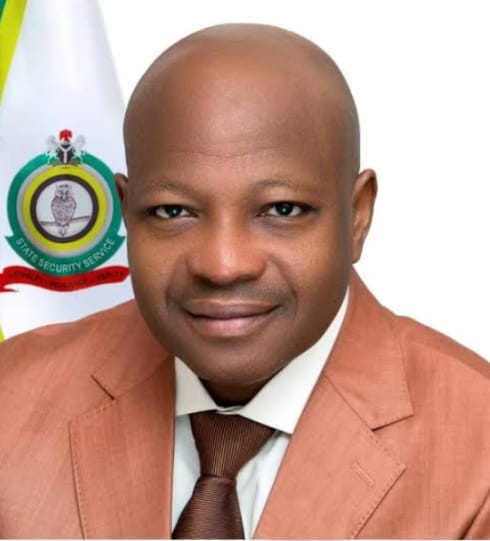
That is the standard against which the Director-General’s own recent statement must be measured. Oluwatosin Ajayi directed his operatives not to arrest anyone over civil matters in a media interview published on September 3, 2026, explaining that the directive formed part of reforms aimed at strengthening adherence to the rule of law and improving the DSS’s human rights record. But Ajayi went further than announcing a new instruction. He acknowledged that his career experience had shown that the DSS had previously conflated civil and criminal matters. That acknowledgement is significant because it raises a question the DSS has not yet fully answered: What happened before the change?
To conflate civil and criminal matters is to blur a distinction that should be fundamental to the exercise of state power. Civil disputes generally concern private rights and obligations, including contractual disagreements, debts, and property claims. Criminal matters involve conduct prohibited by law and prosecuted on behalf of the state. The fact that a civil dispute may contain an allegation of criminal conduct does not mean every disagreement automatically becomes a security matter. The legal question must be whether there is credible evidence of an actual offence within the jurisdiction of the investigating authority.
This distinction matters particularly because the DSS is Nigeria’s premier internal security agency, with a mandate covering threats to internal security, including espionage, subversion, sabotage, terrorism, and economic crimes of national security dimension. A private contractual or property dispute does not automatically become an internal security matter simply because one party petitions the DSS. Section 35 of the Constitution protects personal liberty and permits deprivation of liberty only on lawful grounds, including reasonable suspicion of having committed a criminal offence. Section 8(2) of the Administration of Criminal Justice Act 2015 also expressly addresses arrests arising from civil wrongs and breaches of contract. The underlying legal principle is therefore not simply an internal policy preference of the current DSS leadership. It reflects a broader legal boundary against using coercive state power to resolve purely private disputes.
So when the Director-General says the Service previously conflated civil and criminal matters, Nigerians are entitled to ask what that meant in practice. Were people arrested after private disputes were presented to the Service as criminal complaints? Did some civil disagreements become criminal investigations because one party had greater access to state institutions? Were people detained while what was essentially a debt, land, or commercial disagreement was being investigated? How many such cases were eventually abandoned, dismissed, or ended in acquittal?
These questions are not designed to discredit the DSS. They arise naturally from the Director-General’s own account of the agency’s past. Indeed, why was it necessary for the Director-General to expressly instruct DSS operatives that there should be no arrest in civil cases if the Service had never encountered a problem of civil disputes becoming grounds for arrest? Ajayi himself has said the Service previously conflated the two categories. Nigerians are therefore entitled to know how often that happened, how many people were affected, and what became of those cases.
The public record provides reason to ask. One of the clearest examples is the case of Sheriff Abubakar Rabiu, a retired Assistant Commissioner of Police who served as Chief Security Officer to former Adamawa State Governor Murtala Nyako. In November 2021, Rabiu was detained by the DSS following a petition relating to an alleged ₦80 million property dispute involving the Nyako family. Contemporary reporting described the matter as a property dispute, while Rabiu’s lawyer questioned why the DSS had intervened after the matter had initially involved the police. The DSS subsequently said Rabiu was being held over alleged crimes, and he was arraigned on charges arising from the property allegations.
The case continued for years. On July 3, 2026, the Adamawa State High Court discharged and acquitted Rabiu on all five counts, holding that the prosecution had failed to prove its case beyond a reasonable doubt. The charges included criminal breach of trust, cheating, forgery, and inciting public disturbance.
The acquittal does not by itself establish that the original DSS detention was unlawful, nor does every dispute involving a criminal allegation remain civil. A property transaction can, in appropriate circumstances, provide the basis for a genuine criminal investigation. But the history of the Rabiu case raises a legitimate question about whether a property transaction was appropriately escalated into a security and criminal matter, and it belongs in any serious retrospective DSS review. That question becomes even more relevant because defence lawyers in the case had argued that what began as a civil land dispute was improperly transformed into a criminal prosecution following DSS intervention.
There is another revealing aspect of Ajayi’s September 3 interview. In explaining his new approach, he cited the dispute involving the Socio-Economic Rights and Accountability Project, SERAP, as an example of the DSS choosing the courts rather than an arrest. He said two DSS operatives took the matter to court and that more than ₦100 million was awarded in their favour.
The court record confirms that the Federal Capital Territory High Court awarded ₦100 million in damages in favour of DSS officials Sarah John and Gabriel Ogundele in a defamation suit against SERAP. The court also awarded litigation costs and ordered public apologies. SERAP has appealed the judgment. Importantly, the DSS subsequently clarified that the suit was not instituted by the agency itself but by the two operatives in their personal capacity.
That distinction matters. The officers were entitled to seek legal redress, and the judgment is a judicial determination that remains subject to appeal. But the case should be described precisely. It was a civil defamation action brought by individual DSS officials, not a civil case instituted by the DSS as an institution. If the Director-General is presenting the case as evidence of the Service’s willingness to use lawful civil remedies, the public deserves clarity about who actually initiated the proceedings and in what capacity. The broader point Ajayi was making remains understandable: the dispute was taken to court rather than resolved through arrest.
None of this justifies the conclusion that the DSS routinely arrested Nigerians over purely civil disputes. The available public record is not sufficient to establish so sweeping a claim. But it is enough to establish something narrower and important: the agency’s own Director-General says the distinction was previously blurred, and there are documented cases in which the DSS became involved in disputes publicly described at the outset as civil or property matters before criminal allegations and prosecutions followed.
That is enough to justify an institutional audit.
What should happen to people who may still be in detention or prison because a civil dispute was later converted into a criminal case?
They should not simply be released automatically without examining the legal basis for their detention or conviction. Courts remain central to determining whether a conviction should stand. But where a person is still detained pending trial, or where a case file reveals that criminal proceedings may have been initiated or sustained without a sufficient lawful evidential basis, the matter deserves urgent review. The DSS could identify such cases, notify the appropriate prosecuting authorities, and, where necessary, support applications before the courts for appropriate relief.
Where an unlawful arrest or detention is established, the Constitution provides a remedy, including compensation and public apology under the law. The existence of such a remedy makes retrospective accountability more than an abstract principle. It becomes a question of whether citizens whose liberty was unlawfully taken can obtain meaningful redress.
This is where reform becomes more than public relations.
It cannot mean simply telling officers what they must not do tomorrow. It must also ask what happened yesterday, who was affected, and whether powerful complainants were able to turn private disputes into matters of state coercion.
The question is not whether every person arrested following a civil dispute was necessarily innocent of a crime. That would be its own form of overreach. The question is whether the process used by the state was lawful, necessary, and supported by credible evidence.
A civil dispute can sometimes expose genuine criminal conduct. A land transaction can involve forgery. A debt dispute can involve fraud. A contractual disagreement can reveal criminal deception. The fact that a dispute begins as civil does not immunise anyone from criminal investigation where credible evidence of an offence exists.
But the principle works both ways.
A complainant should not be able to trigger criminal coercive action merely by attaching the words “fraud” or “criminal” to a private disagreement. The state must establish the criminal element independently. That is precisely why the boundary between civil and criminal matters.
There should therefore be an internal review of cases in which petitions to the DSS involved debts, contracts, land transactions, commercial disagreements, employment disputes, or other matters essentially private in nature. The agency should determine how many such petitions it received, how many resulted in invitations, arrests, or detention, how many were transferred to other law enforcement bodies, how many resulted in charges, and how many were discontinued, dismissed, or ended in acquittal.
The review should also examine how many officers were subjected to disciplinary proceedings over the improper handling of such matters and whether any compensation judgments arising from unlawful arrest or detention remain outstanding.
The review should not be designed to punish officers merely because a prosecution failed. Criminal cases can fail for many reasons, and an acquittal is not automatic proof of malicious prosecution.
But where the evidence shows corruption, manipulation, fabrication, or the deliberate conversion of a civil dispute into a criminal case, the consequences should be real. Dismissal should not be off the table simply because the conduct happened under a previous administration.
This is also where the DSS has an opportunity to rebuild a relationship with Nigerians.
For years, public confidence in security institutions has been damaged by allegations of arbitrary arrests, prolonged detention, and selective enforcement, as well as by a widespread perception that state institutions can respond differently depending on how powerful or well-connected a complainant is. That perception may not describe every officer or operation, but it is a serious problem for any institution whose effectiveness depends on public trust.
The DSS cannot demand confidence simply because a new Director-General has announced reforms. Confidence is earned when citizens can see that the institution applies the law consistently, acknowledges mistakes, and provides remedies when its officers cross the line.
The good news is that Ajayi appears to understand part of this.
In the September 3 interview, he said that when he assumed office he ordered a review of past cases because he believed the Service had to correct past mistakes. He acknowledged that the review showed that, in some cases, the DSS was “clearly wrong.” As a separate example of that broader spirit of accountability, he cited a man who was mistakenly shot by DSS operatives in 2016, whom a court had ordered the Service to compensate with ten million naira, a judgment that was never honoured. Under his leadership, he said, the Service arranged hospital treatment for the man and approved an additional ten million naira to help him rebuild his livelihood.
That is precisely the kind of institutional honesty that reform requires, and Nigerians should encourage it.
But encouragement should not mean silence.
If the DSS is ready for genuine change, it should be prepared to retrace its past, identify cases in which civil disputes may have been improperly transformed into criminal matters, examine allegations of corruption and abuse of authority, and establish whether people remain in detention or face prosecution in cases where there may have been no sufficient lawful basis for criminal proceedings.
Where wrongdoing is established, the agency should be bold enough to admit it and help find a lawful solution.
That is not an attack on the DSS.
It is what institutional reform requires.
The test of the new directive will therefore not be another interview. It will be whether the DSS discloses, in aggregate, how many civil-related petitions it has received, how many were redirected to the courts, how many arrests followed complaints later found to be civil in nature, how many prosecutions arose from such complaints, and how many officers have faced disciplinary action for crossing the boundary Ajayi has now restated.
The agency should also consider a mechanism through which people who believe they were unlawfully arrested or detained over civil disputes can submit their cases for review, not to replace the courts but to help the DSS identify institutional failures and refer appropriate cases for judicial or administrative remedy.
Nigeria’s Constitution does not grant security agencies unlimited power simply because a matter is labelled a security concern. The state may investigate crime and protect national security, but coercive power must remain tied to lawful purpose.
The DSS’s new directive is welcome, and Nigerians should encourage genuine reform.
But if the new Director-General is serious about leading the Service onto a stronger human rights path, the reform cannot stop at the present. He must be willing to look into the past, because when the head of an institution says civil and criminal matters were once conflated, Nigerians are entitled to ask what that meant for the people on the receiving end of that confusion.
Were people arrested?
Were some detained?
Were some prosecuted?
Did some remain in prison?
Were some cases built on manipulated or fabricated complaints?
Were officers disciplined?
And where the institution was wrong, what is being done to put it right?
Those are not hostile questions.
They are the questions a serious reform should welcome.
The DSS has an opportunity to rebuild its relationship with the Nigerian people, to become an institution that citizens need not fear when confronted by powerful interests, one that respects the law, protects legitimate rights, and focuses its coercive powers on genuine threats to national security.
But that transformation will require more than a new directive.
It will require courage to account for the past.
Reform is not only about promising Nigerians that the abuse will stop. Sometimes it begins by admitting that something went wrong in the first place.
Daniel Nduka Okonkwo is an investigative journalist, human rights advocate, and publisher, and the founder of Profiles International Human Rights Advocate, PIHRA. His work focuses on governance, accountability, and the protection of fundamental rights across Nigeria and Africa. His reporting has appeared in Vanguard, Daily Trust, Sahara Reporters, African Defence Forum, Opinion Nigeria, and Daily Intel, among others.
Read more of his work on the PIHRA blog: https://profilesinternationalhumanrightsadv.blogspot.com
For tips, feedback, or collaboration, reach him at dan.okonkwo.73@gmail.com