



















By Daniel Nduka Okonkwo
No democracy should accept the notion that citizens must continue living in fear because politicians are more concerned about how a future police structure might affect electoral competition than how the current system is failing to protect human life.
To ask Nigerians to endure escalating insecurity until after an election cycle is to place political calculations above the state’s foremost constitutional obligation, the protection of life and property. The central question is not whether security reforms may have political implications, but whether any political consideration should justify postponing measures that could improve public safety. Where reforms are considered necessary to strengthen security, delaying them solely because of electoral timing risks allowing partisan interests to take precedence over the urgent duty to safeguard citizens. Every delay carries consequences measured not in political advantage, but in the continued exposure of communities to preventable violence and insecurity.
Why would anyone argue that elections should take precedence over the protection of lives? Let those who are losing their loved ones have a say. Let those who have lost everything because of insecurity say that they do not need state police. Let those who travel on roads infested with terrorists say they do not need state police, not those who travel by air under heavy security, protected behind high fences, while continuing to pursue their political agendas.
To better understand this argument, go back and read their previous social media posts to see where they stood when it suited them. Most politicians are not advocating for your future; they are doing everything possible to enter the political circle that gives them the advantage of remaining relevant.
Do not forget to examine their previous positions when those positions favoured them, and also find out who their allies were before those political alliances collapsed.
Nigeria has reached a critical moment where the country’s worsening security crisis can no longer be postponed for political convenience. As kidnappers, bandits, and armed criminal groups continue to attack communities with alarming frequency, the national conversation has shifted from how to protect lives to whether citizens should wait until after elections before meaningful policing reforms are introduced. The debate over state police has exposed a troubling reality: those who either benefit from prolonged insecurity or fear losing political influence should not determine when Nigerians deserve effective protection. Treating public safety as an issue that must wait for the electoral calendar places politics above the constitutional duty to safeguard human life.
Critics of state police, including opposition politicians and civil society organisations, argue that governors could misuse such forces to harass opponents, suppress political activities, or influence elections. These concerns deserve serious attention and must be addressed through strong constitutional safeguards, independent oversight, and clear accountability mechanisms. However, they should not become a justification for delaying urgently needed security reforms while Nigerians continue to suffer daily attacks. Communities are being devastated, lives are being lost, and countless families are living in fear. Asking citizens to tolerate this reality until after elections elevates political calculations above the immediate need to protect lives. The greater risk is allowing fear of political consequences or vested interests to obstruct reforms that could strengthen public security.
Every month that state police remains a subject of debate is a month measured in kidnapped children, burned villages, and highways where travellers pray before they drive. Nigeria’s security crisis has outgrown the single, centrally controlled police force on which it was built. The Nigerian Police Force reports to an Inspector General in Abuja, which means a distress call from a village in Zamfara or a farming settlement in Benue must climb a bureaucratic ladder before help can arrive. In that delay, attackers finish their work and disappear into terrain that local officers would have known better than any outsider posted from another state.
The argument for state police is not theoretical. It rests on a pattern seen in federations far larger and better resourced than Nigeria, where local officers who speak the language, know the terrain, and recognise the early signs of trouble consistently outperform a distant central command. South Africa runs provincial and metropolitan police alongside its national force precisely because no single agency can carry the full weight of policing a large and diverse country. Nigeria has resisted that model for decades while banditry, mass abductions, and communal violence have overwhelmed a force that was never designed to fight an insurgency, forcing the military into a domestic policing role for which it was not designed either.
The case for pausing this reform until after the next election deserves to be taken seriously, not brushed aside, because the underlying fear is not manufactured. Governors could, in principle, use a state force to intimidate rivals, restrict opposition movement, or tilt the electoral playing field. Organisations like RULAAC and opposition figures raising this concern are pointing to a real vulnerability in federations that have decentralised policing without first establishing independent oversight. That risk is worth taking seriously precisely because it is real.
But a real risk is an argument for stronger safeguards, not for indefinite delay. That argument points toward specific actions, including independent oversight boards, judicial checks on deployment, transparent recruitment, legislative accountability, and clear limits on the use of state police during electoral periods. Nigerians should not be asked to choose between a police force that might one day be misused and a police force that is already failing them today. The honest path is to build the safeguards and implement the reform at the same time, rather than treating the safety of millions as something that can be scheduled around a ballot.
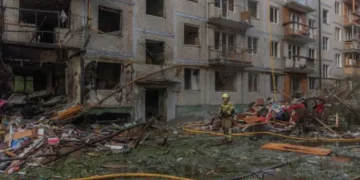
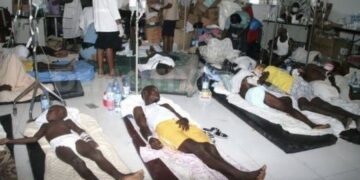
Beyond constitutional arguments and political calculations lies a far more urgent reality. Every fresh report of a murdered farming family, every village set ablaze, every child snatched from a classroom, every woman subjected to sexual violence, and every traveller abducted on a highway should send a chill through the conscience of this nation. These are not abstract statistics. They are Nigerian lives being destroyed while some continue to debate whether reform should wait for a more politically convenient time.
To argue that state police should be postponed solely because some governors might abuse the system during the next election is to elevate a potential political risk above an ongoing national emergency. If stronger oversight is required, then strengthen it now. If constitutional protections are insufficient, then improve them now. What cannot be defended is asking millions of Nigerians to endure another election cycle under a security structure that is visibly struggling to protect them.
Delay carries its own cost, counted in families displaced, communities abandoned, and children left traumatised long after the headlines fade.
The question before Nigeria is no longer whether the existing policing model is imperfect; experience has already answered that. The real question is whether political leaders possess the courage and urgency to reform it while simultaneously embedding the constitutional safeguards needed to prevent abuse. A nation facing daily killings, kidnappings, and widespread insecurity cannot afford to postpone essential security reforms simply because an election is approaching. Human life must remain the highest priority, and every policy decision should reflect that fundamental responsibility.
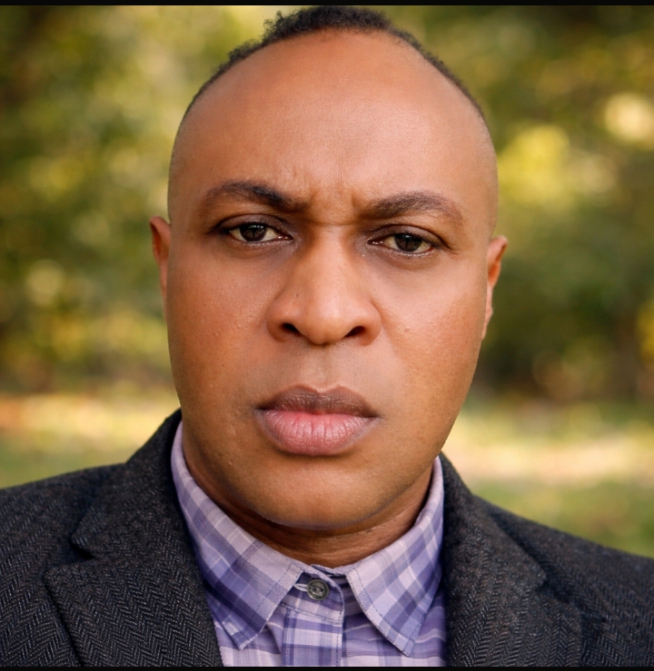
Daniel Nduka Okonkwo is an investigative journalist, human rights advocate, and policy analyst based in Abuja, Nigeria. He is the publisher of Profiles International Human Rights Advocate, a platform focused on accountability journalism, governance reporting, and the documentation of human rights issues across Africa. His work examines the intersection of political power, institutional accountability, systemic failure, and the human impact of corruption, with particular focus on Nigeria and the wider African continent.
Okonkwo’s reporting and analysis have been published in Sahara Reporters, African Defence Forum, Daily Trust, Vanguard, Daily Intel, Opinion Nigeria, African Angle, Local Newsbreak, and other international media outlets. His work is driven by a commitment to transparency, democratic governance, and justice. He also collaborates with Daniels Entertainment on human rights initiatives, extending his advocacy beyond traditional journalism into broader public engagement.
He is based in Abuja, Nigeria, and can be reached at dan.okonkwo.73@gmail.com.